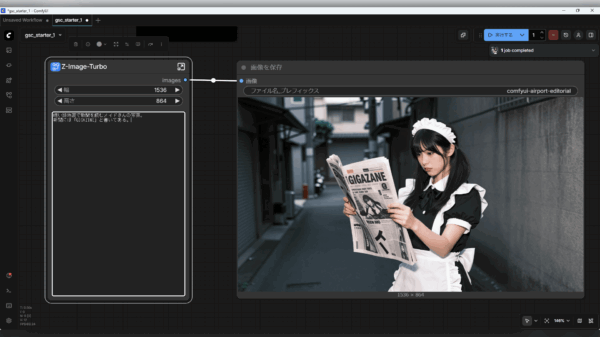
















































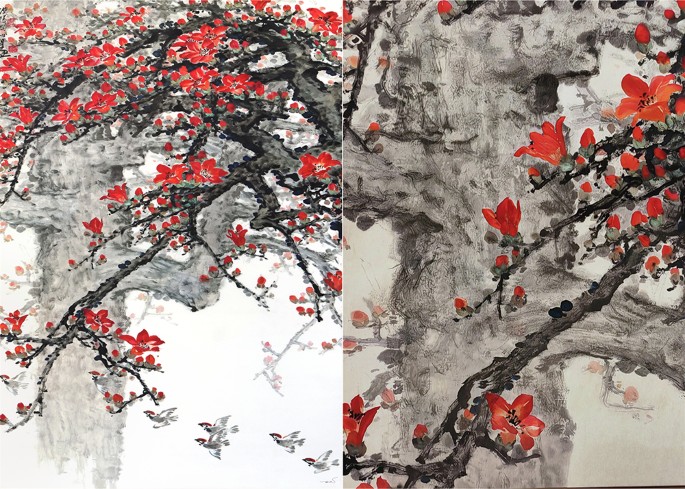
A team of researchers has developed a groundbreaking image generation process that captures the intricate artistry of **Cantonese embroidery** using advanced technology from **Stable Diffusion**. This innovative approach leverages a specially trained model to replicate the unique textures and features of traditional embroidery, creating a seamless workflow integrated into the **ComfyUI** platform.
The project commenced with the establishment of a comprehensive dataset comprising 494 high-definition images of Cantonese embroidery, sourced from reputable entities like **Guangzhou Embroidery Craft Factory Co., Ltd.** and municipal-level representative **Wang Xinyuan**. Despite the artistic value of these works, the researchers encountered challenges in image quality due to the conditions under which they were photographed—primarily in indoor exhibition halls with variable lighting. As a result, the images underwent rigorous post-processing to address issues like uneven exposure and semantic redundancy.
To enhance the dataset’s reliability, images were meticulously annotated using the **WD14-tagger framework**, which involved a combination of automated and manual label corrections. These efforts ensured that the semantic representations accurately captured the complexities of the embroidery’s themes, such as distinguishing between different bird species or floral elements. The final dataset encompasses eight primary categories, including flowers, animals, and landscapes, further divided into 45 subcategories.
Utilizing **LoRA** low-rank adaptation technology, the researchers trained an adapter model, referred to as **gx_lora3.safetensors**, which specifically incorporates the texture features of Cantonese embroidery. This model was integrated with the **Stable Diffusion** framework, allowing it to generate high-quality images that maintain the intricate details characteristic of traditional embroidery. The advanced hardware setup, featuring a **32-core AMD EPYC 7542 processor** and an **NVIDIA GeForce RTX 4090D** graphics card, enables the generation of images at a resolution of 2048×2048 in approximately 50 seconds.
Technical Insights
The image generation pipeline employs a two-pronged constraint method to guide the denoising process during image creation. The first constraint utilizes the **Segment Anything Model (SAM)** for semantic segmentation, which allows for precise delineation of complex regions within input images. This segmentation produces binary masks that ensure enhanced focus during the denoising process, minimizing noise interference in target regions. Early in the diffusion stages, these masks primarily act to confine modifications, while later stages leverage them to refine details in conjunction with additional guidance.
The second constraint is facilitated through **ControlNet**, which enhances geometric structure and color fidelity by encoding depth, line art, and color information from the input image. This integration ensures that the generated images closely align with the original in terms of both spatial composition and color distribution, successfully merging artistic intent with technological capabilities. The researchers found that varying the intensity of these controls according to the complexity of the subject matter improves the model’s performance, allowing for nuanced interpretations of traditional designs.
In a series of experiments, the team tested different LoRA configurations and discovered that the optimal balance was achieved using the model from the 8th training epoch combined with a weight of 0.9. This configuration produced images that not only preserved the artistic integrity of Cantonese embroidery but also exhibited natural color transitions and detailed textures. Images generated under this setting demonstrated a clear floral morphology while avoiding excessive stylization, which had previously led to distortion of the embroidery’s intricate details.
The research indicates that the integration of advanced AI methodologies can significantly enhance the preservation and reproduction of traditional art forms. By combining historical craftsmanship with cutting-edge technology, the team has opened new avenues for digital representation in the realm of cultural heritage. As these techniques continue to evolve, they promise to foster greater appreciation for Cantonese embroidery and potentially other forms of traditional artistry, breathing new life into cultural expressions for future generations.
See also India’s IT Secretary S Krishnan Advocates for Sector-Specific AI Models Over Generative AI
 Netflix, Nike, and Uber Leverage AI Innovations to Enhance Services and Design
 OpenAI Retires GPT-4o and Older Models, Introduces New Personality Features for ChatGPT
 ComfyUI Simplifies Local AI Image Generation with Streamlined Installation Steps
 Survey: 61.5% of Korean Workers Use AI at Work; 71.7% Among Those Aged 35-39