


























Proponents of generative AI argue that this technology has significantly lowered barriers to entry in the art world, enabling virtually anyone with internet access to create landscapes, portraits, sketches, and comics without requiring traditional artistic talent. Critics, however, contend that it represents the lowest common denominator of human expression, relying on complex algorithms that have been trained on copyrighted material while failing to provide fair compensation to human artists whose works have been utilized without consent.
This ongoing debate has escalated into a protracted legal battle, particularly surrounding the question of whether AI-generated art can be copyrighted. A pivotal moment occurred in 2022 when the US Copyright Office rejected computer scientist Stephen Thaler’s attempt to copyright his AI-generated image titled “A Recent Entrance to Paradise.” After a series of legal proceedings, including a ruling from a US district court that denied copyright protection on the grounds that the work lacked a human creator, the case was ultimately referred to the US Supreme Court.
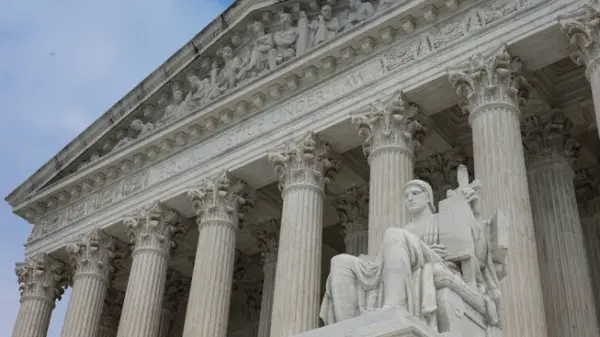
Recently, the Supreme Court declined to hear the case, representing a significant setback for advocates arguing that AI-generated art should receive copyright protection akin to that enjoyed by human-created works. The decision adds complexity to an already fraught landscape, as AI companies face multiple lawsuits for alleged copyright infringement. For instance, Midjourney, a popular image generator, was sued by Warner Bros. Discovery last year. Additionally, a group of artists filed a lawsuit against Google in 2024, asserting that their work had been unlawfully scraped to train the company’s AI.
Despite legal challenges, some AI enthusiasts, including Thaler, continue to seek copyright for their AI-generated creations. Some have gone so far as to claim that their prompts are being plagiarized by other artists. The Trump administration has weighed in on the matter, stating, “Although the Copyright Act does not define the term ‘author,’ multiple provisions of the act make clear that the term refers to a human rather than a machine.”
In addition to his efforts to copyright his artwork, Thaler has pursued patents for inventions such as a food container and a search-and-rescue beacon, arguing that an AI named DABUS should be recognized as the inventor. However, the US Patent and Trademark Office rejected his claims, and the Supreme Court subsequently denied the opportunity to hear his arguments on this matter as well.
The intersection of generative AI and copyright law continues to evolve, with significant implications for the creative industries. As AI technology advances, the question of whether and how to protect works created by machines will remain a critical issue. With ongoing lawsuits and a lack of clear legal precedents, the future of AI-generated art and its place within intellectual property law is uncertain, but its ramifications are poised to reshape the landscape of creativity and ownership in the digital age.