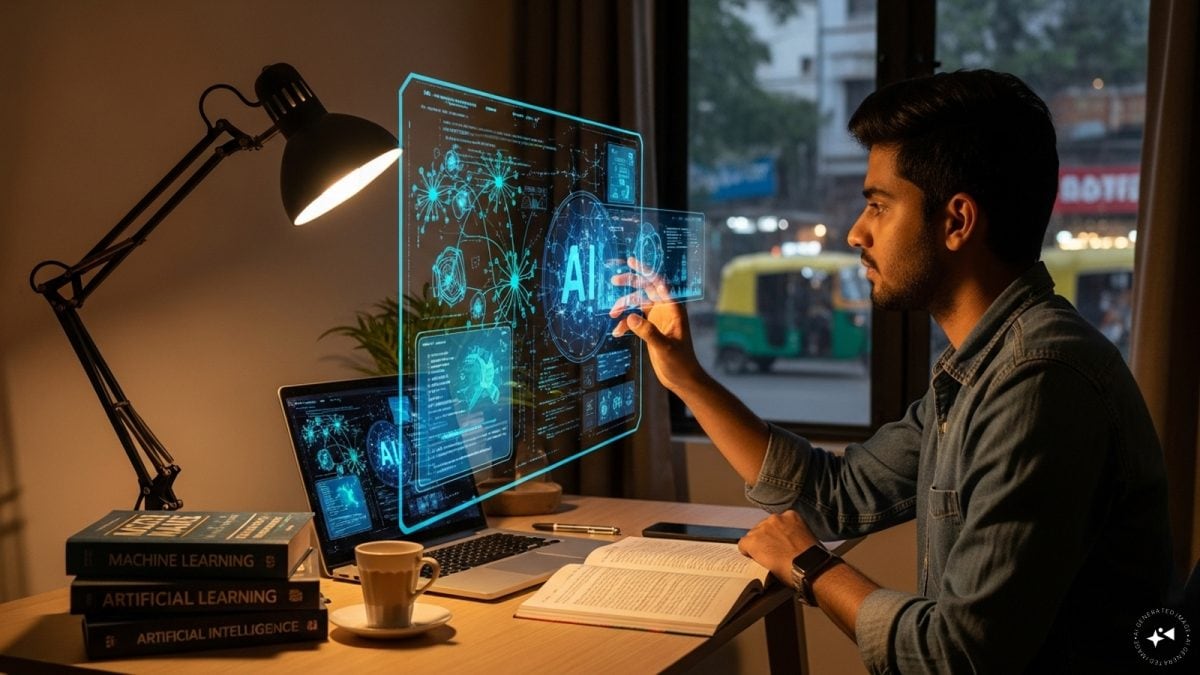
As of March 11, 2026, the landscape of career opportunities in technology has undergone a significant transformation, particularly for students from the arts. Historically, there was a clear division between arts and science students, with the former typically channeled into civil services, literature, or teaching, while the latter pursued engineering and data science. However, this divide has begun to erode in light of the digital revolution, with major tech companies now actively seeking individuals who can bridge the gap between coding and its human context.
Leading firms such as Google, IBM, Apple, and Meta have shifted their hiring practices, emphasizing “micro-credentials” and “portfolios” over traditional four-year engineering degrees. This evolution offers a golden opportunity for arts students, who possess unique skills that can be leveraged in technology roles. With data increasingly reflecting human emotions and societal interactions, the ability to interpret and present this data is now highly valuable.
For those wondering if arts students can transition into artificial intelligence (AI), the answer is a resounding yes. Students from disciplines such as history, psychology, sociology, and linguistics have the critical thinking skills necessary to analyze complex data sets. As coding languages like Python become as accessible as learning a new spoken language, humanities students are well-positioned to adapt. The advent of “no-code” and “low-code” platforms further facilitates this transition, allowing individuals to create intricate data models without extensive coding knowledge.
The critical role of data storytelling cannot be overstated. Arts students excel in translating complex data into relatable narratives, making it easier for business leaders to understand crucial insights. Additionally, students with backgrounds in sociology or philosophy can ensure that algorithms remain ethical and unbiased. The current trend of “skills-first” hiring means that portfolios showcasing relevant projects are increasingly viewed as more valuable than conventional degrees.
Emerging career paths for arts majors in the technology sector are diverse and promising. Opportunities in Natural Language Processing (NLP) allow literature and linguistics students to train sophisticated models like ChatGPT. Roles such as AI Ethics Officer focus on ensuring that AI technologies do not pose risks to society. Meanwhile, UX Researchers can apply their understanding of behavior psychology to design user-centric applications, and Data Journalists are tasked with creating informed news reports based on data analysis.
To pursue a career in AI, arts students should first address any apprehensions they might have regarding data science, which often relies more on logical reasoning than advanced mathematics. Numerous free resources are available to help aspiring tech professionals learn the basics of Python and Excel, with platforms such as Coursera and Google Career Certificates offering valuable programs. Additionally, applying their domain knowledge can lead to innovative projects—such as psychology students developing initiatives focused on mental health data.
Networking also plays a crucial role in this career transition. Engaging with professionals on platforms like LinkedIn who have successfully made the switch from arts to tech can provide invaluable insights and opportunities.
Frequently asked questions reveal that arts students can indeed learn data science without prior math education, as the field emphasizes statistics and logic over advanced calculus. Tech companies like Google and IBM are increasingly adopting “skills-based” hiring practices, valuing strong portfolios and relevant certifications over traditional degrees. The perception that coding is inherently difficult is a misconception; languages such as Python are designed to be user-friendly, enabling those proficient in languages and patterns to master coding logic quickly.
As for financial prospects, arts graduates transitioning into tech can expect competitive salaries. A fresh graduate working as a data analyst may earn between Rs 5 lakh to Rs 8 lakh per annum, with potential earnings rising to Rs 15 lakh to Rs 25 lakh with experience—comparable to or exceeding salaries often associated with seasoned engineers.
This paradigm shift not only opens doors for arts students but also emphasizes the value of interdisciplinary knowledge in the tech industry, where understanding human behavior is increasingly indispensable in a data-driven world.
See also AI’s Exponential Growth Faces Infrastructure Bottlenecks Amid Rising Demand for Fiber and Power
 China’s OpenClaw AI Trend Sparks Local Government Support and Programmer Gold Rush
 AI Scaling Faces Diminishing Returns, Costs Soar Beyond $1 Billion Per Model Training
 RootsTech 2026 Reveals AI Innovations Transforming Family History Research
 Atlassian Lays Off 1,600 Workers to Focus on AI and Enterprise Sales Shift