








































Major social media companies are increasingly implementing tools to assist users in avoiding low-quality artificial intelligence-generated content, often referred to as “AI slop.” As the internet becomes inundated with synthetic media, technology platforms are responding to user demand for effective filtering options to mitigate clutter and enhance content quality.
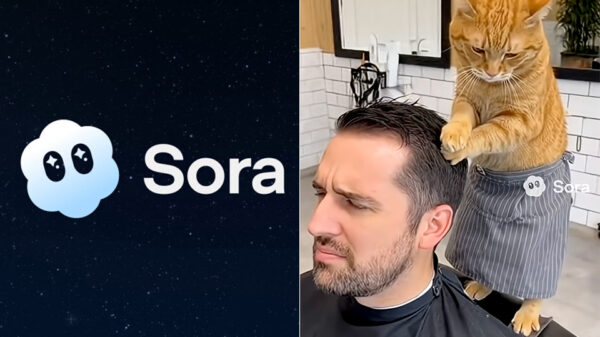
The proliferation of accessible generative AI tools, including Google’s Veo and OpenAI’s Sora, has enabled individuals to create hyper-realistic images with minimal input. This ease of creation has led to a surge of low-quality content featuring everything from cats painting to celebrities in compromising scenarios, further complicating the online landscape.
“The rise of AI has raised concerns about low-quality content — also known as AI slop,” stated YouTube chief executive Neal Mohan, addressing the frustrations voiced by users across various platforms. These concerns have prompted several companies to roll out solutions aimed at filtering out synthetic imagery.
Pinterest was one of the earliest platforms to act, introducing a feature that allows users to exclude AI-generated content late last year. Following this, TikTok implemented a similar filter on its popular video platform. YouTube, as well as Meta-owned Instagram and Facebook, have also introduced measures aimed at reducing user exposure to synthetic images, although these efforts lack definitive filtering tools.
Initially, these platforms concentrated on labeling AI-created videos to help viewers distinguish them from genuine content, yet a significant amount of synthetic media has evaded such labels, complicating the issue further.
The reactions to AI-generated content reflect a divided perspective. Some brands, such as Equinox gyms and Almond Breeze almond milk, have leveraged the public’s frustration regarding AI slop in their advertising campaigns, positioning themselves as authentic alternatives. In contrast, Microsoft chief executive Satya Nadella has called for a shift away from debating the merits of AI creations, urging individuals to embrace the technology as a means to enhance creativity and productivity.
“At its core, the criticism of AI slop is the criticism of some individual’s creative expression,” argued Bob Doyle, a YouTube personality specializing in AI-driven media creation. “You may think it’s useless, but to them it’s the beginning of an idea; a seed.”
Smaller platforms take stronger stance
Amid these developments, smaller technology companies have adopted more assertive measures against AI-generated content. Coda Music, a streaming platform, requires users to report AI-created works, granting confirmed accounts labels identifying them as AI artists. “There has been a lot of participation in the identification of AI artists so far,” noted Coda founder and CEO Randy Fusee. “By and large, (Coda users) just don’t want AI music.” The platform, which has approximately 2,500 users, allows for the complete blocking of AI content from suggested playlists.
In a similar vein, Cara, a social network catering to artists and designers with over one million users, employs a combination of algorithms and human moderation to effectively filter AI-generated content. “People want the human connection,” stated Cara founder Jingna Zhang. “I could like a child’s drawing because I’m charmed by it, as opposed to (something made by) a machine with no intention.”
The ongoing debate surrounding AI-generated content encapsulates broader questions about the role of artificial intelligence in creative expression, as well as the intrinsic value users attribute to human-created versus machine-generated media. As technology platforms and users grapple with these challenges, the landscape of online content continues to evolve, raising important conversations about authenticity and creativity in an increasingly automated world.