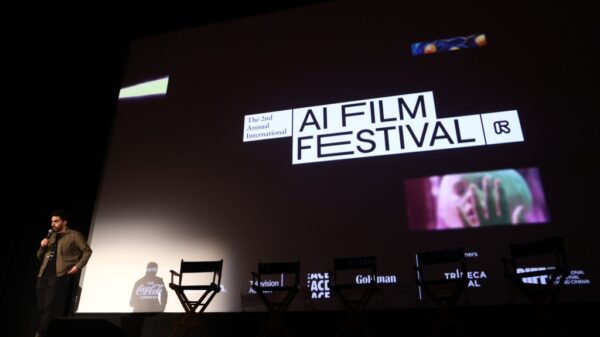













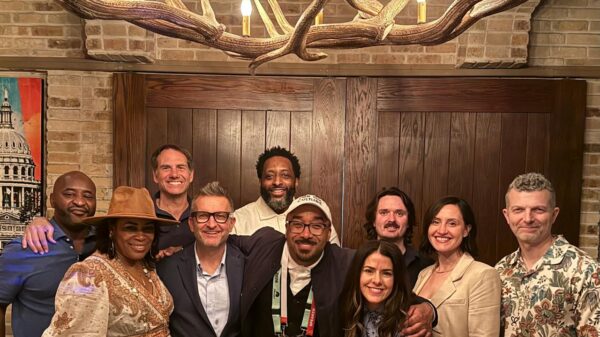






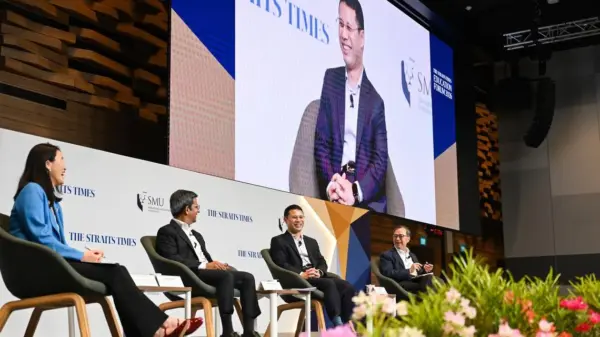


















The rise of large language models (LLMs) has sparked intense debate within the literary community. Following an open letter published by Lit Hub last year condemning the integration of AI in publishing, the literary magazine n+1 referred to AI as a “weak, narrow, crude machine.” As technology reshapes the landscape of literature, a recent panel discussion in Los Angeles brought together five writers and AI researchers to explore these changes and their implications for the future of literary creation.
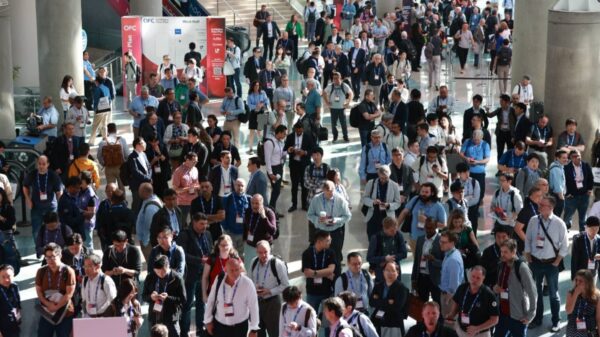
Dashiel Carrera, a novelist and researcher in human-AI interaction, moderated the panel. Gathering under the fluorescent lights of a convention center, the group engaged in a spirited discussion that revealed a spectrum of opinions about the role of AI in literature. “Whatever your position—dismantle, deny, or embrace—AI’s presence has unalterably changed the ways in which literature is read,” Carrera said.
Panelist Katy Gero expressed nostalgia for earlier language models, noting their quirky inaccuracies and playful outputs. “Today, language models are more like inexhaustible executive assistants,” she remarked, lamenting that while these models have become more capable, they have also lost their charm. Gero emphasized that AI systems are not impartial reflections of reality but are shaped by human decisions throughout their development. She argued that writers should have access to diverse AI tools, allowing for the creation of unique models trained on specific themes or topics.
In contrast, poet Christian Bök highlighted the tension between AI and artistic integrity. He observed that poets often grapple with the ethics of AI using their work without compensation while simultaneously demanding free access to information within the broader culture. “We are the first generation of poets who can reasonably expect to write literature for a machinic audience of artificially intellectual peers,” Bök noted, suggesting that future poets may need to consider writing for AI rather than human readers.
Nick Montfort expanded on Bök’s ideas, asserting that LLMs represent a culmination of alternative creative modes that have existed for decades. He pointed to literary works that have embraced polyvocality and information saturation, arguing that LLMs are not a radical departure but rather a continuation of historical literary experimentation. Montfort emphasized the importance of ensuring that AI systems do not exploit existing literary labor but rather extend the creative possibilities of literature.
As the discussion continued, Amy Catanzano presented her unique approach, merging poetry with quantum computing. Her project, “World Lines: A Quantum Supercomputer Poem,” utilizes a theoretical model of a topological quantum computer to create poetry that can only be fully interpreted by an AI developed for this purpose. Catanzano’s experiment explores how AI can read and generate poetry, reflecting the intersections between literature and advanced technology.
The consensus from the panel was clear: while the emergence of AI in literature presents significant challenges, it also opens up new avenues for creative expression. The potential for AI to assist in the writing process may prompt writers to rethink their craft and explore innovative forms of storytelling. Carrera concluded the discussion by expressing hope that the diverse opinions shared would serve as a guide for navigating literature’s complex future in the age of AI.
As AI technology continues to evolve, its integration into the literary world will demand careful consideration and ethical engagement from writers and researchers alike. The ongoing dialogue between human creativity and artificial intelligence is not just a passing trend; it represents a critical juncture for the literary community, one that will shape the narrative landscape for years to come.
See also Researchers Unveil Black-Box Membership Inference Attacks on Fine-Tuned Diffusion Models
 ByteDance Launches Seedance 2.0, AI Model Generates Video Clips from Mixed Media Inputs
 Peking University Launches GENIUS to Evaluate AI’s Fluid Intelligence and Reasoning Skills
 AI Buzzwords Explained: Key Terms Like LLMs and Generative AI Decoded Ahead of Summit
 Generative AI Redefines Professional Roles: Key Skills for Success in the Digital Age