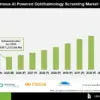

















































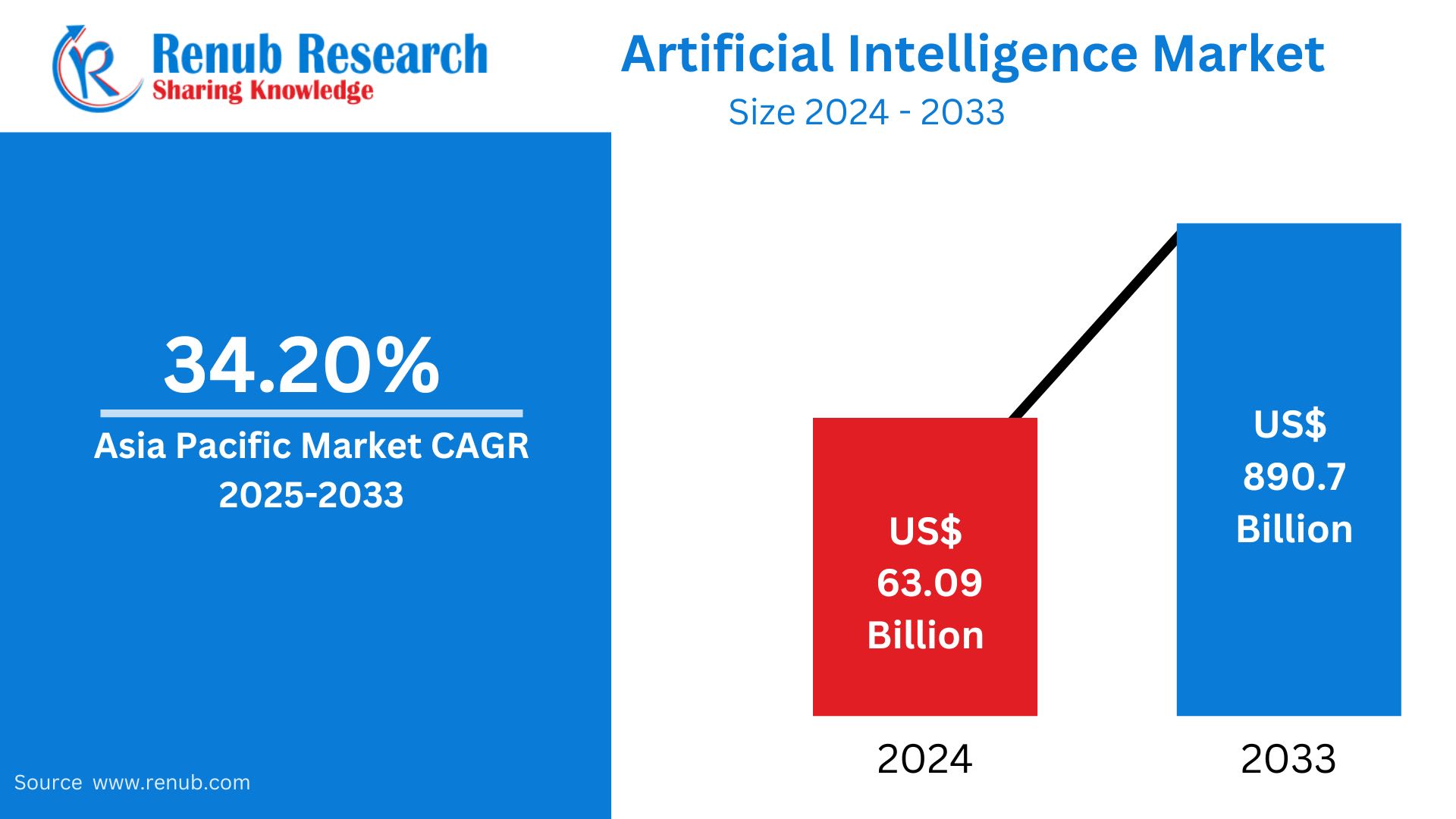
The Asia Pacific region is rapidly evolving into the global leader in artificial intelligence (AI) innovation and adoption. Once primarily recognized as a manufacturing and outsourcing hub, the region is now at the forefront of advanced technologies, with AI driving its digital transformation. According to Renub Research, the Asia Pacific Artificial Intelligence Market is projected to grow from US$ 63.09 billion in 2024 to an astonishing US$ 890.7 billion by 2033, representing a compound annual growth rate (CAGR) of 34.20% from 2025 to 2033. This remarkable growth is attributed to a confluence of government support, private sector innovation, enhanced digital infrastructure, and widespread industry adoption across various sectors including healthcare, finance, manufacturing, and transportation.
With significant investments in cloud computing, 5G networks, semiconductors, and data ecosystems, Asia Pacific is not merely following global AI trends; it is actively shaping them. The rapid pace of AI adoption is evident across nearly all industries, fueled by a swift digitalization of banking, healthcare, telecommunications, retail, and government services. Organizations are leveraging AI to enhance operational efficiency, personalize customer experiences, reduce costs, and explore new revenue models. The expansion of 5G networks and smart city projects further creates an optimal environment for AI to thrive.
Key drivers of this burgeoning market include robust government initiatives, private sector innovation, and swift industry integration. Governments throughout Asia Pacific are decisively influencing the AI landscape through targeted funding, policy frameworks, and strategic national agendas. Countries like China, Japan, South Korea, and India prioritize AI as crucial to economic growth and global competitiveness. China, for example, aims to become the world leader in AI by 2030, bolstered by extensive public investments and regulatory frameworks. Meanwhile, South Korea’s “I-Korea 4.0” initiative actively promotes AI across manufacturing and public services, and Japan focuses on strengthening its industrial base through investment in AI and robotics.
Private enterprises are equally vital in establishing Asia Pacific as a global AI powerhouse. Companies such as Baidu, Alibaba, Tencent, and Samsung are heavily investing in research and development of AI solutions ranging from smart devices to generative AI platforms. Notably, in April 2024, Nvidia announced a US$ 200 million AI complex in Indonesia, marking a significant milestone in Southeast Asia’s role in the global AI landscape. These collaborations are not only expediting innovation but also developing local talent, enhancing the region’s competitiveness.
In addition to government and corporate efforts, industry-wide adoption of AI solutions is becoming increasingly critical. For instance, in healthcare, AI applications enhance diagnostics and patient management, while in banking and financial services, AI is utilized for fraud detection and customer support automation. The manufacturing sector benefits from predictive maintenance and robotics, transforming factory operations. Retail and media are witnessing profitability boosts through AI-driven recommendation engines and demand forecasting. Transportation is also embracing AI, with advancements in autonomous vehicles and logistics optimization. In November 2023, Google introduced the beta version of its Search Generative Experience (SGE), emphasizing the region’s growing significance in AI deployment.
However, the rapid expansion of the AI market in Asia Pacific faces challenges, particularly concerning data privacy and cybersecurity. The reliance on vast amounts of data raises serious concerns, as the region comprises diverse legal frameworks that complicate cross-border data management. Increasing incidents of data breaches and public scrutiny over surveillance practices highlight the need for secure AI architectures and responsible data usage. Moreover, the lack of unified AI governance frameworks raises ethical and regulatory issues, particularly regarding algorithmic bias and transparency. Governments must navigate the delicate balance between fostering innovation and ensuring societal benefits while maintaining public trust.
China currently leads the Asia Pacific AI market, driven by strong governmental backing and a cadre of powerful tech companies. Giants such as Baidu and Alibaba are pioneering AI applications across sectors. In September 2023, Alibaba collaborated with local governments to develop AI-driven smart city solutions aimed at improving urban management. Meanwhile, India’s AI market is burgeoning, supported by favorable government policies and a robust startup ecosystem, with initiatives like IndiaAI promoting open-source development and research. Notably, in October 2024, the Ministry of Electronics and Information Technology partnered with Meta to launch the Srijan Centre for Generative AI at IIT Jodhpur.
As the Asia Pacific artificial intelligence market enters a transformative phase, it is clear that the region is not just catching up to global leaders but is actively defining the future of AI. The interplay of government commitment, rapid private sector innovation, and extensive industry adoption positions Asia Pacific as a critical player in the evolving landscape of artificial intelligence. Continued investment in infrastructure, talent, and responsible AI frameworks will likely maintain its status as the fastest-growing and most dynamic AI market worldwide through 2033, underscoring that the future of artificial intelligence is increasingly being sculpted in Asia Pacific.
See also Canadians Demand AI Regulation as Government Prepares New Strategy Amid Public Skepticism
 OpenAI Launches ‘OpenAI for Countries’ Initiative to Bridge Global AI Application Gap
 Gobind Singh Deo Featured in Apolitical’s 2023 Government AI 100 List for Digital Leadership
 CGI Partners with Google Cloud to Enhance AI-Driven Government Workflows Amid Market Challenges