






















































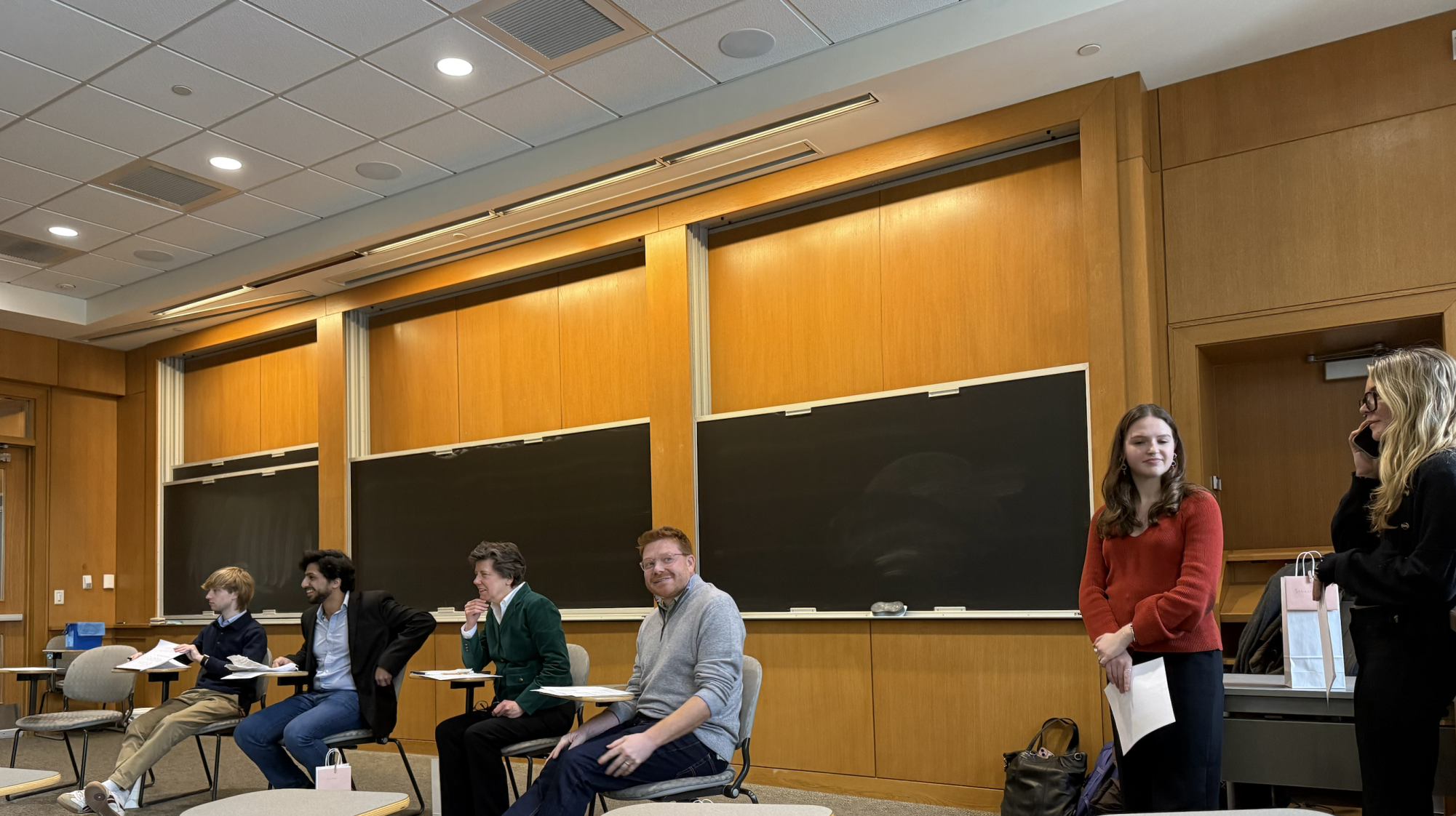
The Colgate University Writing and Speaking Center (WSC) hosted a panel discussion on generative artificial intelligence (AI) in education on February 26, featuring faculty, students, and an alumnus. Moderated by seniors Sophia Boyd and Abby Call, the discussion aimed to foster trust between students and faculty as concerns grow over AI tools potentially replacing traditional writing support. The WSC has seen a decline in student appointments this semester, prompting the need for dialogue about the evolving landscape of academic work and the vital role of human feedback.
Among the panelists was Professor of Philosophy Aaron Wolf, a founding member of Colgate’s new Data Studies minor. Wolf emphasized the transformative potential of generative AI within educational contexts, stating, “The benefits of AI for academics and learning are just beginning to reveal themselves in the last couple of months.” He pointed out that certain AI tools encourage independent thinking rather than merely providing answers.
Wolf introduced a tool called PingPong, designed to guide users toward their answers instead of supplying them outright. He has been working on a similar project that employs system prompting to enhance user engagement. Despite acknowledging his limited experience with AI’s direct use in classrooms, Wolf noted that when he has integrated AI tools into his teaching, they have helped students tackle complex material earlier in their academic journeys. “I’ve shown students how chat tools can be used to begin something like a literature search,” he said, underscoring the depth of understanding they can achieve.
Also participating in the panel, Professor of English Constance Harsh discussed the complexities surrounding generative AI in writing disciplines. While recognizing the utility of AI in specific academic scenarios, she expressed apprehension regarding its implications for English courses. “In English, we really value reading and form as much as content,” Harsh stated. “AI can convey information, but it can’t replicate the experience of reading and struggling through a text.”
Student Ethan Nichols, who studies under Harsh, echoed her sentiments. “Generative AI’s convenience is undeniable… However, that convenience comes at a cost,” he remarked. “Writing is not simply about producing a finished product; it is a process of thinking.” Nichols emphasized the importance of developing a thesis, enduring revisions, and refining unclear ideas as integral to cultivating critical thinking skills.
As the discussion unfolded, both Wolf and Harsh highlighted how generative AI has changed classroom dynamics. Rather than creating new challenges, they argued that AI has amplified existing concerns related to student engagement, assessment practices, and academic integrity. Wolf articulated his perspective: “I don’t think AI is a new problem. It has made an existing problem much more acute.” He advocates for increased transparency in grading, aiming to motivate students to prioritize learning over performance.
Harsh reiterated the necessity for faculty to communicate clearly the purpose of assignments and the skills they are designed to develop. “Simply telling students not to use AI isn’t enough,” she explained. “Students need to understand what the learning goals are and why using AI would undermine them.” She cautioned that mere instruction does not guarantee belief or compliance among students.
Ultimately, the panelists agreed that while students often lean too heavily on AI for its ease of obtaining answers, it is crucial to maintain the practice essential for learning. If employed thoughtfully, AI can augment educational experiences without stunting the growth of critical thinking skills. The conversation wrapped up by addressing the need to restore trust between faculty and students in the classroom.
As generative AI tools emerged, many faculty members were primarily concerned with identifying instances of academic dishonesty. Harsh urged a shift from detection to dialogue focused on learning objectives as a means to uphold academic integrity. “If we can facilitate more conversations between faculty and students about why they are here and what they can accomplish, we can get to the idea of what students really want and how we faculty can guide them there,” she concluded.
The event closed with an open session over refreshments, underscoring the importance of ongoing discussions about AI in academic environments as the technology becomes increasingly integrated into education.
See also Top AI Video Tools of 2026: Sora 2, Veo 3.1, and Kling AI Lead Innovation
 AI Concepts Revolutionizing 2026: LLMs, RAG, Agents, and Multimodal Integration Explained
 AI Innovation Accelerates: Vision Language Models Transform Threat Detection in Security
 AI-Generated War Footage Surges Amid US-Israel-Iran Conflict, Warns Fact-Checkers
 Digital Agency Launches AI Test for 180K Staff, Aiming for 2027 Implementation















