















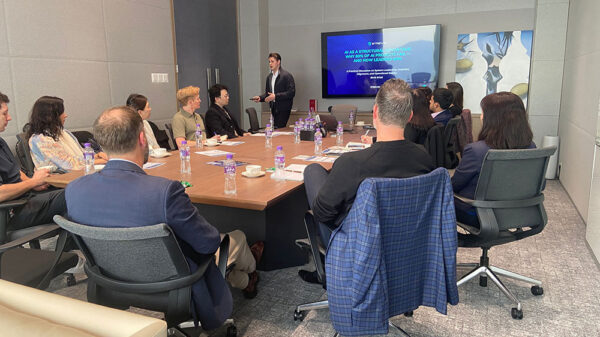





















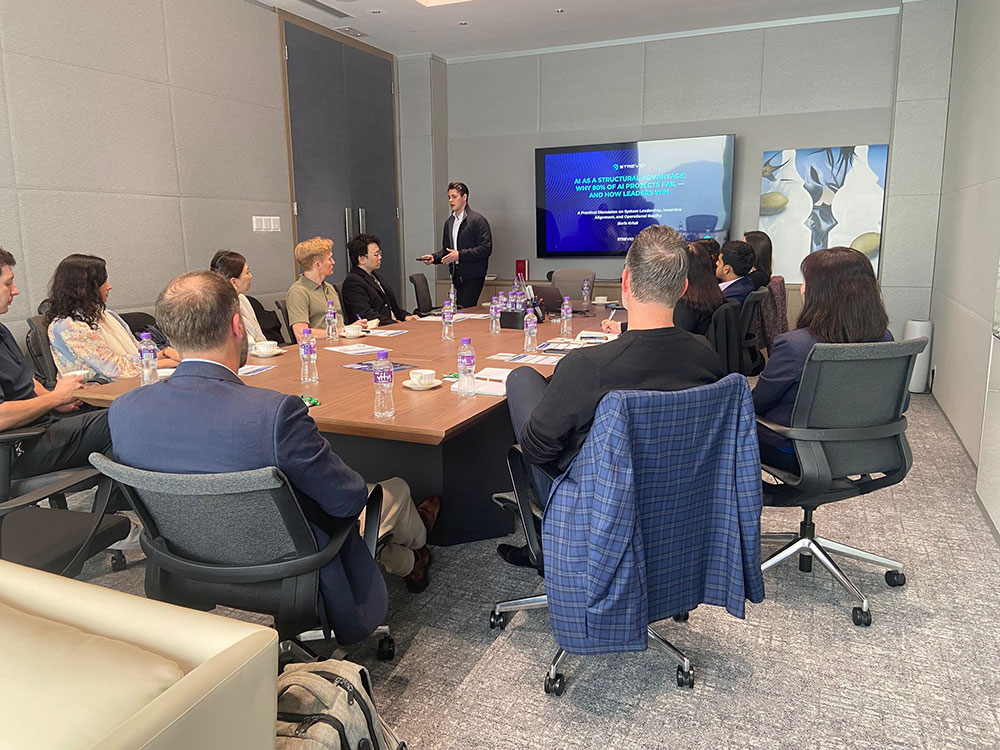
In a significant advancement for artificial intelligence, Boris Kriuk, a 21-year-old researcher, has introduced a pioneering framework known as Deep Workflow Orchestration (DWO), aimed at transforming the deployment of autonomous AI systems in high-stakes environments. Unveiled in April 2025 during a Hong Kong Government event, this innovative architecture is now integral to the monitoring of complex mechanical and electrical systems across one of the world’s most densely populated urban areas, marking a shift from experimental projects to robust, production-level infrastructure.
The landscape of AI has been saturated with various agent frameworks like LangGraph, AutoGen, and CrewAI, which allowed developers to create multi-agent systems that performed well in controlled settings. However, by 2024, the excitement around “agentic AI” began to wane as these tools struggled to maintain stability when deployed in critical sectors such as government operations and industrial monitoring. As Kriuk observed, these systems frequently collapsed under pressure, characterized by cascading hallucinations and lost states, posing unacceptable risks in real-world applications.
Kriuk identified a critical need for an orchestration layer—a central management system capable of coordinating autonomous agents and human operators in real-time. This orchestration was not merely about smarter agents; it was about smarter management of those agents. The result was DWO, which provides a “central nervous system” for independent AI workers, ensuring deterministic safety checks and stable communication throughout their operations. This distinction between coding libraries and actual orchestration architecture is what sets Kriuk’s contribution apart in the rapidly evolving AI landscape.
The evolution of agentic AI can be delineated into distinct eras. The initial phase, termed the Framework Era (2023–2024), showcased the potential for agents to collaborate through code, yet these systems remained fragile. The subsequent Orchestration Era (Late 2024–2025) saw platforms like DWO shift the focus to reliability and governance, re-establishing the foundations of multi-agent AI in real-world scenarios. We are currently transitioning into the Standardization Era (2025–2026), where protocols like the Model Context Protocol (MCP) are formalizing communication standards between orchestrated systems. Kriuk stands at the intersection of these developments, innovating a framework that enables the practical application of AI in public service and industrial settings.
Kriuk’s approach contrasts with enterprise solutions from industry giants like IBM and Google by emphasizing distributed and adaptive architectures. These systems can reorganize based on the task at hand rather than following rigid, predefined pathways, making them more versatile and applicable to complex real-world challenges. Central to this adaptability is Kriuk’s earlier work on frameworks such as ELENA (Epigenetic Learning through Evolved Neural Adaptation), which allows AI systems to dynamically restructure, and the Gradient Focal Transformer, which addresses critical issues in pattern recognition and model generalization.
Another notable addition to Kriuk’s portfolio is POSEIDON, released in early 2026, a physics-informed earthquake prediction system leveraging the world’s largest open-source earthquake dataset, significantly contributing to global scientific research and community resources. Each of these components interconnects, with adaptive architectures informing orchestration, enabling deployment, and ultimately validating Kriuk’s scientific principles under real-world pressures.
As the AI industry increasingly prioritizes model size and benchmark scores, Kriuk’s work serves as a vital reminder of the importance of functionality where it matters most—bridging the gap between intelligence and infrastructure. Agentic orchestration has evolved into a recognized discipline, prompting enterprise platforms to adopt its principles while government agencies assess its viability for crucial operations.
Ultimately, Kriuk’s contributions signify a transformative shift in how multi-agent AI can be trusted in city operations, signaling a legacy rooted in practical, reliable solutions to complex challenges. The future of AI will likely hinge on the lessons learned from Kriuk’s work, underscoring the importance of dependable systems in an era where technology increasingly shapes our everyday lives.
See also AI Technology Enhances Road Safety in U.S. Cities
 China Enforces New Rules Mandating Labeling of AI-Generated Content Starting Next Year
 AI-Generated Video of Indian Army Official Criticizing Modi’s Policies Debunked as Fake
 JobSphere Launches AI Career Assistant, Reducing Costs by 89% with Multilingual Support
 Australia Mandates AI Training for 185,000 Public Servants to Enhance Service Delivery