












































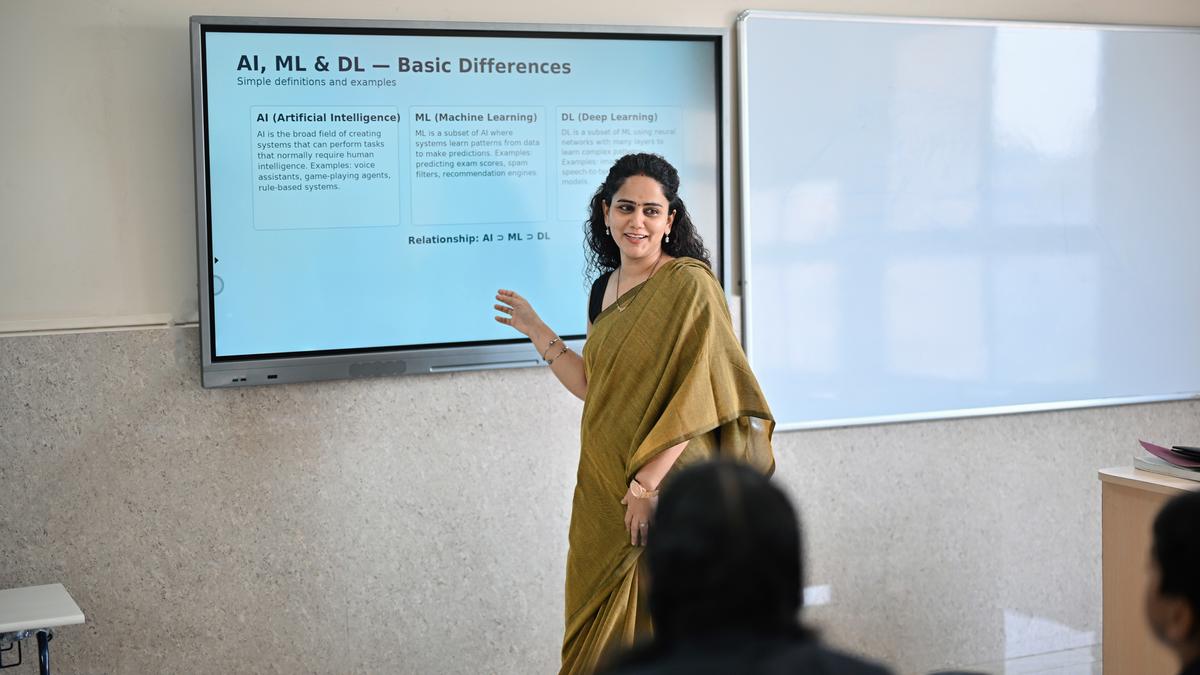
The Union Government of India is poised to liberalise the country’s open schooling framework and introduce new guidelines aimed at integrating artificial intelligence into educational practices. The move, part of the Viksit Bharat Shiksha Adhishthan (VBSA) Bill, 2025, seeks to overhaul the regulatory landscape for higher education, with a focus on enhancing employability and entrepreneurial skills among graduates. Officials from the Education Ministry announced these initiatives on January 2, 2026, noting the importance of adapting educational standards to the needs of today’s job market.
A senior official from the Ministry emphasized the necessity of aligning technical education with practical skills that equip students for the workforce. “There is a need to ensure that standards for technical education are set with a focus on centering it around equipping students with the skills to acquire jobs and start entrepreneurships,” the official stated. The integration of artificial intelligence into teacher training is also seen as a crucial component of this educational evolution.
The VBSA Bill, introduced during the Winter Session of Parliament in 2025, has faced opposition, prompting the government to propose its referral to a joint committee of Parliament. While the committee has yet to be formed, officials remain optimistic about presenting the Bill for approval during the upcoming Budget Session later this year.
In addition to reforms for higher education, the government plans to expand and liberalise the National Institute for Open Schooling (NIOS). Currently, NIOS requires educational institutions to be linked to formal schools to offer certain courses. Discussions are underway to allow a broader range of institutions, such as Industrial Training Institutes (ITIs), to initiate open schooling programs. This expansion could potentially reduce dropout rates by providing more accessible pathways for individuals of all ages seeking secondary and higher secondary certifications.
The NIOS framework currently offers open basic education programs for individuals over 14 years old, providing certifications equivalent to Classes 3, 5, and 8 of the formal schooling system. Additionally, it includes secondary, senior secondary, vocational education, and various “life-enrichment” programs aimed at enhancing the overall educational experience.
As the Indian government moves forward with these ambitious reforms, the emphasis on merging technology with education signals a significant shift towards more inclusive and practical learning environments. By making educational pathways more flexible and adaptable, the government hopes to not only improve individual opportunities but also strengthen the overall workforce in a rapidly evolving job market.
See also Elon Musk’s Grok Faces Backlash Over AI-Generated Sexualized Images of Minors
 India Orders X to Fix Grok AI After Complaints of Obscene Content Involving Minors
 Grok AI Faces Backlash for Generating Nonconsensual Sexualized Images of Minors
 X Enforces Strict Measures Against Illegal and AI-Generated Content Following Meity Directive
 India Launches First Government AI Clinic in Noida to Enhance Patient Diagnostics and Care