



















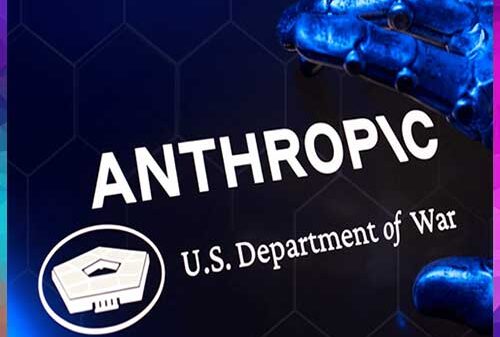



















The U.S. government has defended its decision to blacklist Anthropic amid a legal challenge from the AI company, arguing that the designation was lawful and rooted in national security concerns. This defense comes as the company filed a lawsuit in federal court in California seeking to overturn the government’s classification, which identifies Anthropic as a national security supply chain risk.
On March 3, Defense Secretary Pete Hegseth announced the designation after Anthropic declined to lift restrictions on its AI technology’s usage, which include limitations on applications like autonomous weapons and domestic surveillance. The U.S. Department of Justice has since supported the Department of Defense’s decision in a court filing, asserting that the classification is based on contractual and national security issues rather than First Amendment protections.
In its lawsuit, Anthropic contends that the government’s actions violate its constitutional rights and federal procedures. The Justice Department countered that the issue at hand arises from the company’s refusal to change its product restrictions, characterizing this as conduct rather than protected speech. Anthropic stated it is reviewing the government’s response, maintaining that its legal challenge is vital to safeguard its business, customers, and partners.
This dispute underscores growing tensions between government agencies and AI developers regarding the deployment of advanced systems, particularly in sensitive defense and surveillance contexts. Former President Donald Trump has supported the Pentagon’s decision, which presently impacts a limited number of military contracts, but it could have wider ramifications if extended across federal agencies.
Anthropic has been vocal about its concerns regarding the safety of current AI systems, arguing that they are not sufficiently safe for use in autonomous weapons and opposing their application in domestic surveillance initiatives. The outcome of this case could establish a significant precedent for how governments regulate AI companies, especially as debates intensify surrounding national security, ethical usage, and the oversight of advanced AI technologies.
The legal battle reflects a broader discourse on balancing innovation and safety in an era where AI technologies are rapidly evolving. As both sides prepare for the courtroom, the implications of this case could resonate throughout the tech industry, potentially reshaping regulatory frameworks that govern the development and application of AI systems.
See also AI Technology Enhances Road Safety in U.S. Cities
 China Enforces New Rules Mandating Labeling of AI-Generated Content Starting Next Year
 AI-Generated Video of Indian Army Official Criticizing Modi’s Policies Debunked as Fake
 JobSphere Launches AI Career Assistant, Reducing Costs by 89% with Multilingual Support
 Australia Mandates AI Training for 185,000 Public Servants to Enhance Service Delivery