













































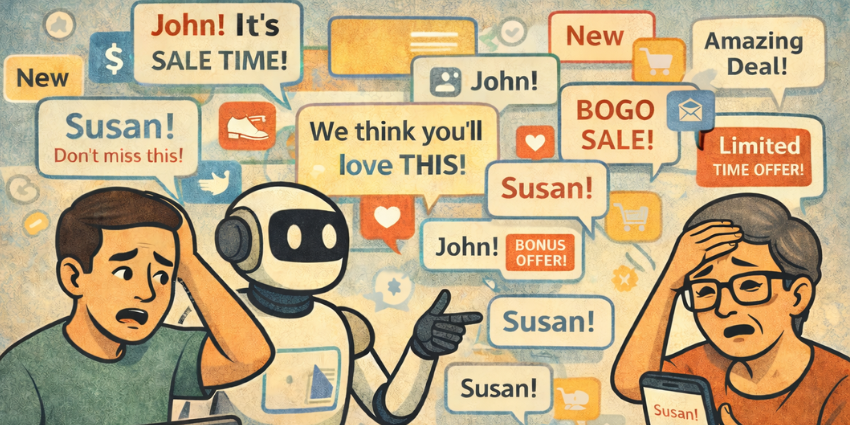
The rise of AI personalization engines has transformed marketing strategies, allowing companies to deliver more tailored experiences to customers. However, the enthusiasm surrounding this technology may lead businesses to overwhelm their clients with excessive and repetitive messaging. Recent statistics indicate that 70% of customers actively tune out corporate communications, while 59% believe that repetitive messaging degrades their overall experience. As consumer attention wanes amid a deluge of notifications, a more thoughtful approach to personalization is necessary.
AI personalization engines function by leveraging customer data from sources such as CRM systems and click trails to create individualized marketing journeys. These tools are particularly appealing to CMOs seeking quick results in meeting KPIs. The data layer gathers comprehensive customer information, while the decision layer crafts tailored marketing interactions based on real-time data. However, despite their effectiveness, these systems often prioritize channel engagement over cohesive customer experiences, resulting in an overwhelming flood of messages.
This over-optimization stems from various organizational flaws. Structural issues arise when different departments manage their messaging protocols independently, leading to disjointed customer interactions. Technical shortcomings often occur when AI is programmed to prioritize engagement metrics—such as clicks and conversions—without considering customer fatigue. Cultural factors also play a role, with marketing teams adopting a “more is better” mentality, which can ultimately alienate customers.
Understanding the Costs of Over-Personalization
As AI becomes increasingly sophisticated, it ironically amplifies the noise consumers experience. According to surveys, 55% of customers prefer fewer messages from brands, and 59% have missed important communications due to excessive noise. The consequences of this over-communication are significant: customers may opt out completely, adding brands to spam lists or ignoring them altogether. This poses a challenge for businesses trying to reach their audience when it matters most.
Interestingly, studies reveal that more strategic timing and less frequent messaging can yield better results. For example, Bloomreach found that engagement increased when SMS messages were spaced according to individual consumer tolerance. Similarly, Coca-Cola achieved a 36% revenue lift by implementing a more disciplined approach to customer journeys. Ultimately, the true cost of over-messaging extends beyond financial implications; it can erode trust and communication between brands and consumers.
When selecting an AI personalization engine, it is essential for businesses to focus not just on features but also on how well the system manages messaging fatigue. Companies should look for engines that provide a unified view of customer interactions, enabling them to see the entirety of a consumer’s journey. This includes understanding customer engagement across various channels and ensuring that messaging aligns with their current needs.
Effective AI systems should also implement suppression rules and fatigue scoring mechanisms to prevent overwhelming consumers. Dynamic frequency caps that adapt to individual behavior are vital, as are suppression triggers tied to service events or declining customer sentiment. Furthermore, customer-level fatigue scoring can provide insights into how frequently messages are being ignored or flagged as spam.
Intent and relevance modeling is another critical aspect to consider. A truly effective personalization engine should not merely send messages that align technically with a customer’s preferences but should also adapt to their real-time behaviors and emotional state. Systems that can detect shifts in intent—such as from shopping to troubleshooting—will provide a more holistic customer experience.
Finally, ensuring transparency and governance in AI operations is essential. Businesses need to maintain clear records of decision-making processes and be able to trace the logic behind their AI-driven communications. This includes understanding which data informs decisions and being able to justify why certain messages were sent while others were not. Opaque practices can pose significant legal and reputational risks.
In testing AI personalization engines, companies should create scenarios that expose potential weaknesses, especially in high-stakes situations where customer trust is paramount. By assessing how systems handle fatigued but valuable customers, prioritize service communications over promotional ones, and manage potential messaging collisions, businesses can better evaluate the effectiveness of these tools.
In conclusion, as businesses increasingly rely on AI personalization engines, the challenge will be to balance smart personalization with a respectful approach to communication. The most effective systems will be those that recognize when to engage and when to hold back, ultimately leading to better customer relationships and improved business outcomes. Developing a thoughtful strategy for using AI in marketing can enhance not only profitability but also customer trust and loyalty.
See also GitLab Faces AI Market Challenges as Analysts Remain Bullish on Stock Potential
 AI Slop Floods Digital Platforms, Hitting 90% of Web Content by 2026
 Reddit Reports $1B Ad Revenue Surge, Highlights AI-Driven Content Commercialization
 Google’s December Core Update Triggers 70-85% Traffic Drops for Publishers Amid Industry Consolidation
 New York Enacts AI Disclosure Law Requiring Transparency on Synthetic Performers