












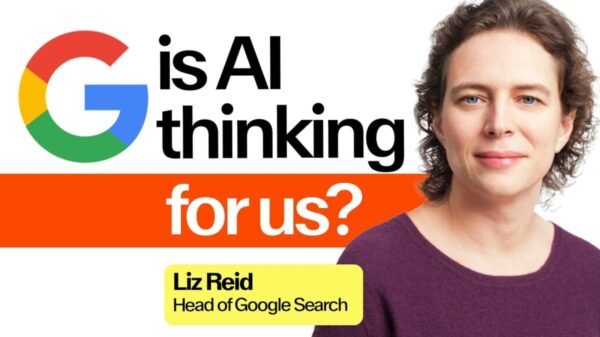






























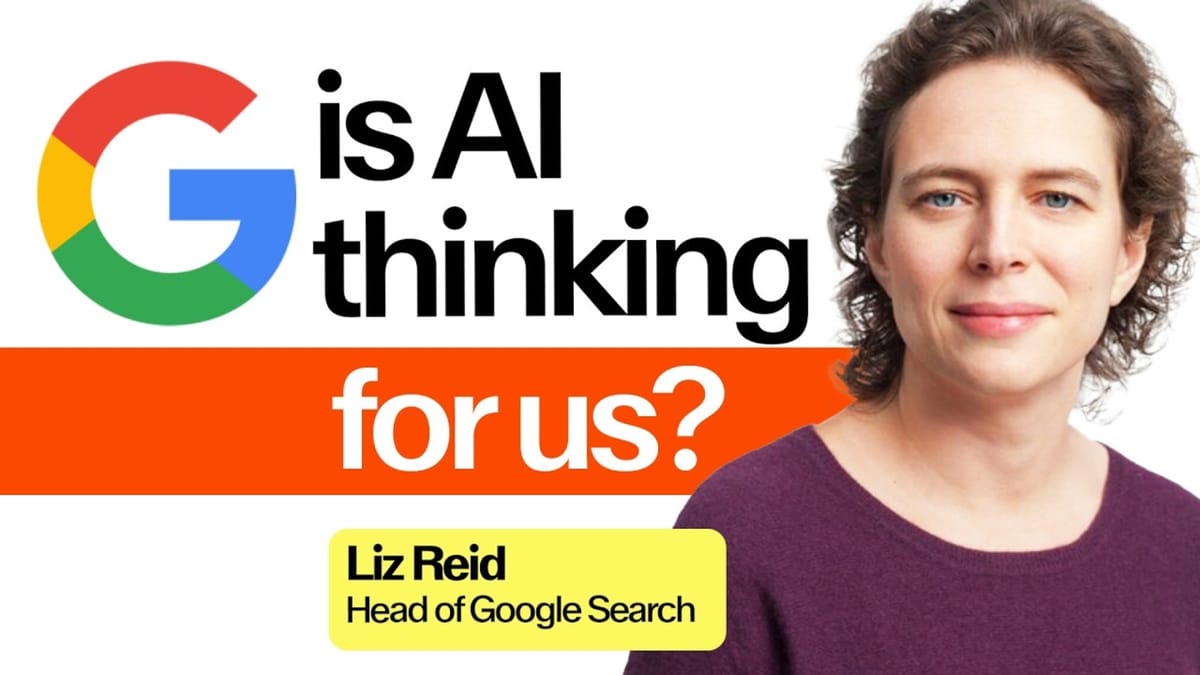
Liz Reid, Google’s VP and head of search, addressed the evolving landscape of online information access during a recent interview on the Access podcast, discussing the impact of artificial intelligence on one of the world’s most relied-upon information products. Published on March 6, 2026, the episode, which garnered 367 views within a day of release, arrives as the search industry faces significant uncertainty. AI Overviews are reshaping user interactions with online information, as ChatGPT’s market share has dropped from 86.6% to 64.6% over the past year, raising strategic questions about the future convergence of Google Search and the Gemini app.
Reid, who has been with Google for approximately 22 years, previously led the Google Maps team before transitioning to search amid the pandemic, at a time when the division was fragmented. Her leadership coincided with rising speculation among competitors and media that ChatGPT could disrupt traditional search functions. In her discussion, she acknowledged that users are increasingly blending tools like ChatGPT and Claude with Google in their daily information-seeking habits, which has shifted the competitive landscape.
While some may view this as a threat, Reid offered a different perspective, stating, “The overall volume of questions people ask is growing, not shrinking.” She likened the current industry transformation to earlier shifts, such as the transition to mobile, suggesting that the total market size is more significant than the division of market share among competitors. Supporting this, Google reported that AI Overviews were generating over 10% additional queries globally in relevant searches, contributing to a 16% year-over-year revenue increase to $102.3 billion in the third quarter of 2025.
Despite this growth, challenges remain for marketers. Independent research has indicated a decline in organic click-through rates of up to 54.6% year-over-year for searches featuring AI Overviews, a claim Google disputes, asserting that “average click quality has increased.” This discrepancy underscores a complex tension between Google’s reported metrics and the experiences of publishers.
Technical Details
In the podcast, Reid offered insights into the technological evolution of AI within Google’s search capabilities, confirming that large language models like BERT were integrated long before the generative AI surge. BERT was primarily employed in ranking algorithms but faced latency issues that prevented its widespread application in user-facing features. Reid explained, “People on search are sensitive to 100 millisecond difference,” underscoring the challenge of maintaining a seamless user experience.
The launch of MUM, a successor model, similarly encountered constraints regarding speed and quality. Reid indicated that enhancements in model efficiency ultimately enabled the successful rollout of AI Overviews, which debuted in the U.S. in May 2024, with rapid global adoption following. As of January 27, 2026, Google made Gemini 3 the default model for AI Overviews, facilitating smoother transitions to conversational AI modes.
Reid clarified the distinctions between Google Search and the Gemini app, which is designed for productivity and creation, while Search focuses on connecting users with external web content. The future relationship between these two products remains uncertain, with Reid noting that they may converge in some areas while diverging in others. This distinction holds significant implications for advertisers, as AI Mode queries tend to be longer, indicating stronger user intent.
Looking ahead, Reid entertained the possibility that AI agents could become primary users of search infrastructure, yet she also emphasized the enduring role of human users. “I personally don’t believe in a world where it’s all agents,” she stated, highlighting the complexity of advertising dynamics in an increasingly automated environment. Google’s documentation suggests the company is considering how task completion may redefine its core product.
Another crucial aspect discussed was Google’s personalization feature, which utilizes user data from services like Gmail and Calendar to deliver context-aware search results. Reid illustrated this with an example of a user at an airport receiving tailored suggestions based on their profile. Although users must opt in for this feature, its strategic potential lies in Google’s extensive behavioral data, which could serve as a significant competitive advantage.
As AI-generated content proliferates, Reid acknowledged the challenges posed by low-quality “AI slop.” She characterized it as an extension of pre-existing content quality issues, stressing the need for Google to distinguish between high-quality AI-generated content and superficial productions. This ongoing battle against spam has resulted in prolonged update cycles for Google’s algorithms, reflecting the complexities of maintaining content integrity in a rapidly evolving digital landscape.
In conclusion, the insights provided by Liz Reid during the Access podcast highlight the intricate relationship between AI innovations and traditional search functionalities. With Google’s ongoing efforts to enhance personalization, tackle content quality issues, and navigate the potential rise of AI agents, the future of search remains a dynamic and pivotal area of focus for marketers and publishers alike. As Reid expressed optimism about the future of the web, the industry will need to adapt to these transformative changes in the coming years.
See also Enhance Your Website”s Clarity for AI Understanding and User Engagement
 FoloToy Halts Sales of AI Teddy Bear After Disturbing Child Interactions Found
 AI Experts Discuss Vertical Markets: Strategies for Targeted Business Growth
 Law Firms Shift to AI-Driven Answer Engine Optimization for Enhanced Marketing Success
 Anthropic Disrupts State-Sponsored Cybercrime Using Claude AI, Reveals Key Insights