As large language models (LLMs) continue to evolve, the AI industry is witnessing significant advancements in capabilities and performance. Key players, including OpenAI and Google DeepMind, are pushing the boundaries of what these models can achieve, fostering a competitive landscape that promises innovative applications across various sectors.
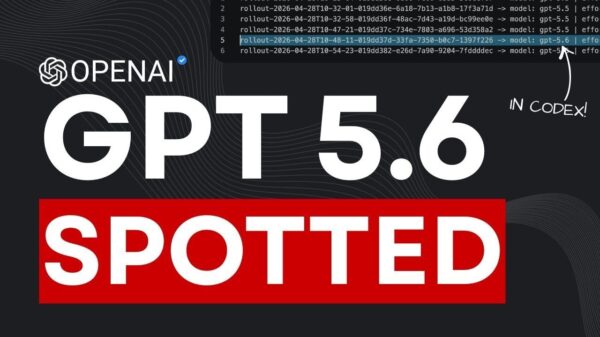
The recent release of GPT-5.2 by OpenAI on December 11, 2025, marks a pivotal moment in this evolution. Designed to incorporate advanced multimodal and reasoning capabilities, GPT-5.2 has been benchmarked against previous models, demonstrating superior performance in tasks requiring logic and contextual understanding. Notably, it boasts a context window of 400,000 tokens, allowing for more extensive data processing compared to earlier iterations. Despite some concerns over a higher hallucination rate of 39%, GPT-5.2 remains a significant upgrade, emphasizing enhanced reasoning and tool-calling features.
Hot on its heels, Gemini 3.1 Pro was launched by Google DeepMind on February 19, 2026. This model expands the Gemini family with a one million-token context window, which facilitates improved reasoning capabilities. Gemini 3.1 Pro achieved a remarkable score of 77.1% on a benchmark test for recognizing novel patterns, outpacing its closest competitor, Claude Opus 4.6, by nearly 9%. This model’s versatility is further underscored by its integration of image generation tools, allowing for comprehensive functionalities in a single platform.
Following closely is DeepSeek-V3.2, released on December 1, 2025, by DeepSeek. This model features a total of 685 billion parameters and excels in both mathematical reasoning and coding tasks. While it has faced stiff competition from newer models like GPT-5.2 and Gemini 3.1, DeepSeek distinguishes itself by offering a low-cost structure for enterprises, charging only $0.25 per million tokens for input and $0.40 for output. This economical approach has attracted considerable attention and traffic, with the platform reportedly receiving over 262 million visits monthly.
Claude 4.6 Opus, also released in early 2026, showcases Anthropic‘s commitment to enhancing its AI capabilities. Launched on February 5, 2026, this model features a unique adaptive thinking ability, allowing it to dynamically adjust the effort it exerts on tasks to maximize efficiency and output quality. Each agent in Claude 4.6 Opus can utilize its own context window of up to one million tokens, enhancing the model’s collaborative problem-solving capabilities across complex tasks.
In the same vein, Grok-4, introduced by xAI on July 9, 2025, builds on its predecessor with improvements in reasoning and real-time information processing. This model has garnered significant user engagement, with daily visits averaging 6.85 million, marking it as a substantial player in the AI space.
As the competition heats up, the landscape of LLMs is becoming increasingly diverse, with each model offering unique strengths and applications. For example, Mistral Large 3, launched on December 2, 2025, employs a mixture-of-experts architecture to provide efficient multilingual processing, although it still trails behind leaders like GPT-5.2 and Claude 4.6 in advanced reasoning tasks.
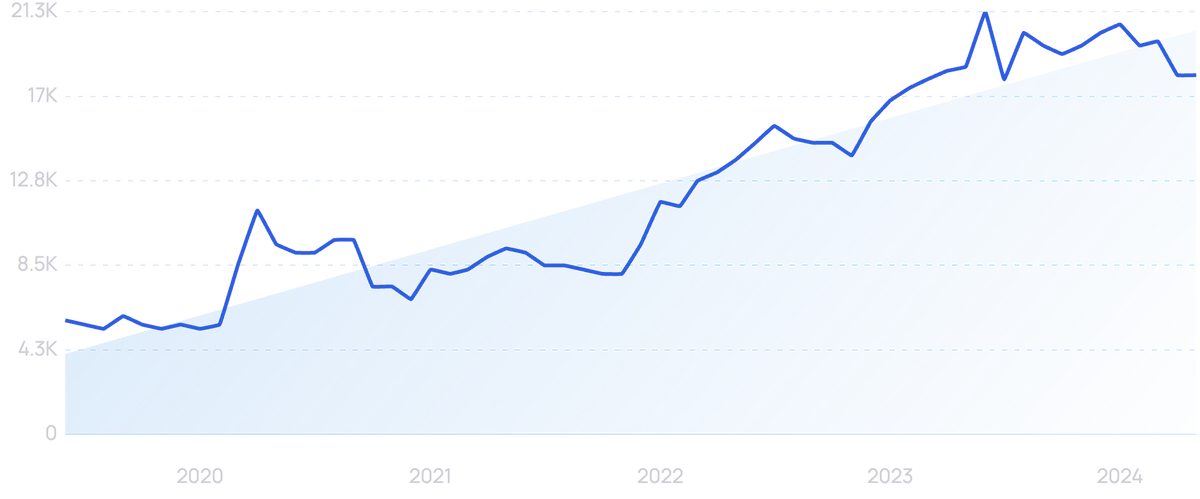
The growth of these models reflects a broader trend in the AI industry, characterized by rapid innovation and increased adoption across various sectors. Businesses are leveraging these advanced LLMs to enhance productivity, improve customer interactions, and streamline operations. Analysts predict that as these technologies mature, they will unlock new possibilities, fundamentally changing how organizations operate and interact with technology.
Looking ahead, the LLM market is expected to continue expanding, driven by ongoing research and development. The upcoming iterations of these models will likely focus on enhancing performance while reducing errors, further refining the capabilities of generative AI. As companies such as OpenAI, Google DeepMind, and Anthropic lead the charge, the industry is poised for exciting developments that will shape the future of artificial intelligence.
See also Walmart’s $26.64B Capex Strategy Positions It to Thrive as Oil Prices Approach $100
 Nvidia (NVDA) Drops 3% as U.S. Plans New AI Chip Export Regulations
 Meta Opens WhatsApp to Competing AI Bots Amid €135B Spending and EU Scrutiny
 Intern Chris Maddison’s Key Role in AlphaGo’s Historic Victory Over Lee Sedol
 Michael Burry Urges Adobe to Acquire Midjourney Amid 20% Stock Decline