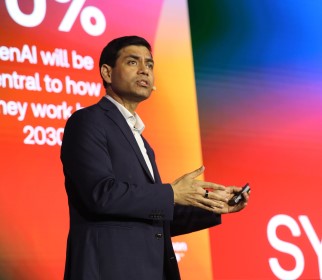

















































Chief Information Officers (CIOs) and Chief Marketing Officers (CMOs) across the Asia-Pacific (APAC) region are grappling with increasingly complex marketing and customer-engagement technology landscapes. Years of integrating new channels, adding point solutions, and meeting compliance requirements have resulted in environments that are sprawling, expensive, and difficult to manage. Rajesh Iyer, Executive Vice President and Portfolio General Manager for Business and Industry Solutions at HCLSoftware, described the situation as akin to a “Frankenstack” or a “Martech jungle,” where large organizations assemble multiple data repositories and marketing technology systems that ultimately lead to fragmented strategies and ineffective outcomes.
“What you intended in the first brief is not what comes out in the final edit; you wanted an apple and got an orange. This fragmentation is a real problem,” Iyer told iTnews Asia. He emphasized that executives are no longer seeking “more AI,” but rather a simplification of their technology stacks. The expectation is for an architecture that reduces fragmentation, rather than adding yet another tool to an already crowded ecosystem.
Enterprises in APAC engage vast audiences, often managing operations across diverse languages, cultures, and regulatory frameworks. According to Iyer, traditional AI applications—such as segmentation and propensity scoring—are largely procedural and manual, requiring human intervention at every stage. While these efforts do lead to incremental improvements in campaign execution, they fail to address the underlying structural issues that lead to inefficiency.
As businesses continue to add new tools—ranging from Customer Data Platforms (CDPs) to Demand-Side Platforms (DSPs)—the result is a complicated web of loosely connected systems with overlapping functionalities and significant operational waste. Iyer noted that CIOs and CMOs are asking for practical outcomes rather than more theoretical discussions around agentic AI: “Please don’t talk about agentic AI anymore. Show us outcomes and simplification.”
CIOs and CMOs across APAC are trying to simplify tech stacks. At the same time, they don’t want disruption. They expect what already works to keep working, and are not willing to introduce new risks around compliance or data leakage.
– Rajesh Iyer, EVP & Portfolio General Manager, Business & Industry Solutions at HCLSoftware
Iyer argued that agentic AI, when properly architected, could serve as a unifying integration layer that enhances existing systems rather than creating additional silos. It could seamlessly pull data from various sources, apply enterprise privacy and compliance rules, and dynamically stitch information together. This approach would enable automatic segmentation and real-time customer engagement without the need for constant manual oversight.
However, Iyer cautioned that for agentic AI to function effectively, it must operate within strong guardrails. These constraints should include avoiding bias, adhering to governance policies, and providing decision-making transparency. Human oversight remains critical, allowing operators to halt activities if necessary. Such safeguards would enable enterprises to utilize agentic AI safely, without compromising security or compliance.
To truly benefit from this technology, companies must also rethink their marketing foundations. A unified master record of customer data is essential for downstream actions to succeed. Iyer emphasized the importance of real-time behavioral data, claiming that static attributes do not sufficiently reveal customer intent. In fast-paced markets like India, China, and Indonesia, the challenge is exacerbated by the need for campaigns to comply with stringent privacy regulations while reaching millions of consumers.
HCLSoftware has designed solutions that can operate across various cloud and on-premises environments, allowing enterprises to maintain control over their data. Yet Iyer pointed out that the challenge lies in proving the impact of these new systems, as CMOs often focus on measurable outcomes that sales leaders prioritize. For marketing technologies to deliver substantial business value, they must demonstrate clear causal ROI.
Scaling agentic AI across APAC faces two significant barriers: skill gaps and regulatory fragmentation. Iyer noted that even in India, where there is a large IT talent pool, expertise in deploying agentic AI remains limited. Teams need practical experience in areas such as prompt engineering and agent orchestration, and they must learn to operationalize multi-agent workflows while ensuring adequate human oversight.
Moreover, regulatory diversity complicates the landscape, as different countries have varying data protection laws. Iyer stressed that enterprises cannot wait for regulatory clarity; they must establish their own internal guidelines to follow national laws while prioritizing customer privacy. He argued that the real test lies in how customers perceive their interactions with brands, necessitating cultural localization in messaging.
Ultimately, Iyer concluded that measuring the impact of AI initiatives requires discipline. Businesses should focus on key performance indicators, such as customer acquisition rates and workload shifts from humans to agents, to demonstrate the changes resulting from new technologies. By doing so, organizations can enhance their learning pace and adapt more swiftly to market dynamics, making agentic AI not merely an addition but a transformative force that simplifies complexity and delivers measurable outcomes.
See also AI Marketing with Kourtney Launches Human-Centered AI Solutions for Small Businesses
 Marketers Misinterpret AI SEO: 85% of Visibility Comes from Off-Site Credibility
 Real Madrid Expands Partnership with Adobe to Personalize Content for 650 Million Fans
 AI-Driven Tools Achieve 20% Conversion Boost by Automating Lead Nurturing
 Top 7 AI Email Generators of 2025 Streamline Workflow and Boost Productivity