








































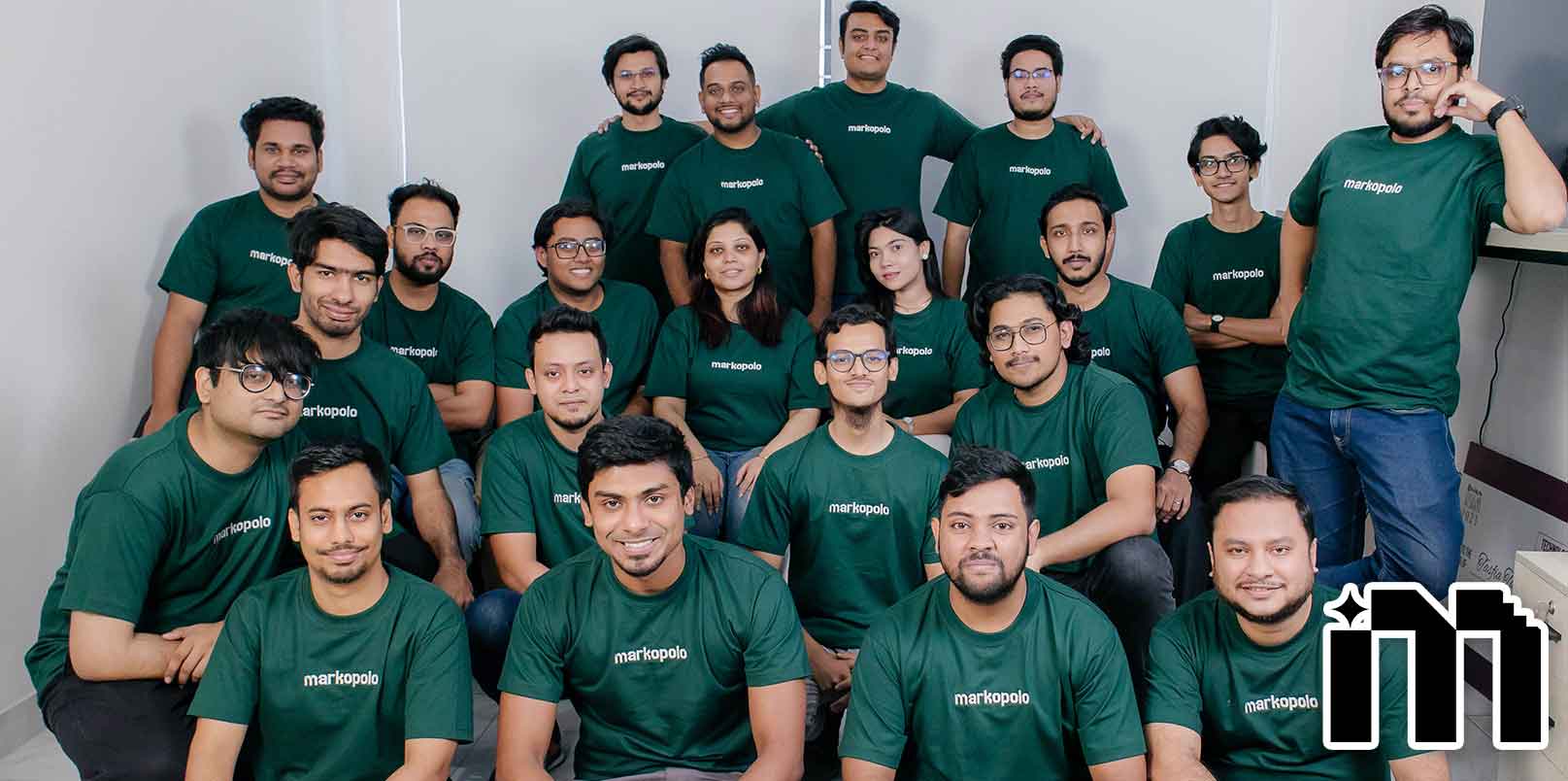
In the fast-evolving e-commerce landscape, checkout processes often represent the final hurdle for online retailers, where many potential sales are lost. Markopolo AI, a company founded by Tasfia Tasbin, aims to tackle this issue by integrating behavioral intelligence with automated multi-channel engagement. The startup is redefining how brands recover lost sales, particularly in the competitive Korean market, as it progresses through the K-Startup Grand Challenge (KSGC) 2025 Phase 2.
In an exclusive interview, Tasbin discussed Markopolo’s rapid growth, its strategic localization for South Korea, and how the company is addressing the high cart abandonment rates that plague e-commerce.
Tasbin revealed that the inspiration for Markopolo AI stemmed from observing a common challenge faced by brands: despite significant investments to attract customers to their checkout pages, 70–75% of potential sales were falling through due to cart abandonment. Traditional solutions, such as generic email reminders, were insufficient. Tasbin noted, “We realized the real issue wasn’t about sending more reminders; it was about understanding why someone abandoned them in the first place and then engaging them in a way that actually works.” This insight led to the development of a system that analyzes behavioral signals to engage customers through platforms like email, SMS, WhatsApp, and even voice calls.
South Korea’s e-commerce market, valued at approximately USD 84 billion, presents a unique opportunity for Markopolo. Notably, the country’s cart abandonment rates, at around 74.5%, exceed the global average. Tasbin highlighted that during KSGC, the team engaged with various stakeholders who emphasized the disparity between the advanced nature of Korea’s e-commerce operations and its outdated cart recovery systems. “Everyone is extremely data-driven and ROI-focused, yet most are still using basic email automation tools,” Tasbin explained. This gap illustrated a market ripe for Markopolo’s innovative solution.
Moreover, Tasbin noted that Korean merchants tend to rely on agency partners for tool selection, in contrast to the direct purchasing model prevalent in the United States. This insight prompted Markopolo to shift its strategy to an agency-first model, allowing it to leverage established networks and relationships.
Since joining KSGC, Markopolo has experienced significant transformations. The collaboration with CNT Tech opened new avenues, leading to discussions with multiple Korean agencies, each managing over 50 merchants. Tasbin emphasized, “The pipeline potential is significantly larger than what we could have achieved through a direct-to-merchant approach.”
On the product side, feedback from the Korean market has driven substantial improvements. Markopolo revamped its analytics dashboard, adding separate Campaign Analytics and Audience Analytics features. Time-decay attribution models were also integrated to enhance performance tracking—a critical requirement in Korea’s data-centric environment. Additionally, the company is transitioning to Meta’s WhatsApp Cloud API to optimize messaging costs and improve delivery performance, which is crucial in a price-sensitive market.
Looking ahead, Tasbin expressed a clear vision for Markopolo’s future as an autonomous commerce engine for global e-commerce brands. “We aim to predict and prevent revenue loss before it happens,” she stated. The next steps involve completing business registration in Korea and developing agency partnerships to ensure long-term commitment and compliance. Simultaneously, the company is focusing on enhancing its platform with AI-powered intent prediction to proactively engage customers likely to abandon their carts.
As Markopolo AI continues to adapt to the nuances of the Korean e-commerce landscape, it is not only aiming to recover lost revenue but also striving to reshape how brands engage with their customers. The insights gained through KSGC have propelled the company toward becoming a formidable player in the sector, proving that smarter engagement can lead to measurable growth.
“Korea has pushed us to become sharper, more localized, and more scalable than before. KSGC provided complete transformation in our strategic partnerships and product improvements based on Korean market feedback.”
This article is part of the “K-Startup Grand Challenge 2025 Interview Series,” which features 40 global startups from Phase 2 of Korea’s leading accelerator program, highlighting how international founders are scaling innovation through Korea’s startup ecosystem.
See also AI Marketing Agency Rainmaker Enhances Strategies Using Big Data for 30% Increased Engagement
 AI Personalization Engines Overwhelm Customers, 59% Say Messaging Harms Experience
 GitLab Faces AI Market Challenges as Analysts Remain Bullish on Stock Potential
 AI Slop Floods Digital Platforms, Hitting 90% of Web Content by 2026
 Reddit Reports $1B Ad Revenue Surge, Highlights AI-Driven Content Commercialization