






















































Meta Platforms (NASDAQ: META) finds itself at a critical juncture as it transitions from a social media giant to a formidable player in generative artificial intelligence and consumer wearables. As of December 23, 2025, the company has developed a “dual-engine” strategy that combines its lucrative advertising business, powered by its suite of applications—Facebook, Instagram, Messenger, and WhatsApp—with substantial investments in “Agentic AI” and spatial computing. This shift follows a turbulent period marked by significant stock declines and operational restructuring.
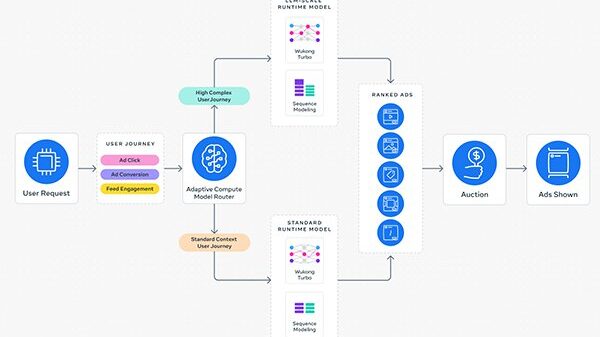
The company’s ambitious pivot to AI and smart wearables has reignited investor confidence, which had taken a hit in previous years. Meta’s stock is approaching historic highs, driven by successful product launches such as the Ray-Ban smart glasses and a more efficient ad targeting system. Despite ongoing challenges, including heightened regulatory scrutiny, Meta’s recovery illustrates its resilience and adaptability in a rapidly evolving tech landscape.
Founded in 2004, Meta’s evolution from a collegiate social network to a global powerhouse has been shaped by landmark acquisitions, notably Instagram in 2012 for $1 billion and WhatsApp in 2014 for $19 billion. The company experienced rapid growth throughout the 2010s, operating under a “move fast and break things” philosophy. However, the dawn of the 2020s brought about existential threats, prompting CEO Mark Zuckerberg to rebrand the company as Meta Platforms in 2021 and initiate a costly foray into the “metaverse.”
The announcement of the 2022 “Metaverse Valley,” which saw shares plummet by over 60% due to external challenges like Apple’s privacy changes and unsustainable expenditures, marked a turning point. In response, Zuckerberg declared 2023 the “Year of Efficiency,” implementing significant layoffs and streamlining operations. This strategic shift laid the groundwork for Meta’s current positioning as a leader in AI, allowing the firm to regain its trillion-dollar valuation by late 2025.
Meta’s revenue streams continue to pivot around the “attention economy,” yet diversification is evident. The Family of Apps generates over 98% of revenue predominantly through digital advertising, leveraging advanced AI-driven ad technologies to engage a user base nearing 4 billion. Notably, WhatsApp Business has evolved into a multi-billion-dollar revenue engine through refined monetization strategies, particularly in emerging markets. Meanwhile, Reality Labs is developing hardware and software solutions, although this segment remains heavily supported by advertising revenues.
Financially, Meta’s Q3 2025 results exhibit robust growth but also rising costs. The company reported revenue of $51.24 billion, a 26% year-over-year increase, largely due to AI-optimized advertising. Operating margins have narrowed to approximately 31% amid intense competition in AI, while capital expenditures are projected between $66 billion and $72 billion in 2025, heavily invested in AI infrastructure like GPU clusters and supercomputing projects.
Leadership remains firmly in Zuckerberg’s hands, who retains majority voting power through Class B shares. His management team, including Susan Li as CFO and Andrew “Boz” Bosworth as CTO, reflects a commitment to disciplined financial oversight and innovative product development. The board supports Zuckerberg’s long-term vision, even as institutional investors express concerns about the sustainability of Reality Labs’ expenditures.
As Meta moves into 2026, its product lineup illustrates a shift towards AI and wearables. The Llama 4 and 5 models serve as the backbone of its AI strategy, while the Ray-Ban Meta Smart Glasses have quickly gained traction, selling over 3 million units in 2025. With the Quest series still dominating the VR market, smart glasses are increasingly seen as the future of interaction with digital content.
However, Meta faces significant competition on multiple fronts. In advertising, Google and Amazon are fierce rivals, with Amazon’s retail media division gaining ground. The AI landscape is similarly competitive, with Meta’s open-weights strategy positioning it against established players like OpenAI and Microsoft. Meanwhile, TikTok continues to vie for the attention of younger audiences, with a recent U.S. court ruling providing Meta with a degree of legal protection against antitrust challenges.
The tech industry in 2025 is characterized by a shift from generative AI to “Agentic AI,” a trend Meta is poised to capitalize on, given the natural integration of AI within its applications. This evolution underscores a broader transition towards a “Post-Smartphone” era, where wearables may define the next major computing platform.
While opportunities abound—such as the potential for WhatsApp monetization and the emergence of AI-enhanced advertising—the company must navigate risks, including significant losses from Reality Labs, regulatory pressures, and ethical concerns surrounding AI deployment. As Meta enters the new year, its ability to balance the lucrative cash flow from social media apps with the high-stakes venture into AI and wearables will be critical in determining its long-term success.
See also Sudhir Vashist Launches SEORCE, an AI-Driven Platform to Transform Digital Visibility
 Google Tests CC: New AI Email Assistant Delivers Daily Summaries from Your Inbox
 AI Search Engines Capture 50% of Queries: Master Answer Engine Optimization Now
 AI-Powered SEO Solutions Transform Rankings and Search Visibility by 2026, Says Goodfirms
 Draftype Secures $2.07M Series A Funding to Enhance AI-Driven Advertising Solutions