










When Rhea launched her small digital agency, she anticipated the typical challenges of building a business: writing blog posts, managing social media updates, and engaging in client calls. However, she was taken aback by a sudden increase in website visits that appeared to stem from nowhere. No viral social media posts or new backlinks seemed to account for the gradual traffic rise. As she examined her analytics more closely, Rhea noticed something peculiar: a surge of “direct” visits coming at odd hours and from locations outside her target audience. This prompted her to delve deeper into a critical aspect of modern business: AI search visibility.
AI tools such as Google’s AI Overviews, ChatGPT, Perplexity AI, and Bing Copilot aggregate information from various sources and present direct answers to users. Consequently, brands can be discovered without necessarily receiving a click-through or referral. Rhea quickly realized that her agency was getting mentioned in AI responses more frequently than she had previously understood, although she lacked insight into where or how to track these mentions.
This transformative landscape means businesses must learn how to monitor their visibility across various AI platforms. Rhea began her exploration with Google’s AI Overviews, which have become prevalent for myriad search queries. These summaries pull data from numerous pages, allowing brands included in Overviews to experience traffic surges without any identifiable referral source. To assess her presence, Rhea employed a straightforward routine: she searched for common industry questions, examined AI Overview text for her brand name, identified content snippets that aligned with her blog posts, and monitored keywords she already ranked for to see if AI tools were reusing her content.
Through this method, Rhea gained valuable insights into when Google featured her content, as well as which blog topics resonated most with AI results. The next step in her investigation involved analyzing mentions in ChatGPT. Although ChatGPT does not provide referral traffic in the same manner as traditional search engines, it frequently references notable brands in response to user inquiries. Rhea began testing this by inputting common questions her clients typically ask, such as “Best digital marketing agencies for local SEO,” “How to fix slow WordPress websites,” and “Tools for technical SEO.” By checking whether ChatGPT mentioned her agency, she could analyze the context of each reference.
Rhea discovered that by producing content that clearly addressed these common queries, she could influence her visibility in AI responses. She noted a pattern where well-ranking content on Google sometimes led to ChatGPT utilizing similar insights. Further expanding her monitoring efforts, Rhea explored Perplexity AI and Bing Copilot, tools that function more like search engines by displaying citations and linking directly to sources. This made tracking her agency’s mentions significantly easier.
Rhea adopted a simple process: she entered her primary keywords into Perplexity AI, checked for citations to her site, reviewed which sections of her content were quoted, and compared which pages appeared most frequently. She found Perplexity AI to be a vital indicator of her AI search visibility, as it highlighted the content that AI tools found trustworthy. Bing Copilot worked similarly; Rhea noted when her site appeared in citations and used the insights from instances where it did not to enhance the depth of her content.
After several weeks of manual tracking, Rhea turned to third-party monitoring tools designed to track AI mentions. These included SERP monitoring platforms with AI detection capabilities, brand mention trackers that now incorporate AI sources, and keyword tools that flag appearances in AI Overviews. Utilizing these tools confirmed her earlier findings and revealed long-term patterns she had initially overlooked.
The importance of tracking AI search visibility cannot be overstated, as AI increasingly functions as a discovery engine. Consumers are relying on its outputs more than ever, and businesses can find themselves included in AI-generated answers without direct referral data. A comprehensive understanding of AI search visibility not only allows brands to know where they are appearing but also helps them recognize the content that AI trusts, identify new opportunities, and fortify their brand presence across multiple platforms.
Rhea now incorporates AI visibility checks into her routine alongside traditional ranking assessments. This practice has continually informed her content strategy, aligning it with the preferences of AI tools. As the shift toward AI-driven search continues to evolve, brands that monitor their mentions and adapt accordingly will maintain a competitive edge, just as Rhea has done.
See also Prometheus Premier Marketing Launches AI Engine ‘The Spark’ for Results-Driven Strategies
 Philippine Agencies Embrace AI Orchestration for 2026 Marketing Strategies
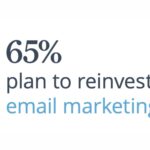 Marketers Reinvest in Email, 65% Embrace AI for Enhanced Customer Engagement by 2026
 AI Panic Mirrors 1990s Internet Chaos: What Marketers Must Learn Now
 Semify Acquires Dragon Metrics to Enhance AI-Driven Reporting and Global Reach