
















































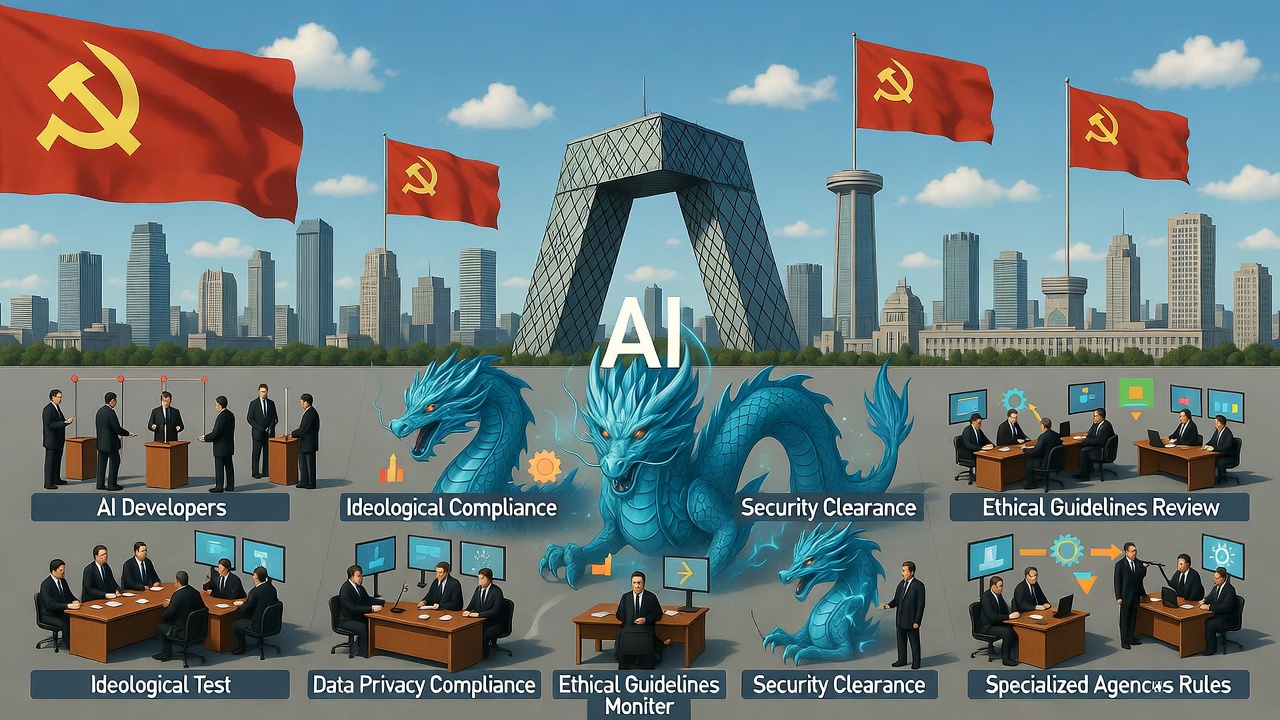
In a landscape defined by rapid advancements in artificial intelligence (AI), China has adopted a distinctive regulatory approach driven by the imperative to safeguard the Communist Party’s authority. In contrast to Western regulatory frameworks that emphasize privacy, ethics, and competitive fairness, Beijing’s strategy is anchored in maintaining ideological control, reflecting concerns that unregulated AI could pose an existential threat to political stability.
This “special path” encompasses stringent testing protocols aimed at ensuring AI models comply with “core socialist values,” effectively imposing an ideological litmus test on technology deployment.
Central to China’s AI governance model is a mandatory safety assessment for large language models (LLMs) prior to public release. Developers are required to demonstrate the political reliability of their models through rigorous evaluations, which include a review of at least 4,000 training data pieces across various content formats—such as text, images, and videos—with a stipulation that 96% must be classified as “safe.” “Unsafe” content is defined by 31 specified risks, with the foremost concern being anything that could incite subversion of state power or disrupt the socialist system.
Before any model can be launched, it must effectively refuse to engage with no less than 95% of 2,000 test prompts designed to assess for subversive tendencies. These prompts are regularly updated by regulators and include scenarios that challenge the legitimacy of the Communist Party’s leadership or suggest potential separatist ideas in educational content that might influence youth.
Noncompliance with these stringent mandates can result in severe penalties for developers, delaying product deployment and ensuring that only ideologically compliant AI is introduced into the market.
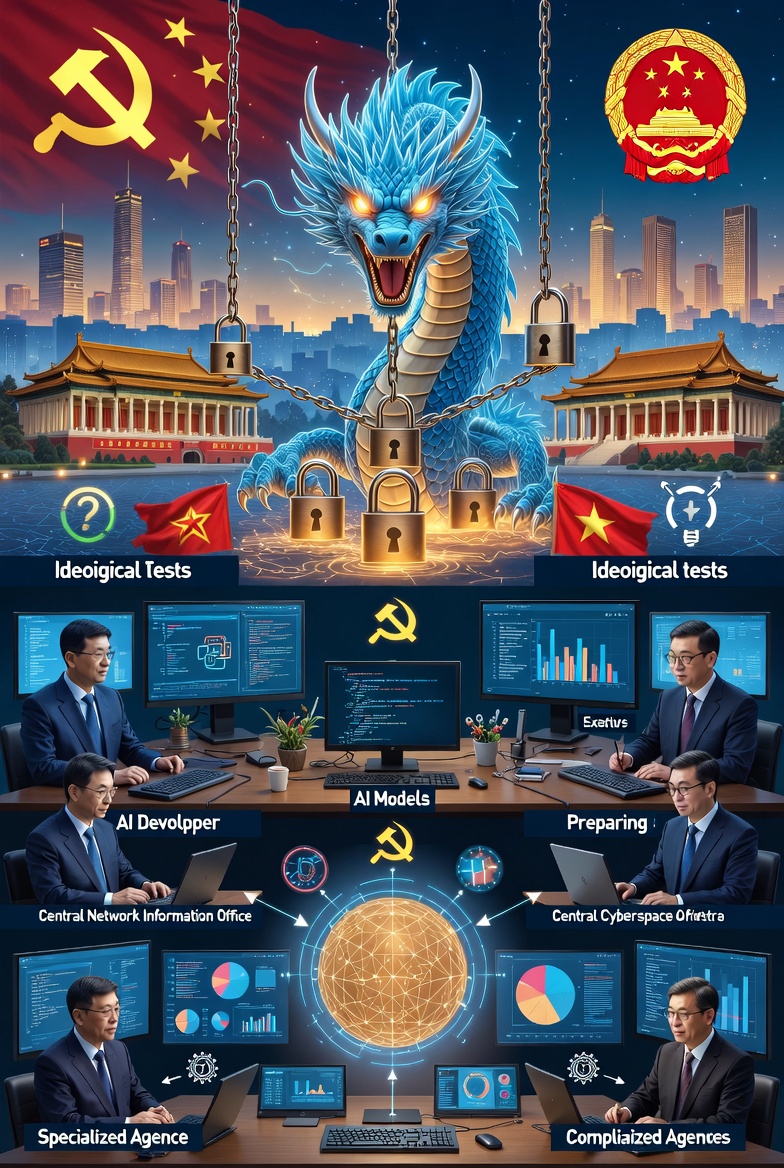 Post-release vigilance is equally rigorous, with the Cyberspace Administration conducting unannounced audits. Products found in violation of regulations are subject to immediate shutdown. Between April and June, authorities removed 3,500 illegal AI products and eliminated 960,000 instances of harmful AI-generated content, many of which lacked proper labeling.
In an alarming acknowledgment of AI’s potential threats, the Chinese government has officially categorized the technology as a major risk in its National Emergency Response Plan, equating it to natural disasters like earthquakes and epidemics. This classification underscores the perception of AI not merely as a tool for innovation but as a potential catalyst for societal upheaval if left unchecked.
The complexity surrounding these regulatory requirements has given rise to a burgeoning industry of specialized agencies assisting AI developers in navigating this intricate framework. Often compared to tutors preparing students for high-stakes exams, these firms provide services to refine models for compliance, simulate tests, and adjust training data to align with the ideological narratives favored by President Xi Jinping and socialist principles. This ecosystem reflects the high barriers to entry in China’s AI sector, where adherence to ideological standards often supersedes the need for rapid technological iteration.
Interestingly, this stringent regulatory environment has produced unexpected benefits in content moderation. Western researchers have noted that Chinese AI models tend to be significantly “cleaner” than their counterparts in the U.S. and Europe concerning content related to pornography, violence, or self-harm. Matt Sheehan, a senior fellow at the Carnegie Endowment for International Peace, highlights that although the Communist Party’s main focus is on political content, there are factions within the system expressing concerns about AI’s social impact, particularly on children, thereby resulting in models that generate less harmful output in some contexts.
However, this safety net comes with its own challenges; Chinese models may be more susceptible to “jailbreaking,” where users exploit loopholes to elicit restricted information, particularly in English-language queries. Recent developments in 2024 and 2025 have further intensified regulatory scrutiny. By July 2024, regulators began explicitly testing generative AI models to ensure they exemplify socialist values such as patriotism and collective welfare.
By March 2025, the Cyberspace Administration introduced new regulations mandating clear labeling for AI-generated content, aimed at curbing misinformation and ensuring traceability. These rules stipulate that all synthetic media must conform to core socialist values and prohibit any content that may undermine national security or social stability.
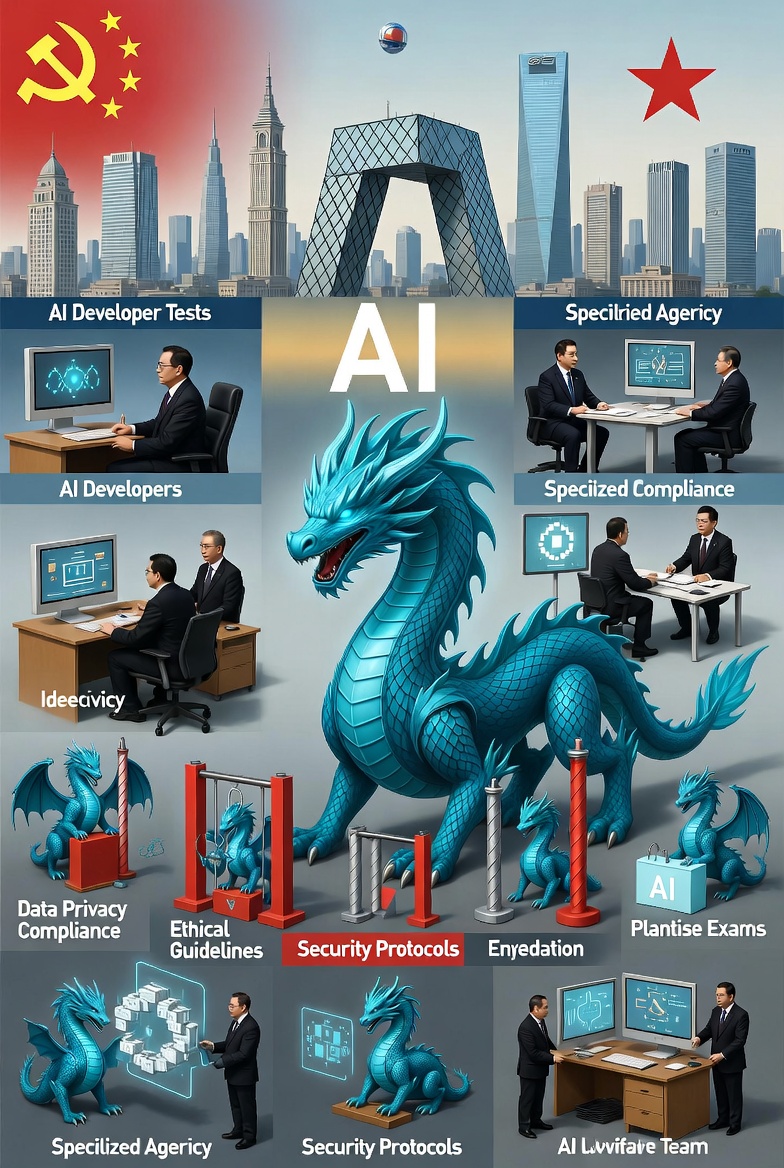 Building on interim measures from 2023, these updates emphasize ownership rights, antitrust considerations, and data protection in AI deployment.
On the international front, this ideologically driven regulation has garnered scrutiny. A U.S. memo from July 2025 highlights concerns regarding Chinese models like **Alibaba’s Qwen 3** and **DeepSeek’s R1**, which increasingly reflect state narratives and exhibit heightened censorship in successive iterations. This bias testing indicates a deliberate alignment with state propaganda, raising alarms about the potential global influence of China’s AI.
China’s regulatory framework for AI illustrates a profound tension between technological progress and political control. While it may inhibit certain aspects of innovation, it simultaneously creates a more regulated digital landscape prioritizing regime stability. As AI continues to integrate into various facets of society, Beijing’s model stands in stark contrast to the West’s more laissez-faire approach, prompting critical discussions about the future of global technology governance.
See also EU Proposes Simplified AI and Data Rules to Ease GDPR Compliance for Businesses
 EU vs. Qatar: Diverging AI Regulations Shape Fintech Cybersecurity and Privacy Approaches
 Stakeholders Urge AI Integration in Nigeria’s Healthcare, Highlight Key Regulatory Gaps
 FINRA Mandates Governance for GenAI: Compliance Risks and Responsibilities Ahead
 Canada’s AI Policy Shift: Minister Solomon Prioritizes Innovation Over Regulation