















































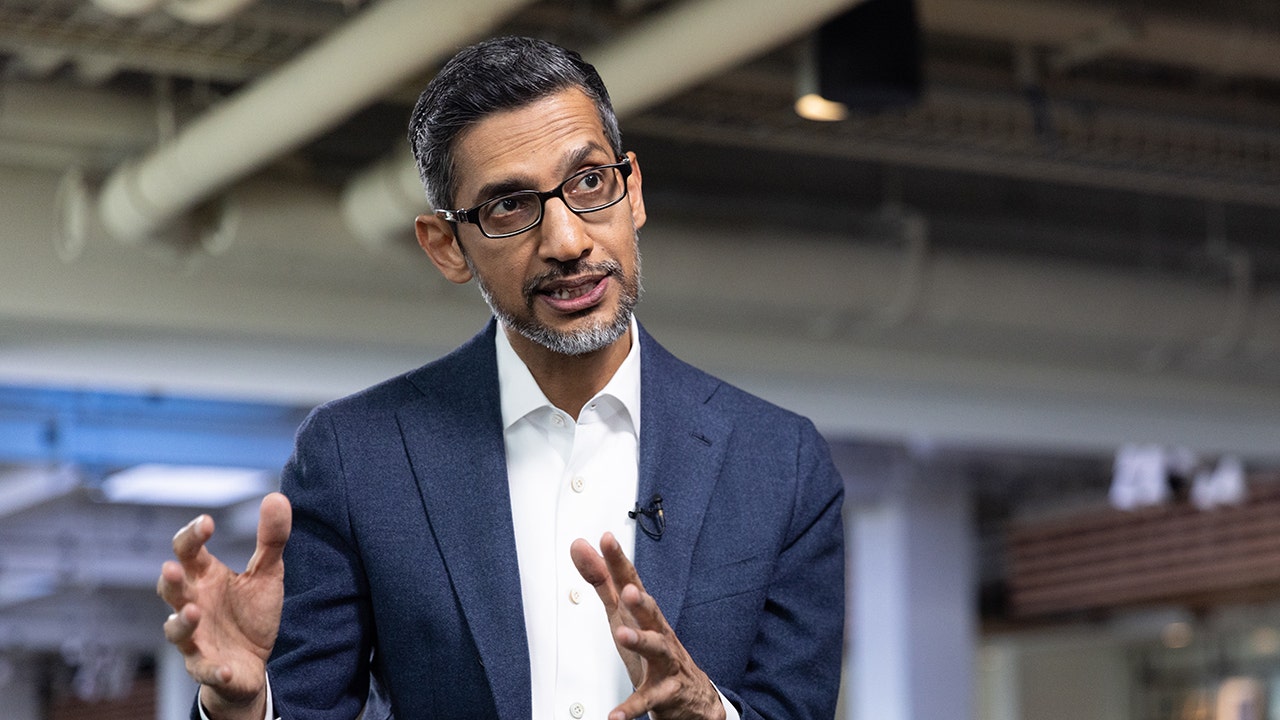
Google CEO Sundar Pichai emphasized the urgent need for balanced regulation of artificial intelligence (AI) in the United States during a recent interview on “Fox News Sunday.” Speaking with Shannon Bream, Pichai asserted that the U.S. risks falling behind China if it fails to establish coherent policies amid a flurry of over 1,000 AI-related bills now making their way through state legislatures. “How do you cope with those varied regulations, and how do you compete with countries like China, which are moving fast in this technology?” he posed, advocating for national-level frameworks that encourage innovation while maintaining necessary guardrails.
Pichai’s remarks come as Google intensifies its efforts in the AI sector, including a significant $40 billion investment in data centers in Texas. This move is part of a broader strategy to enhance Google’s AI capabilities and reinforce its competitive stance against rivals like NVIDIA, which has been a dominant force in AI chip manufacturing. The CEO highlighted the dual-edged nature of technology, noting that while AI can deliver substantial societal benefits, such as advancements in drug discovery and cancer treatment, it also poses risks if misused by malicious actors.
“Any technology has a dual side to it,” Pichai stated. As he underscored the importance of collaboration between governments and tech firms, he called for the establishment of international frameworks to prevent the weaponization of AI technologies. “Part of it is us as companies making our products better. Part of it is governments working together to create standards and frameworks by which we all use technology in a cooperative way,” he explained.
In a related development, Google is implementing defensive AI measures to combat cybercrime. Pichai pointed to SynthID, a tool developed by Google DeepMind that identifies AI-generated images and videos. He referenced a recent court ruling in Google’s favor against a phishing operator that targeted millions globally, emphasizing the need to harness AI for protective purposes. “You want to use AI on the defense side too,” he remarked, illustrating the technology’s potential in detecting criminal activities.
Pichai also revealed ambitions for a project dubbed “Suncatcher,” which aims to create solar-powered AI data centers in outer space. He suggested that this initiative could become a commonplace method of data center construction within the next decade, reflecting the technology sector’s shift towards sustainable solutions.
As part of the larger AI landscape, Amazon has announced plans to invest up to $50 billion in building AI infrastructure for U.S. government agencies, indicating the escalating competition among tech giants in the realm of artificial intelligence. This funding mirrors the strategic moves of other major companies, further ensuring that the U.S. remains a key player in the AI race.
When confronted with concerns about AI undermining human thought, Pichai likened current apprehensions to skepticism faced by Google nearly 25 years ago. “I think as a society we will adapt, and I expect our creative days are going to be even richer in the future,” he asserted, suggesting a future where AI and human creativity coexist harmoniously.
The discussion surrounding AI regulation, investment, and ethical considerations is becoming increasingly pertinent as technology continues to evolve at a rapid pace. Pichai’s insights underscore the necessity for a thoughtful approach that balances innovation with safety, aiming to position the U.S. as a leader in this transformative field. With initiatives like Google’s data centers and defensive AI applications, the tech industry is poised for significant advancements, provided that cohesive regulatory frameworks can be established.
See also Tier-II Cities Drive Real Estate Boom in India: Ayodhya, Lucknow, and More See Surge in Demand
 Australia Unveils First National AI Plan, Emphasizing Voluntary Business Compliance
 OSTP Faces Backlash for Deregulating AI Amidst Growing Public Safety Concerns
 SAI360 Acquires Plural Policy to Enhance AI-Driven Regulatory Compliance Solutions
 Federal Government Announces National AI Plan, Relies on Existing Laws to Manage Risks