


























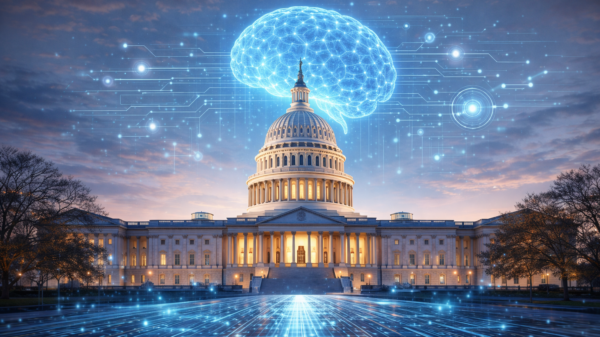









SPRINGFIELD, Ill. (WTVO) — Legislators in Illinois have introduced a comprehensive package of artificial intelligence bills designed to establish one of the most robust regulatory frameworks for AI in the United States. This initiative, unveiled on Thursday, includes six proposals that aim to address key areas where AI is increasingly impacting society, including education, employment, and professional services.
Among the proposed measures is SB3492, which mandates the Illinois State Board of Education to develop statewide guidance for the integration of artificial intelligence, quantum computing, and other rapidly evolving technologies into K-12 education. This legislation emphasizes the importance of a workforce-oriented curriculum that prepares students for future job markets.
Another significant proposal, HB5113, seeks to establish a statewide Artificial Intelligence Use in Education Commission. This body would investigate the implications of AI tools and smartphones on student learning, mental health, and classroom behavior. As part of its mandate, the commission is required to conduct ten public meetings throughout Illinois and issue semiannual reports until 2030.
In light of automation’s growing role in the workplace, SB3571 would compel employers to report layoffs attributable to artificial intelligence. Under this legislation, companies would need to disclose the number of employees whose jobs were eliminated due to AI-driven automation. Additionally, the Illinois Department of Commerce and Economic Opportunity would be tasked with including AI-related causes in any public layoff reports.
Licensing requirements are also addressed in SB3601, which would require licensed professionals—including financial advisers, real estate agents, and cosmetologists—to clearly communicate when individuals are interacting with AI instead of a human representative. This measure aims to enhance transparency in professional interactions increasingly mediated by AI technologies.
Two nearly identical bills, SB3502 and SB3590, propose frameworks for AI product liability. These measures would treat certain AI systems similarly to traditional consumer products, enabling individuals and businesses to sue AI developers for defects, inadequate warnings, or unmet warranty promises. The legislation also stipulates that companies deploying AI systems could be held liable for significant alterations or misuse of those systems.
Together, these bills signal Illinois’s shift toward a sector-specific regulatory model for AI, in contrast to a single overarching law. If enacted, Illinois would position itself as one of the leading states in the country in establishing guidelines for the use of AI technologies and determining accountability when such technologies cause harm.
This legislative push comes amid increasing scrutiny of AI’s role in society, particularly as its applications expand rapidly across various sectors. As policymakers grapple with these technologies, Illinois’s approach could serve as a model for other states seeking to navigate the complexities of AI regulation.
See also FTC’s Limited Authority to Preempt State AI Laws Under Executive Order Explained
 Korea’s Job Forecast: 2.8% Growth in Semiconductors Amid 1% Overall Decline
 Canadian Boards Push for AI Decision Accountability in 2026, Elevate Leadership Training
 IEEE Mini-MBA Launches to Meet Corporate Demand for AI Leadership and ROI Targets
 Ramsey Theory Capital Launches Real-Time AI Governance to Meet New RAISE Act Standards