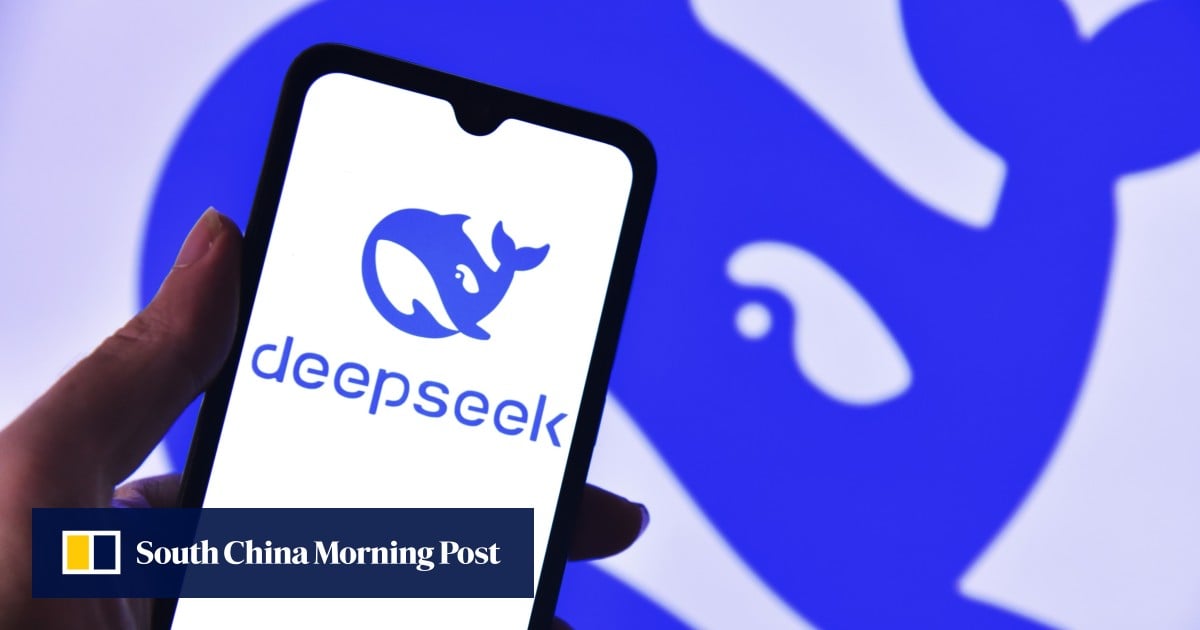
Chinese companies are addressing the challenges posed by artificial intelligence (AI) in a manner distinct from their Western counterparts, as highlighted by industry insiders. Concerns surrounding the safety and reliability of Chinese AI models have hindered their global adoption, with DeepSeek—a prominent player in the field—encountering bans or restrictions in over ten countries, including the United States, Italy, and India. This has raised questions regarding the effectiveness of these models in the international market.
In a podcast released on Sunday, former DeepSeek researcher Tu Jinhao emphasized that the intense focus on catching up with the United States in AI development has overshadowed necessary work on AI safety protocols. Tu, who joined the Hangzhou-based start-up while still in high school, voiced concerns that “all the computational resources are being spent training AI models, with little left to spend on safety work.” His comments reflect a wider anxiety among experts about the implications of prioritizing advancement over responsible deployment.
The discourse around AI in China has increasingly become a reflection of the broader geopolitical tensions between China and the United States. While the U.S. has implemented strict regulations governing the use of AI technologies, particularly those developed in China, industry insiders argue that these measures do not take into account the unique landscape and regulatory challenges of the Chinese market. They contend that the Western perspective often fails to appreciate the local context in which these technologies are developed and deployed.
Despite these concerns, DeepSeek has made significant strides in AI technology, yet its global outreach remains hampered by skepticism from international users. The company was forced to navigate a complex web of regulations and perceptions that have left some questioning the capabilities and safety of its models. The conflicting narratives reflect a broader struggle for Chinese tech firms as they aim to expand their footprint while facing heightened scrutiny.
As the debate over AI safety evolves, Tu’s insights shed light on a critical issue: the allocation of resources within Chinese AI companies. The prioritization of rapid development often leads to insufficient investment in safety measures, a point that may resonate with industry stakeholders worldwide. The implications of such a strategy could have long-term effects not just for Chinese firms but for the entire global AI ecosystem.
Looking ahead, the landscape for AI development and regulation is likely to change. With increasing calls for a balanced approach that integrates safety into the development process, Chinese companies may need to rethink their strategies if they wish to be seen as credible players on the global stage. The challenge will be to harmonize ambitious technological aspirations with the requisite safeguards that could foster greater trust among international users.
In conclusion, the ongoing discourse surrounding AI in China presents a window into the complexities of global technology governance. As **DeepSeek** and similar companies navigate this intricate environment, the outcomes of their strategies will not only shape their future but also influence the global conversation about the role of AI in society. Ensuring that safety remains a cornerstone of AI innovation may prove to be crucial as the world grapples with the rapid advancements in this transformative field.
See also Wall Street Dips as AI Competition Threatens Tech Margins Amid Renewed U.S.-Iran Tensions
 AI Adoption Fuels 55,000 U.S. Layoffs in 2025 as Companies Restructure Workforce
 Amazon and Prosus Form $100M AI Cloud Partnership to Boost Global Expansion
 Sandisk’s AI NAND Demand Fuels 31.8% Stock Surge Amid Kioxia Supply Deal
 Healwell AI Faces Crucial 2026: Must Prove Growth Post-Transformation Amid 52% Stock Decline