
















































North-West University (NWU) has become the first university in South Africa to implement an official artificial intelligence (AI) policy, a move that positions the institution as a leader in AI governance within the higher education sector. The policy was approved during the university council’s recent meeting, marking a significant step in shaping the discourse around responsible AI usage in higher education and research.
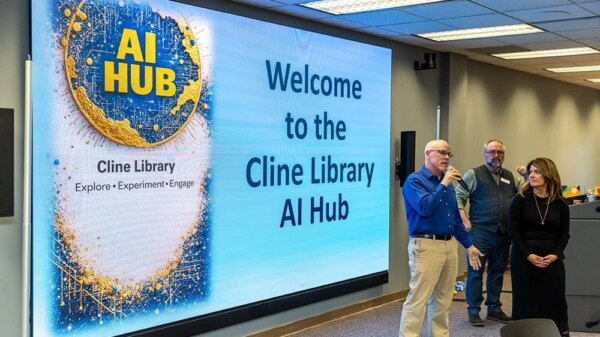
Prof. Anné Verhoef, director of the NWU AI Hub, described the approval of the policy as a milestone. He emphasized that many universities have hesitated in formulating AI policies due to the rapid advancements in the field. However, he stated that a policy can be crafted in a flexible manner, allowing it to adapt to ongoing developments while simultaneously providing a framework for safe and effective management of AI at the university.
The AI strategy at NWU is designed to integrate AI in a manner that is human-centered, ethical, and responsible, spanning across teaching and learning, assessments, research, and postgraduate supervision. The policy explicitly outlines the roles and responsibilities of students, lecturers, researchers, and administrative management, aiming to establish clear accountability in the governance of AI.
Amid growing uncertainty at many universities regarding where AI governance should reside—be it in research, teaching, or administration—NWU’s policy clarifies these roles and provides a structured governance model. According to Verhoef, the policy situates AI governance within the university’s IT department, recognizing AI as both a tool and application. An AI Steering Committee, comprising representatives from students, faculty, and administration, has been tasked with overseeing AI-related issues. This committee will report to the IT Committee, which in turn communicates with the University Management Committee, ensuring streamlined information flow to faculties and Senate as necessary.
The development of the policy followed a comprehensive consultation process that involved input from various faculties, Senate, and refinement committees prior to its council approval. Verhoef noted that many of the concerns raised during these consultations tended to be philosophical rather than technical, with a predominant focus on maintaining a human-centered approach.
In addition to ethical considerations, the policy also addresses practical concerns related to AI’s environmental impact, including its energy and water consumption. By emphasizing sustainable AI practices, NWU aims to set a precedent for responsible AI integration in higher education.
With this policy, NWU not only reinforces its position in the national discourse on AI governance but also sets a benchmark for other institutions aiming for responsible, human-centered, and sustainable AI practices in the educational landscape. This initiative is expected to influence future developments in the use of AI across South African universities, as well as contribute to broader conversations about AI in the global academic community.
See also South Carolina Lawmakers Push for AI Regulations Amid Federal Executive Order
 eSafety Commissioner Calls for Action Against Grok’s Misuse on X Amid Rising Concerns
 Kazakhstan Enacts First AI Law, Establishing Risk Classifications and Content Regulations
 Top 20 AI GRC Software for 2026: Essential Tools for Risk and Compliance Management
 AI Governance Shifts: Experts Advocate for AI to Oversee AI Systems Effectively