





















































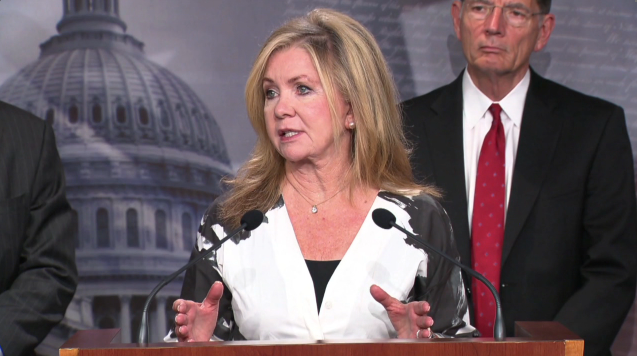
NASHVILLE, Tenn. – U.S. Senator Marsha Blackburn (R-Tenn.) today introduced a comprehensive policy framework aimed at regulating artificial intelligence (AI) through the proposed TRUMP AMERICA AI Act. The legislation seeks to unify regulatory standards across states, ensuring protections for children, creators, conservatives, and communities, while promoting robust AI innovation in the United States. This initiative follows a directive from former President Trump to establish a single rulebook to address the current fragmented landscape of state laws affecting AI development.
“Instead of pushing AI amnesty, President Trump rightfully called on Congress to pass federal standards and protections to solve the patchwork of state laws that have hindered AI innovation,” Blackburn stated. “I look forward to introducing the TRUMP AMERICA AI Act in the new year to create one federal rulebook for AI to protect children, creators, conservatives, and communities across the country and ensure America triumphs over foreign adversaries in the global race for AI dominance.”
The framework is designed to safeguard what Blackburn refers to as the “4 Cs” — children, creators, conservatives, and communities — from exploitation and misuse while facilitating a more innovation-friendly environment for American AI companies. It builds on prior legislative efforts, including the Kids Online Safety Act and the NO FAKES Act, both aimed at enhancing protections for vulnerable groups.
To protect children, the act mandates a duty of care on AI developers, requiring them to assess and mitigate potential harms linked to their technologies. It calls for regular evaluations of algorithmic systems to identify risks impacting users’ psychological and physical well-being. Additionally, reforms to Section 230 are proposed, incentivizing the development of tools that allow parents to block unsuitable content for minors. Platform providers would also be compelled to implement safeguards against exploitation, including tools designed to shield minors from serious risks like sex trafficking and mental health issues.
In terms of creator protections, the TRUMP AMERICA AI Act would establish a federal right for individuals to litigate against companies that utilize their data without consent for AI training. This includes compensating creators for unauthorized digital replications in audiovisual works. The act also stipulates that derivative works produced by AI without consent would not qualify for copyright protection, thereby reinforcing the rights of content creators in a rapidly evolving digital landscape.
The proposed legislation also addresses concerns from conservatives, aiming to mitigate perceived biases in AI systems. It calls for regular audits of high-risk AI systems to prevent discrimination based on political affiliation and other protected characteristics. Federal agencies involved in AI development would be required to provide ethics training to their personnel, which is intended to ensure the responsible deployment of these technologies.
On the community front, the act would mandate companies and federal agencies to report quarterly on AI-related job impacts, such as layoffs and job displacements, to the Department of Labor. Furthermore, data center operators would be held accountable for the complete costs associated with their operational infrastructures, ensuring that these expenses do not burden local ratepayers.
The TRUMP AMERICA AI Act has garnered endorsements from notable figures, including Mike Davis and Steve Bannon. Davis emphasized the bill as a significant victory for the MAGA movement, asserting it would protect American values and freedoms while positioning the country as a leader in AI innovation. Bannon underscored Blackburn’s commitment to guarding consumers against potential abuses in the AI landscape, framing the act as a necessary measure to prevent exploitation in an unregulated environment.
As the legislative process unfolds, the TRUMP AMERICA AI Act stands as a pivotal move in shaping the future of AI governance in the U.S. By establishing a unified framework, it aims to balance the scales between fostering innovation and safeguarding the rights of individuals and communities, potentially setting a global precedent in AI regulation.
See also Europe’s AI Sector Faces $500B Investment Gap as Omnibus Proposal Falls Short
 Windsor Launches AI Chatbot Pilot to Streamline 30% of Provincial Offences Calls
 Texas Legislators Defend AI Regulation Amid Trump’s Threat to Federal Funding
 OpenAI Updates AI Guidelines for Users Under 18, Enhancing Safety and Transparency