By Choonsik Yoo (December 26, 2025, 00:56 GMT) — The South Korean administration of President Lee Jae Myung has made significant strides in its ambitious overhaul of the nation’s artificial intelligence (AI) strategy, recently gaining traction after earlier challenges posed by domestic political dynamics. However, the government’s AI policy agenda now confronts heightened regulatory hurdles and a pressing need to bolster public confidence. Businesses are voicing concerns that vague obligations stemming from the AI Basic Act and an accelerated implementation timeline could hinder AI adoption, exacerbating fears of diminished public trust in the wake of various digital-security breaches. Additionally, global market fluctuations and the looming specter of an AI bubble could derail South Korea’s investment initiatives, exposing its economy to potential shocks.
Over the past six months, the Lee administration has focused on dismantling and reconstructing a disjointed national AI framework. This foundational work has positioned the government to assert its renewed commitment to compete on the global AI stage. Yet, this rapid administrative transformation raises critical questions about the sustainability of its competitive edge amid tightening pressures, both domestically and internationally.
As the government seeks to navigate its AI agenda, the response from the business sector has been mixed. Many companies caution that the ambiguous guidelines set forth in the AI Basic Act could lead to confusion and hinder the sector’s growth. The rapid pace of policy implementation has led some industry leaders to express concerns that a lack of clarity surrounding regulatory obligations may create obstacles that could stifle innovation and investment in AI technologies.
Moreover, a series of recent digital-security incidents has shaken public trust, prompting calls for greater transparency and accountability in AI deployment. This combination of regulatory uncertainty and public skepticism could prove detrimental to South Korea’s ambitions of becoming a leader in AI development. As businesses await clearer guidelines, some fear that a lag in adoption rates could hamper the country’s long-term competitiveness.
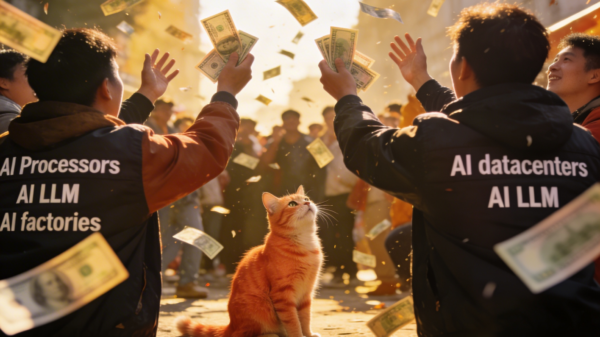
In the broader context, South Korea’s push to become a global AI powerhouse is set against a backdrop of intensifying global market volatility. Investors are increasingly wary of what some analysts describe as an AI bubble, a phenomenon that could undermine confidence in tech investments and hinder the nation’s economic recovery efforts. The risks posed by this potential bubble are compounded by rising geopolitical tensions and shifts in international trade dynamics, which may further complicate the landscape for domestic AI ventures.
As the country navigates these complexities, the Lee administration’s ability to convert its initial policy momentum into sustained competitive advantages will be critical. The government must address regulatory challenges while simultaneously reassuring the public about the safety and efficacy of AI technologies. This balancing act will be essential for fostering a climate conducive to innovation and investment.
Looking ahead, South Korea’s commitment to AI development will likely hinge on its capacity to establish a coherent regulatory framework that can adapt to both technological advancements and public concerns. By addressing these pressing issues, the government may better position itself to harness the full potential of AI, ensuring that it not only keeps pace with global competitors but also meets the expectations of its citizens. As the landscape evolves, the intersection of technology, regulation, and public trust will play a pivotal role in shaping the future of AI in South Korea.
See also Trump Signs Executive Order to Preempt State AI Regulations, Promoting National Framework
 New York’s New AI Law Sets $500M Revenue Threshold, Effective January 2027
 California Finalizes CCPA Regulations: Key Insights on AI Decision-Making and Risk Assessments
 Trump’s New AI Order Aims to Federalize Regulation, Empower Industry Growth