














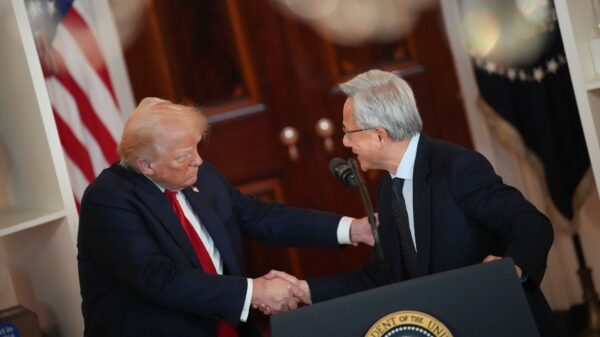








































An executive order signed by President Donald Trump could place Texas at odds with the federal government over a new state law aimed at regulating artificial intelligence (AI). The order, issued last week, threatens to withhold federal broadband funding from states that adopt AI regulations deemed “onerous and excessive,” potentially affecting Texas’ allocation of up to $3.3 billion intended to expand broadband access across the state.
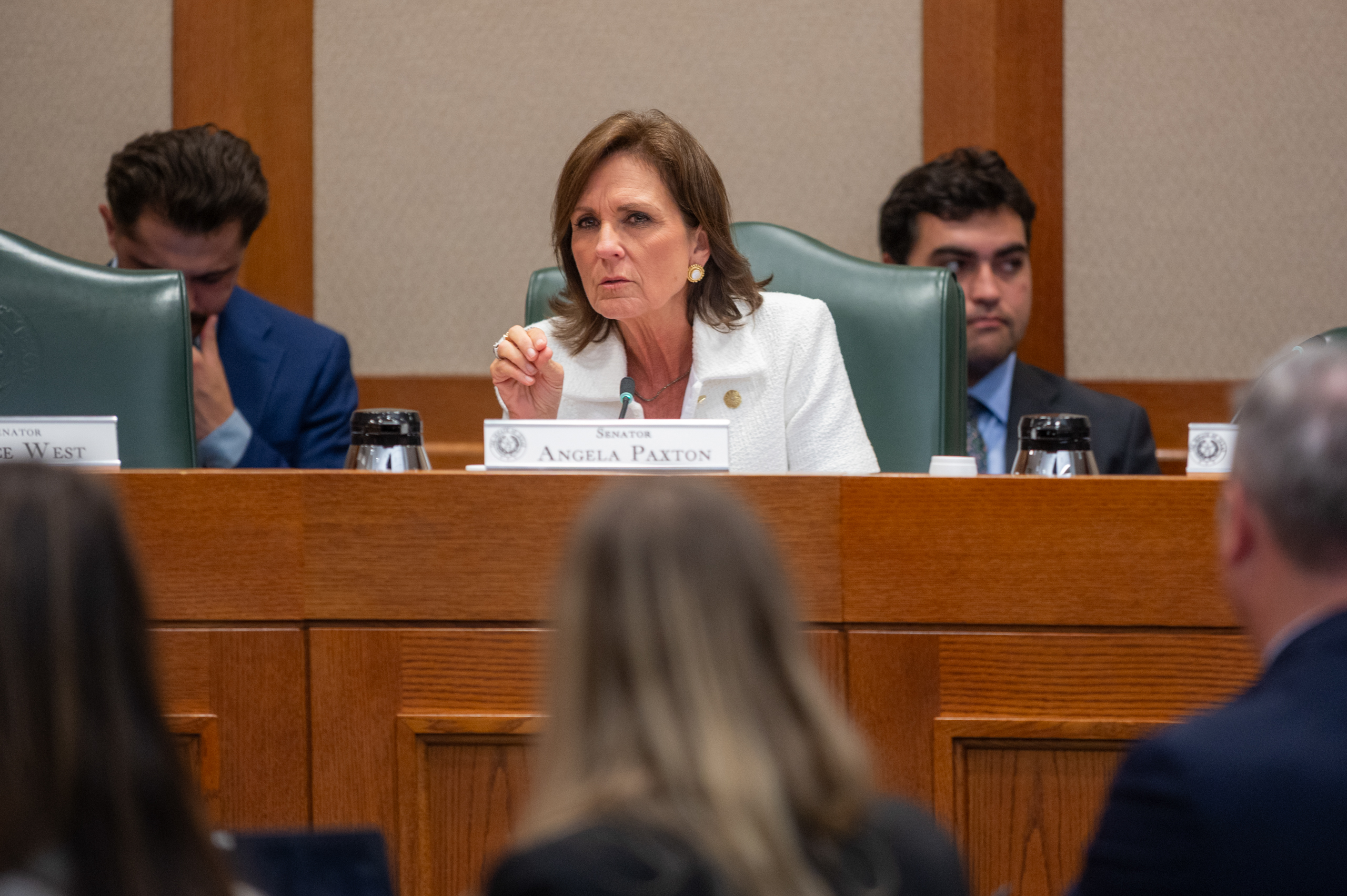
Texas has enacted one of the nation’s most comprehensive AI regulations, set to take effect on January 1. A bipartisan coalition of state legislators is actively working to defend the law, arguing that unregulated AI poses risks to children and consumers alike. State Senator Angela Paxton, R-McKinney, emphasized the importance of responsible oversight, stating, “I want Texas to be a leader in AI, but you know what, I don’t want Texas to be a leader in AI-generated child porn.”
Paxton, who has a background in education, cited concerns over the exploitation of AI technologies to produce child pornography and the proliferation of chatbots that encourage self-harm. These issues motivated her to advocate for reasonable regulations in Texas. Along with 15 other state senators, she penned a letter to U.S. Senators Ted Cruz and John Cornyn, urging them to support the state’s law and resist any federal attempts to limit state-level AI regulations.
The letter from Paxton and her colleagues stressed that a federal moratorium on AI regulations would undermine their efforts to combat child pornography, protect data privacy, and prevent discrimination. “Surely we can all agree that these kinds of state protections do not interfere with legitimate innovation and are reasonable and appropriate,” the letter asserted.
State Senator Carol Alvarado, a Democrat from Houston, rejected the notion that an executive order could override state law, contending that only Congress has the authority to do so. “We just had the government shut down, so I just don’t have a lot of confidence in Washington being able to get something done that puts in protections for our constituents,” she remarked.
The Texas law prohibits government agencies from employing AI systems for “social scoring” and bars companies from creating AI tools that incite self-harm, violence, or criminal behavior. Additionally, it restricts the use of AI in ways that limit access to political content or infringe on freedoms of expression or association.
While Cornyn has expressed apprehension regarding federal preemption of state AI regulations, Cruz, who stood beside Trump during the executive order signing, has been a vocal advocate for a moratorium on state regulations. He argues that a fragmented regulatory landscape could hinder AI development. “It’s a race, and whoever wins, the values of that country will affect all of AI,” Cruz stated during the signing ceremony. “We want American values of free speech, individual liberty, and respecting the individual.”
Trump’s order includes an exception for state laws addressing “child safety protections,” but the enforcement of this provision remains ambiguous. Paxton and others worry that the executive order may create a chilling effect on state legislatures seeking to regulate AI, irrespective of any exceptions.
In defending Texas’ law, Paxton noted that it effectively addresses the misuse of technology while still fostering innovation. Brendan Steinhauser, CEO of the nonprofit Alliance for Secure AI, supported this viewpoint, asserting that Texas’ regulation is a necessary measure to “pump the brakes” on AI. He highlighted the persistent deadlock in Washington, claiming that state governments are better suited to navigate the rapid advancements in technology.
“You can’t get Republicans and Democrats to hardly agree on anything, and we were able to do that in Texas,” Steinhauser commented. “I just think people in their local communities have the right to speak on this … If we just go extremely fast without safeguards, guardrails, accountability, transparency, we could be in a situation where big tech just sort of runs the country and we don’t have a say.”
While Paxton agrees with Trump and Cruz on the necessity of supporting AI innovation, she expressed frustration over Congress’s failure to establish a national regulatory framework. “It’s something that’s important for all of us to work together on, but the reality is, it’s hard for Congress to do stuff,” she noted. “So in the meantime, I don’t think the states should be locked down to take care of those things … I think a measured approach to things, especially when we already know they’re dangerous, makes all the sense in the world.”
See also OpenAI Updates AI Guidelines for Users Under 18, Enhancing Safety and Transparency
 Egypt Advances Global AI Framework with UN Resolution for Telecom Development
 New York Enacts RAISE Act for AI Safety, Mandating Transparency and Reporting Standards
 AI Regulation Looms as Anthropic Reveals 96% Blackmail Rates Amid Rapid Development