













































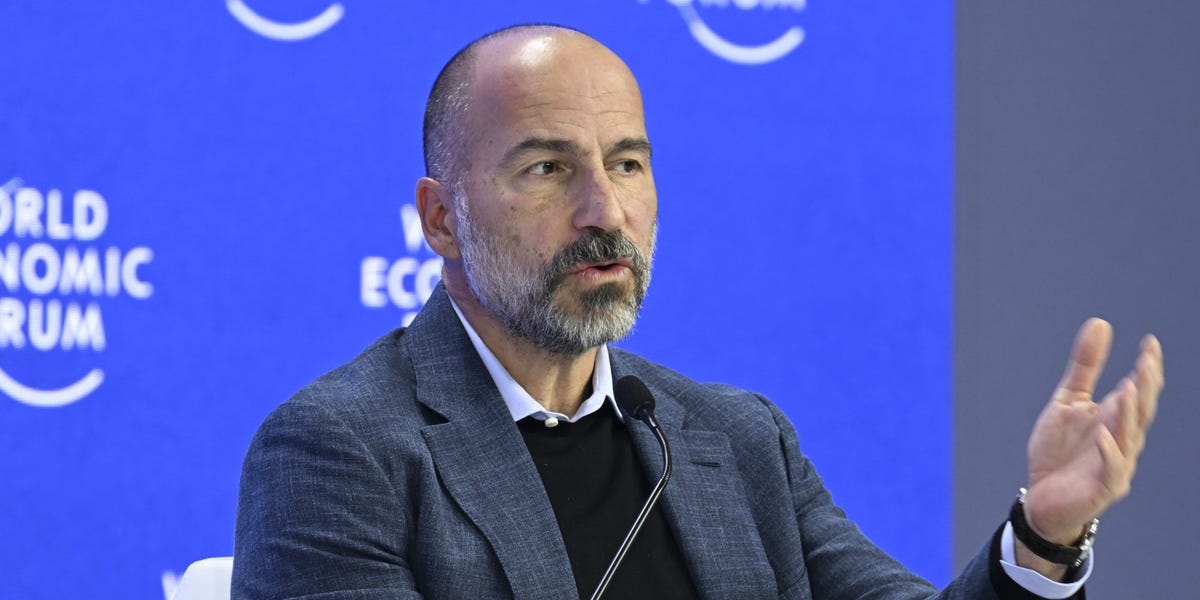
During a discussion at the World Economic Forum in Davos, Uber CEO Dara Khosrowshahi expressed skepticism regarding the genuine adoption of artificial intelligence (AI) by many companies. Khosrowshahi remarked that while firms may be investing heavily in AI tools, the reality is often more complex than it appears, describing a number of organizations as “play-acting” when it comes to their digital transformation efforts.
Khosrowshahi emphasized that true integration of AI into business processes requires a foundational approach, rather than superficial applications. “Some companies are saying the right words,” he said, “but they are play-acting their way into a pretend transformation.” He cited examples of companies automating simple tasks, such as using AI to summarize client pitches, which he characterized as the “easy stuff” that does not set businesses apart.
The Uber CEO noted that meaningful changes necessitate a complete overhaul of existing processes. He specifically pointed to Uber’s own journey in enhancing customer service through AI. Initially, the company had some success by applying AI within its existing framework of old policies. However, Khosrowshahi highlighted a significant breakthrough that occurred when the firm decided to rebuild its system from the ground up, assigning clear underlying goals to AI agents, such as ensuring a positive customer experience.
“Allowing the AI to reason through that and throwing away all of the old policies is turning out to be the most promising way forward,” Khosrowshahi stated. He described companies as being composed of a “bunch of policies,” indicating that to fully realize AI’s potential, they must dismantle existing rules and start anew.
Internally, Uber developers have begun utilizing AI tools such as Anysphere’s Cursor and Anthropic’s Claude. As businesses across sectors ramp up their investments in AI with hopes of unlocking productivity gains, a recent survey by RBC Capital revealed that 90% of IT professionals plan to increase their AI spending this year. Despite this optimism, concerns linger about whether AI is meeting expectations and fears that it may adversely affect workers’ skills.
Khosrowshahi acknowledged the challenges of effectively implementing AI within an organization. “You have to survive through a bunch of car crashes internally to do so,” he admitted, underscoring the tumultuous nature of integrating advanced technologies into established business frameworks.
The discourse at Davos reflects a broader industry trend where companies are navigating the complexities of digital transformation while managing employee concerns about the implications of AI. As organizations strive to harness the full potential of artificial intelligence, the distinction between genuine innovation and superficial compliance will likely become increasingly significant.
See also Salesforce CEO Benioff Calls for AI Regulation, Labels Models ‘Suicide Coaches’
 IBM Launches Enterprise Advantage and GRAMMY IQ, Enhancing AI Governance and Engagement
 India’s MeitY Exposes Regulatory Gaps in AI Governance Post-Grok Incident
 South Korea Enforces World’s First AI Safety Law, Establishing New Regulatory Standards
 Ireland’s Medtech Sector Embraces AI and Femtech for €15B Growth by 2026