

































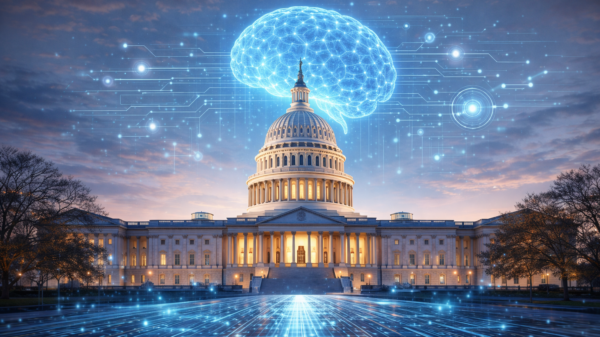











The global artificial intelligence (AI) market is poised for significant expansion, projected to grow at a compound annual growth rate (CAGR) of approximately 36.6 percent between 2025 and 2030, ultimately reaching nearly US$ 1,811.75 billion by the end of the decade. This growth highlights the increasingly transformative role that AI plays across diverse sectors, including healthcare, finance, manufacturing, and governance. Currently, the United States maintains its position as the leader in AI development, supported by robust research, substantial public and private investment, and favorable policy frameworks. Following closely is China, propelled by substantial state funding and a comprehensive legal infrastructure aimed at achieving AI dominance by 2030. India ranks third globally in AI competitiveness, demonstrating promising progress despite existing gaps in computing power and advanced research capabilities.
China’s rapid ascent in the AI sector is largely attributed to sustained and incremental policy support. The 2017 New Generation AI Development Plan established clear targets for global AI leadership, underpinned by public investments like the US$ 8.2 billion National AI Industry Investment Fund. This is further enhanced by the US$ 138 billion National Venture Capital Guidance Fund, dedicated to AI startups and related sectors, including robotics. Local governments contribute by offering subsidies and relaxed regulations in AI pilot zones, while strategic computing infrastructures such as the National Integrated Computing Network are enhancing access for large language models (LLMs). A strong emphasis on AI education and university-industry partnerships has cultivated a talent pool, facilitating rapid commercial adoption and fostering a competitive AI landscape.
On the governance front, China’s approach is predominantly security-focused and statute-driven, integrating laws such as the Personal Information Protection Law (PIPL) and the Data Security Law. These legal structures impose obligations like risk assessments and algorithm filings, allowing the state to maintain control over national security and social order. Through initiatives like the Digital Silk Road, China is also expanding its AI footprint internationally by exporting cloud services and data centers, enhancing surveillance capabilities in developing nations. The country’s Global AI Governance Action Plan specifically targets the “Global South,” promoting international collaboration and technological support for nations striving to develop their AI capabilities.
The United States, having established itself as a premier AI hub, combines early policy initiatives with significant investments and a strong infrastructure. The 2019 Executive Order on Maintaining American Leadership in Artificial Intelligence and the National AI Initiative Act of 2020 have bolstered federal research and access to computing resources. Additionally, the Creating Helpful Incentives to Produce Semiconductors (CHIPS) Act aims to enhance domestic semiconductor manufacturing, which is essential for AI advancement.
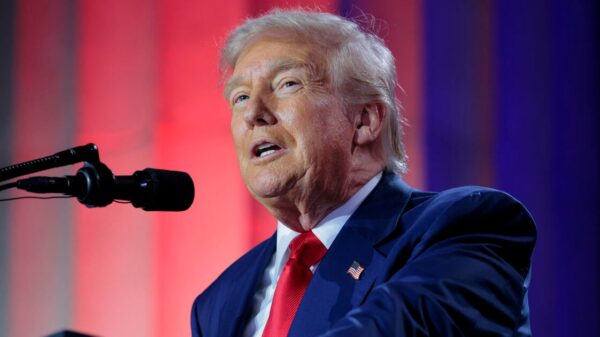
Under the current administration, US AI policy is shifting from a regulation-centric approach to one focused on speed, scale, and innovation. The rescission of the AI Diffusion Rule in May 2025, previously aimed at controlling the export of advanced AI models, reflects this change. The US now prioritizes the global adoption of its AI technology stack while reinforcing export controls. The 2025 AI Action Plan emphasizes deregulation, private-sector innovation, and the enhancement of domestic AI infrastructure as key strategies for maintaining US leadership on the global stage.
India is entering a pivotal phase in its AI development, with government initiatives aimed at fostering innovation, supporting startups, and establishing research hubs. The India AI Mission, approved in 2024 with a budget of INR 10,300 crore over five years, aims to create a shared and subsidized AI computing infrastructure. The government is facilitating access to 38,000 GPUs and 1,050 TPUs at reduced rates, complementing domestic semiconductor manufacturing efforts. Programs such as the India Semiconductor Mission and platforms like BHASHINI are focused on enhancing language access and dataset availability, while indigenous models and AI skilling initiatives aim to position India as a leader in AI use cases.
India’s governance model prioritizes ethical AI development without stifling innovation. Supported by the Digital Personal Data Protection (DPDP) Act 2023, India’s AI Governance Guidelines outline principles that encompass trust, innovation, accountability, and sustainability. This framework reflects Prime Minister Narendra Modi’s vision of “AI for All,” emphasizing the need for inclusion and broad societal benefits.
Despite its ambitious plans, India faces several structural challenges in realizing its AI aspirations. The lack of robust compute infrastructure and energy-efficient data centers hampers the ability to scale AI solutions. While initiatives like AIKosh and the National Data and Analytics Platform (NDAP) have been launched, access to high-quality, domain-specific datasets remains uneven, limiting impactful AI applications. Furthermore, while India produces a large number of IT graduates, it suffers from a shortage of advanced AI researchers and faces persistent brain drain, which hinders its competitiveness in cutting-edge AI research.
Addressing these challenges will require coordinated and strategic public investments in green computing infrastructure, as well as policies that enable responsible data sharing. Strengthening collaboration between academia and industry, expanding domain-specific research, and incentivizing the retention of skilled AI professionals are critical steps toward realizing India’s AI vision and ensuring its long-term impact.
See also Clearnote Launches AI-Powered Legal Contracts Platform for $29.99 a Month
 Goldman Sachs Deploys Anthropic’s Claude AI for Core Accounting and Compliance Functions
 Illinois Proposes Comprehensive AI Bills to Regulate Education, Employment, and Liability
 FTC’s Limited Authority to Preempt State AI Laws Under Executive Order Explained
 Korea’s Job Forecast: 2.8% Growth in Semiconductors Amid 1% Overall Decline