







































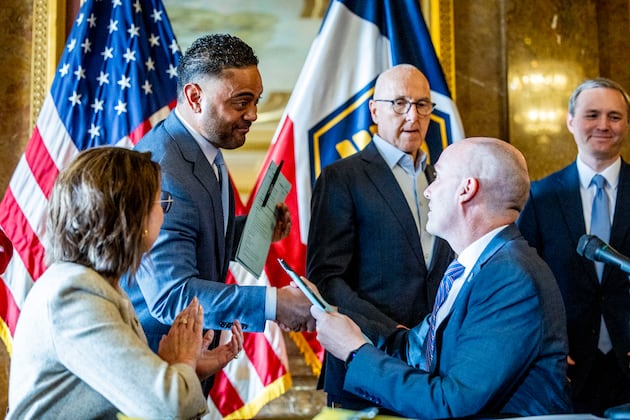
Utah Representative Doug Fiefia is spearheading legislative efforts aimed at regulating artificial intelligence (AI) in a manner that prioritizes child safety. The bills he sponsors, which will be introduced in the upcoming 2026 legislative session, are designed to prohibit AI chatbots from engaging in inappropriate conversations with minors and to require AI companies to publish safety plans focused on child protection. Fiefia, a former Google employee, asserts that these measures are essential in an era where AI is increasingly shaping the lives of young people.
“Both bills really come from the same place, which is AI is already shaping kids’ lives and the rules just haven’t caught up,” Fiefia told the Deseret News. This initiative follows Utah’s recognition as a leading state for AI regulation, where lawmakers established an AI policy lab to guide the integration of technology with consumer protections. The urgency of Fiefia’s proposals is underscored by alarming reports of AI influencing youth in harmful ways, including promoting delusions and self-harm.
The first bill, titled HB286, the Artificial Intelligence Transparency Amendments, would mandate that AI developers post public safety and child protection plans on their websites, conduct risk assessments for new AI technologies, and report safety incidents to the state’s AI policy office. Violations of these regulations could incur civil penalties of up to $1 million for initial offenses and $3 million for subsequent breaches. Additionally, the bill includes protections for whistleblowers who report safety concerns related to AI applications.
Fiefia emphasizes that without mechanisms to enforce safety protocols, AI companies may neglect these crucial considerations in their pursuit of competitive advantage. “This is what we’re afraid of,” Fiefia remarked. “We want AI to innovate… but we can’t lose our children at the same time.” His second bill aims to empower Utah’s Department of Commerce to restrict chatbots from exposing minors to explicit content or encouraging self-destructive behaviors.
Concerns regarding the bills extend beyond their intentions. Senate Majority Leader Kirk Cullimore expressed apprehension that HB286 could inadvertently clash with previous state policies aimed at fostering AI development. “Our position has always been that we should have a super light touch on the technology and the development of AI because we want to encourage… entrepreneurship,” he stated.
The context surrounding these legislative efforts is significant. In December, former President Donald Trump ordered the Department of Justice to challenge state-level AI regulations, a directive that may conflict with Fiefia’s proposals. Although Senate leadership indicated that the White House has eased its stance on litigating Utah’s regulatory approach, the potential for conflict remains, particularly as lawmakers navigate the balance between consumer protection and innovation.
Public sentiment appears to strongly favor Fiefia’s initiatives, with a recent poll indicating that over 90% of Utah voters support AI regulations aimed at protecting children and promoting transparency. Among the respondents, 78% expressed a desire for lawmakers to prioritize AI safety legislation, while 61% opposed Trump’s order that restricts state AI regulations.
Critics of Fiefia’s approach, such as Kevin Frazier from the Abundance Institute, caution against regulations born from fear rather than empirical evidence. He argues that the underlying mental health challenges facing youth extend beyond AI’s influence and that imposing restrictive measures could infringe on First Amendment rights. “Rather than rush ahead and design regulations based off of speculative fears… our focus should instead be equipping Utah residents to make informed decisions,” Frazier stated.
Despite these concerns, Fiefia remains optimistic about the support for his bills. He believes that a narrow focus on transparency and child safety aligns with the broader goals of promoting innovation and national leadership in AI. “I’m aligned with the goal of American AI leadership,” he said, expressing a desire to collaborate with the administration rather than oppose it. As Utah continues to carve its path in AI regulation, the unfolding legislative landscape will likely be closely watched by both advocates and critics alike.
See also Deloitte Reveals AI’s Role in Cybersecurity: Enhancing Threat Response and Compliance
 AI Safeguards Against Financial Cybercrime: Insights from Shift4’s VP on Trust and Compliance
 H200 Export Crisis: NVIDIA Faces 25% Tariff and Blockade Amid AI Hardware Standoff
 Columbia Law Faculty Enhances Curriculum with Generative AI Insights for Future Lawyers
 Federal and State AI Regulations Emerge as Health Care Faces Growing Enforcement Risks