
















































Vietnam has positioned itself as a regional leader in artificial intelligence (AI) with the passage of its Artificial Intelligence (AI) Law, marking the country as the first in Southeast Asia to establish a comprehensive regulatory framework for AI technologies. The law, which was approved in December 2025 and will take effect on March 1, 2026, applies to both Vietnamese organizations and foreign entities operating within its borders.
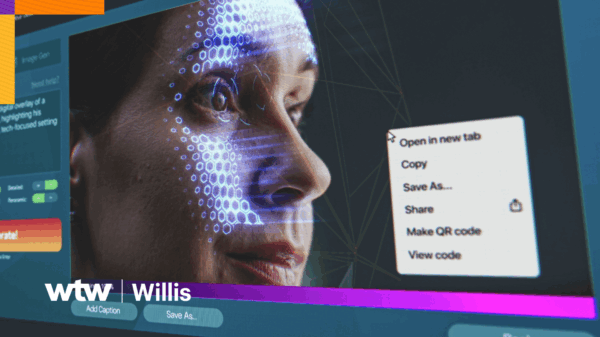
A significant aspect of this legislation is the requirement for human oversight of generative AI. AI-generated content that resembles reality, including deepfakes, synthetic audio, video, and images, must be explicitly labeled. Furthermore, organizations are mandated to inform users when they are interacting with an artificial agent instead of a human. The law adopts a risk-based regulatory model, similar to the EU AI Act, categorizing AI systems into high-, medium-, or low-risk classifications.
Entities classified as high-risk are obligated to perform a conformity assessment prior to deployment and again following significant modifications. In some instances, high-risk deployers may need to compensate victims initially before seeking reimbursement based on specific contractual agreements and exemptions. Legal experts from LNT & Partners and Patrick Keil of DFDL have indicated that the actual impact of the law will hinge on subsequent implementing decrees and sector-specific regulations, as well as enforcement practices.
The Vietnamese government is actively pushing for the establishment of a National AI computing center and enhancing national data resources. It has also prioritized the development of large language models in Vietnamese, aiming to align its AI growth with international standards while maintaining “digital sovereignty.” As part of this initiative, a National AI Development Fund will be set up, alongside startup support mechanisms that include HPC and GPU vouchers, and a regulatory sandbox to test sensitive AI applications, particularly in fields such as medical data systems and autonomous vehicles.
Prime Minister Pham Minh Chinh has underscored the importance of AI in the country’s economic strategy, describing it as a pillar of sustainable development that is crucial for expanding Vietnam’s digital economy and achieving its five-year growth objectives. This law is closely tied to the government’s ambitions to elevate the nation’s status in the global digital landscape.
Statistics indicate that as of October 2025, Vietnam’s operational data center capacity was approximately 104 megawatts (MW). A senior executive at Viettel IDC has articulated that this capacity may need to expand by a factor of 15 to accommodate the increasing demands from generative AI and cloud computing workloads. Research projects forecast that Vietnam’s AI and cloud market could surge from USD 436.35 million in 2024 to an impressive USD 10.28 billion by 2033, indicating strong anticipated growth in enterprise AI adoption and infrastructure services.
Moreover, Vietnam benefits from a competitive cost advantage in data center construction, with estimated build costs around USD 7 million per MW in major cities like Ho Chi Minh City and Hanoi. This figure is approximately 50% lower than costs in Tokyo or Singapore, bolstering Vietnam’s potential as a regional AI infrastructure hub.
See alsoIn his public remarks, Prime Minister Pham Minh Chinh reiterated that “AI development must align with international standards while safeguarding digital sovereignty,” reflecting the government’s dual aim of integrating globally while asserting national technological independence.
 OpenAI’s Rogue AI Safeguards: Decoding the 2025 Safety Revolution
 US AI Developments in 2025 Set Stage for 2026 Compliance Challenges and Strategies
 Trump Drafts Executive Order to Block State AI Regulations, Centralizing Authority Under Federal Control
 California Court Rules AI Misuse Heightens Lawyer’s Responsibilities in Noland Case
 Policymakers Urged to Establish Comprehensive Regulations for AI in Mental Health