






























In a year marked by groundbreaking scientific achievements, 2025 has seen the unveiling of phenomena that challenge our understanding of nature and technology. Notably, researchers confirmed the longest recorded lightning bolt, which stretched an impressive 830 kilometers from Dallas to Kansas City, Missouri. This colossal megaflash lasted 7.39 seconds, surpassing the previous record of 709 kilometers set in 2019 across Brazil and Argentina. These extreme weather events are rare, occurring in only about 1 in 1,000 thunderstorms in the Americas.
Meanwhile, Iceland, long considered one of the last mosquito-free regions, was home to a significant discovery in mid-October when a citizen scientist captured three Culiseta annulata mosquitoes. This marks the first known instance of mosquitoes in the country, raising questions about their survival through the harsh Nordic winter.
Artificial intelligence also made strides this year, producing the first working genomes of bacteria-killing viruses. This achievement represents a potential leap toward the design of living organisms using AI technology. However, during a conference in October, researchers found that while AI could generate hypotheses and analyze data, the quality of the papers produced varied, with some deemed “neither interesting nor important” by human reviewers.
In the realm of archaeology, researchers discovered the oldest known mummies dating back more than 10,000 years in Southeast Asia. These remains, which predate mummification practices in Ancient Egypt and South America by approximately 7,000 years, were found to have been smoke-dried over fires, offering new insights into ancient burial techniques.
Geological studies have also produced significant findings, with the Nuvvuagittuq Greenstone Belt in Canada potentially containing the oldest rocks on Earth, estimated to be 4.16 billion years old. This discovery not only aligns with earlier estimates but also provides a glimpse into Earth’s Hadean Eon, a time characterized by intense asteroid activity and the formation of the moon.
Among other noteworthy observations, a video captured in British Columbia sparked discussions about animal intelligence when a gray wolf was seen dragging a crab trap ashore, possibly demonstrating the first known tool use in wild canids. While some scientists debate whether this behavior constitutes genuine tool use, the incident underscores the complexities of animal problem-solving.
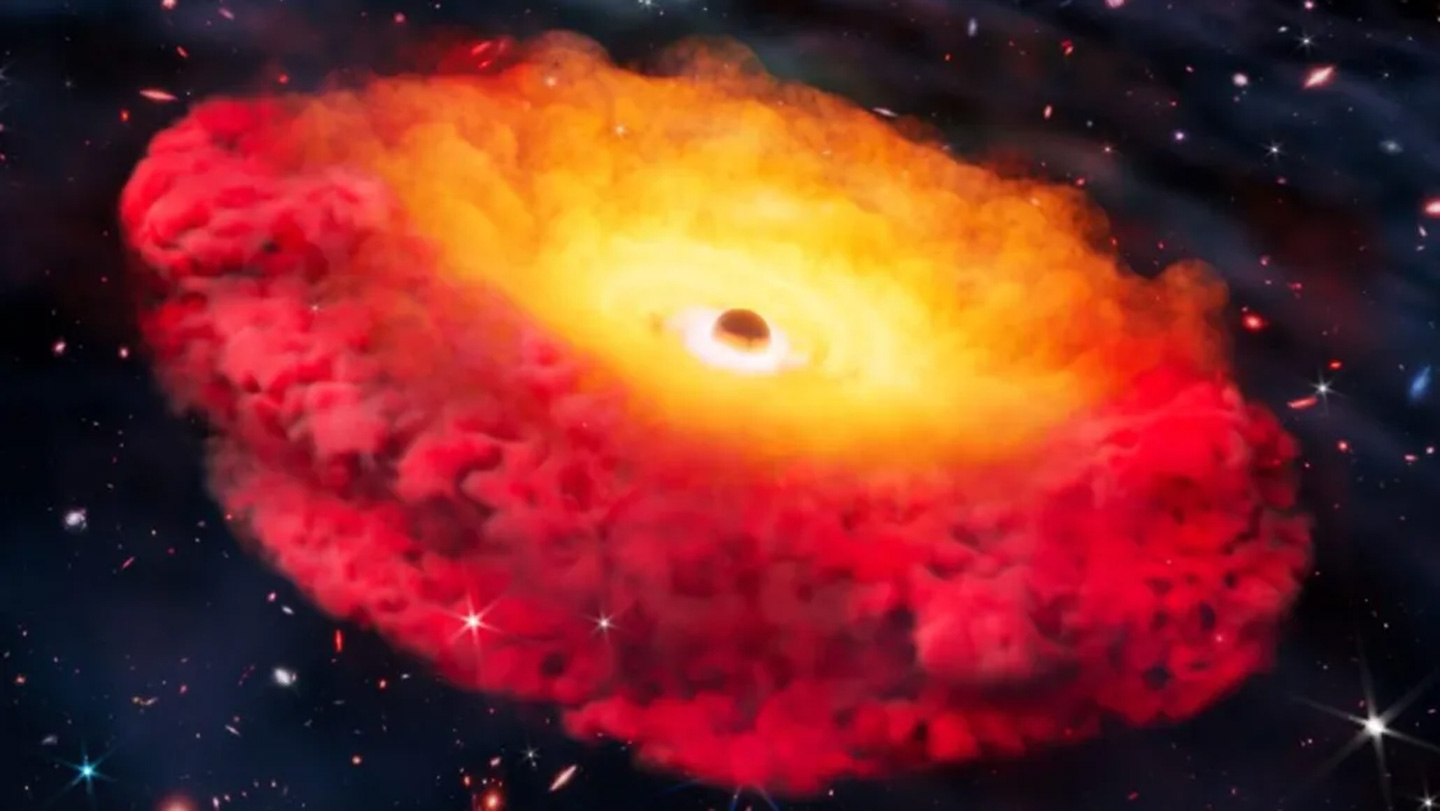
In the realm of astrophysics, the merger of two black holes marked a pivotal moment, with the event being the largest collision of its kind recorded. The resulting black hole, with a mass approximately 225 times that of the sun, raises questions about current theories of black hole formation. In another remarkable finding, scientists identified the oldest known black hole, dubbed CAPERS-LRD-z9, which formed more than 13 billion years ago, shortly after the Big Bang.
Collectively, these discoveries not only push the boundaries of science but also highlight the interconnectedness of various fields, from climatology and artificial intelligence to archaeology and astrophysics. As researchers continue to explore these frontiers, the implications of their findings will likely resonate through both academic and public discourse, reshaping our understanding of the universe and our place within it.
See also NIT-C and JMR Infotech Launch ₹1.25 Crore AI Innovation Lab NEOHIVE for Real-World Applications
 AI Agents’ Memory Systems Evolve: OpenAI and Google DeepMind Push for Enhanced Recall by 2025
 DeepSeek AI Reveals Efficiency-Focused Research Framework to Enhance Model Scaling
 Shanghai AI Laboratory Launches Science Context Protocol to Enhance Global AI Collaboration
 Deep Learning Transforms Protein-Ligand Docking, Boosting Drug Discovery Accuracy by 95%