







































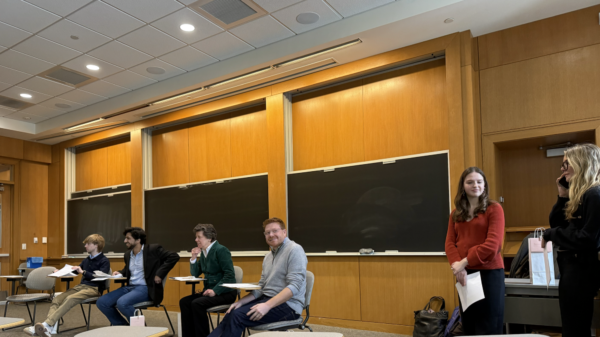


In a notable advancement within the realm of artificial intelligence, Dr. Patricia Angela R. Abu and her team at the Ateneo Laboratory for Intelligent Visual Environments (ALIVE) are making significant strides in machine learning, particularly in the area of computer vision. As Chair of the Department of Information Systems and Computer Science at Ateneo de Manila University, Dr. Abu discussed these innovations during her keynote address at the Second Ateneo Breakthroughs lecture on February 26, 2026. The focus of her presentation, titled “Smarter Sight: Building Intelligent Visual Systems for Public Good,” emphasized the transformative potential of machine learning across various fields, including healthcare and urban planning.
Machine learning, a critical component of artificial intelligence, enables computers to detect intricate patterns in data that often evade even seasoned human experts. However, the learning process for machines diverges significantly from that of humans. While a child can quickly learn to recognize faces with minimal guidance, computer vision systems require extensive datasets, detailed annotations, and rigorous iterative training. This slow yet necessary process is crucial for ensuring reliable performance in real-world conditions, which can include variations in lighting, camera angles, and environmental noise.
Dr. Abu captured this paradox during her lecture, addressing how machines can outperform humans in specific perceptual tasks despite needing more extensive learning. She articulated the essential role of interdisciplinary collaboration in bridging the gap between theoretical models and practical applications. According to Dr. Abu, the dependability of machine learning systems hinges on a combination of domain expertise and computational accuracy, necessitating close partnerships between subject matter experts, such as doctors and urban planners, and computer scientists.
At ALIVE, Dr. Abu’s research team has concentrated on advancing computer vision and image processing with deep learning techniques that hold promise for various applications. In healthcare, for instance, they have developed a dental imaging support system aimed at enhancing dentists’ ability to identify subtle diagnostic indicators that might be overlooked during busy clinical sessions. Additionally, the team has engineered patch-based deep learning models that detect bone metastasis in medical imaging, providing oncologists with critical early diagnostic tools.
ALIVE’s innovations extend beyond healthcare, impacting public infrastructure through initiatives like V-PROBE. This versatile platform analyzes real-time data on vehicle and pedestrian movements to monitor traffic conditions, predict parking availability, and proactively address congestion risks. By offering timely insights, V-PROBE aims to improve urban mobility and mitigate the socio-economic costs associated with traffic gridlocks.
The success of these projects relies on continuous collaboration with stakeholders who navigate complex, dynamic environments. Dr. Abu emphasizes that algorithmic models must adapt to real-world operating conditions, which encompass hardware limitations, privacy concerns, and the need for high performance amid public scrutiny.
Recognizing the importance of industry partnerships, ALIVE is now focused on forging deeper ties with commercial entities. These collaborations provide essential access to large-scale data pipelines and real-world settings where the efficacy of ALIVE’s research can be rigorously tested against benchmarks for speed, security, robustness, and scalability. Input from industry experts helps refine the projects to meet end-user needs, facilitating the journey from theoretical concepts to functional innovations.
Dr. Abu’s leadership exemplifies the necessity of integrating artificial intelligence with domain-specific knowledge to create intelligent visual systems that align with public interests. By fostering an inclusive and collaborative approach, ALIVE is advancing machine learning’s application in medical diagnostics, urban management, and beyond.
This narrative at ALIVE mirrors a broader trend in artificial intelligence research, emphasizing the need to transcend academic boundaries and connect theoretical advancements with societal demands. Through continual innovation, cooperation, and refinement, machine learning systems can evolve to not only recognize patterns but also respond effectively within intricate human contexts, paving the way for more intelligent and adaptive visual technologies.
For those interested in exploring these advancements, Dr. Abu’s lecture is available for public viewing at ateneo.edu/breakthroughs. Researchers, industry stakeholders, and media representatives are encouraged to engage in dialogue and collaboration by reaching out to Dr. Abu directly.
As artificial intelligence continues to evolve, the interplay between sophisticated algorithms, domain expertise, and operational realities will likely shape the future of smart visual systems on a global scale. ALIVE’s efforts serve as a beacon of how interdisciplinary collaboration can harness the potential of machine learning to drive meaningful change in healthcare, urban living, and beyond.
See also AI Study Reveals Generated Faces Indistinguishable from Real Photos, Erodes Trust in Visual Media
 Gen AI Revolutionizes Market Research, Transforming $140B Industry Dynamics
 Researchers Unlock Light-Based AI Operations for Significant Energy Efficiency Gains
 Tempus AI Reports $334M Earnings Surge, Unveils Lymphoma Research Partnership
 Iaroslav Argunov Reveals Big Data Methodology Boosting Construction Profits by Billions