











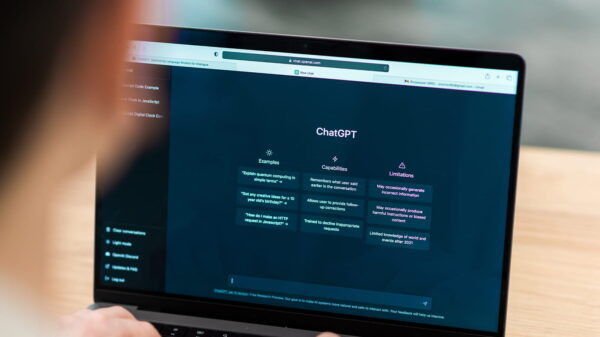



























Chonnam National University (CNU) has launched an ambitious artificial intelligence (AI) campus transformation project aimed at integrating AI tools throughout its educational framework. Announced recently, the initiative will provide access to eight generative AI platforms free of charge for the university’s community, which comprises approximately 30,000 students, faculty, staff, and researchers. This effort is designed to lower barriers to AI usage and extend its accessibility across various disciplines and professional roles.
The generative AI tools made available include ChatGPT, Gemini, Perplexity, Claude, Grok, Llama, Mistral, and Qwen. Individually, these services typically cost around 200,000 won ($140) per month, but CNU’s initiative eliminates these fees for its campus members. The decision to institutionalize access to these platforms is part of a broader vision dubbed “AI for All @ CNU,” building on years of investment in AI education and infrastructure that began with the establishment of the university’s AI Convergence College in 2019.
This transformation sets itself apart from other educational initiatives that limit AI tools to specific majors or research labs. Instead, CNU’s approach aims to integrate AI seamlessly into everyday academic and professional activities. University administrators emphasize that this project signifies a recognition of AI not merely as a technical specialty, but as an essential utility that enhances teaching, learning, research, and administrative functions.
In classrooms, faculty members are encouraged to utilize AI for designing syllabi, generating course content, and crafting assessment items. Students are expected to incorporate these tools into their research, writing, project development, and career planning. Faculty leaders have underscored the importance of fostering real-world AI fluency as part of students’ academic development. On the research front, AI is set to assist with idea generation, data analysis, and drafting research manuscripts—aimed at boosting productivity and enhancing the university’s competitive edge.
For administrative tasks such as drafting meeting minutes and routine reports, AI tools are being positioned as efficient resources that can streamline workflows. “Chonnam National University’s AI transition is not limited to software access,” a university official stated. “It also includes expanding educational programs for faculty to help them become proficient in AI technologies and integrate those tools responsibly in their work and teaching.” Workshops, online training, and guidelines addressing ethical, legal, and privacy considerations associated with AI use are also part of this educational initiative.
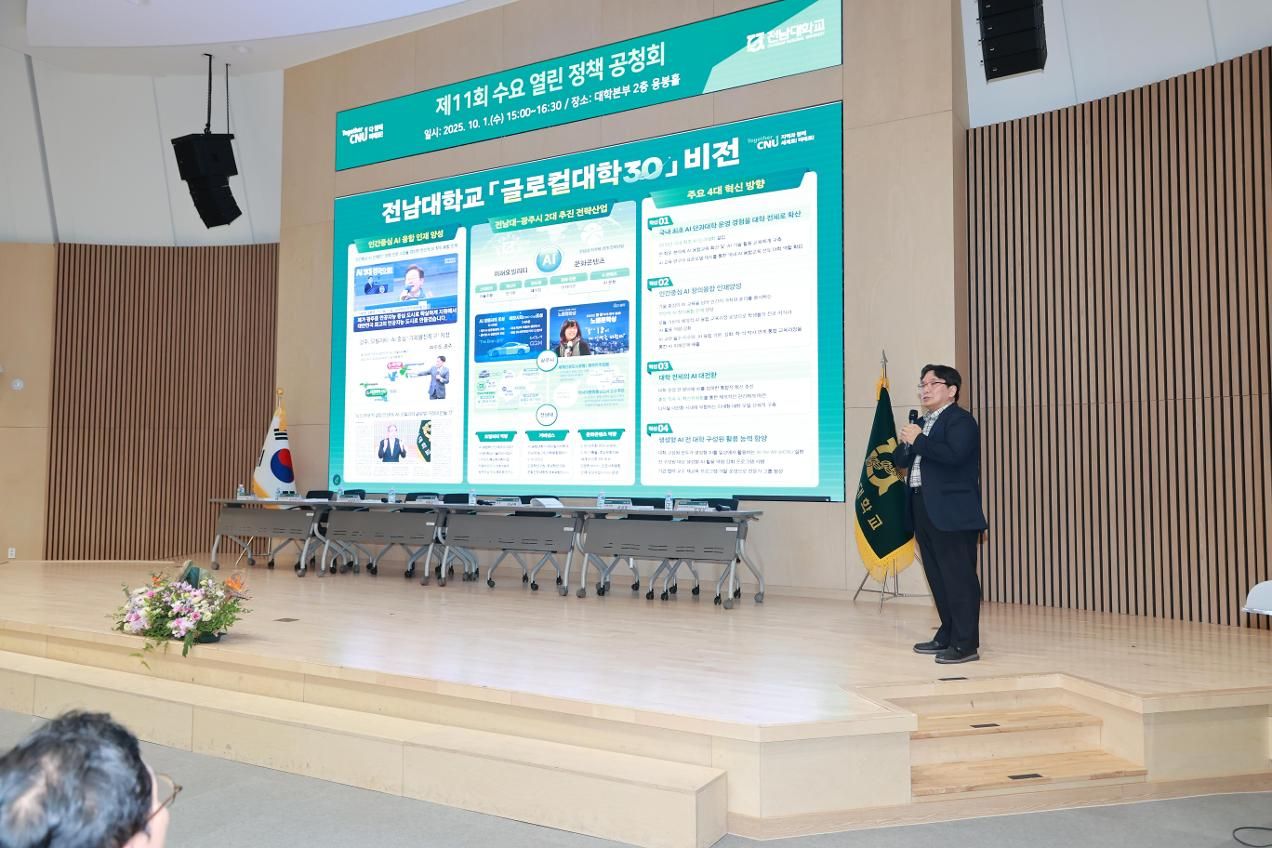
The AI campus transformation project dovetails with the larger Glocal University 30 framework spearheaded by Korea’s Ministry of Education. This initiative aims to empower high-potential regional universities to become key players in local and global innovation. CNU was designated as a Glocal University 30 institution in September, which comes with an allocation of approximately 22 billion won ($15.3 million) over five years for education incentives, research programs, job creation, and graduate support.
The strategic plan under the Glocal University 30 framework emphasizes two core priorities: promoting “human-centered AI” education through multidisciplinary learning, and establishing AI-enhanced programs aligned with regional economic strengths, particularly in mobility and manufacturing sectors. The plan also calls for additional AI-related faculty and new integrated academic tracks ranging from bachelor’s to doctorate levels, along with enabling greater campus access for students from diverse academic backgrounds.
“The AI transformation builds on a track record of innovation stemming from the university’s early establishment of an AI-focused college—a first among Korean higher education institutions,” the official noted. “Since its inception, our AI Convergence College drive has grown in faculty and scope, hosting more than 100 dedicated professors and forging links between AI and fields such as energy, biotechnology, mobility, and cultural content.”
CNU highlighted that graduates from its AI program have successfully transitioned into careers at major corporations, public institutions, and research labs, with many pursuing advanced degrees. This success reinforces the program’s effectiveness in supplying skilled professionals to Korea’s evolving tech economy. “The school’s vision of AI is not just a discipline but a capability that should be woven into the fabric of campus life,” said CNU President Lee Geun-bae. “Our goal is to make AI an everyday tool that empowers everyone at Chonnam National University, driving innovation that contributes both locally and internationally.”
See also Korean Study Reveals 94% of AI Chatbots Provide Unsafe Medical Advice Amid Vulnerabilities
 NextNRG Validates AI-Driven Grid Intelligence with Peer-Reviewed Research Expansion
 Bellini College Launches at USF, Pioneering AI and Cybersecurity Education for 5,000 Students
 MIT Jameel Clinic Launches AI Study to Predict Breast Cancer Risk in Japan with Mirai Tool