





















































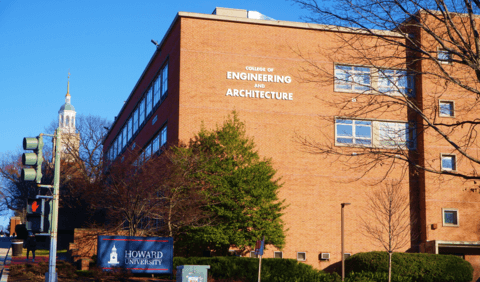
Researchers at Howard University are exploring how artificial intelligence (AI) can tackle pressing infrastructure and public health issues exacerbated by climate change. Led by Sanjib Sharma, Ph.D., an assistant professor in the College of Engineering and Architecture, the team is focusing on how AI can improve predictions related to extreme weather events, such as flooding and heatwaves, that increasingly threaten communities nationwide.
As noted by the National Resources Defense Council, the United States faces significant challenges, including aging infrastructure, contaminated water systems, and heightened urban flooding risks. Addressing these hazards requires innovative tools capable of early detection and informed decision-making. The research team is integrating AI, big data, and high-performance computing to enhance predictions of extreme events, thereby supporting communities in making smarter, data-driven choices.
The first of two studies published in Nature Scientific Reports was led by Dylan Darling, a recent graduate from Howard’s civil engineering program. Titled “Explainable machine-learning-based predictions of blood lead levels and school drinking water contamination among children: a case study in Washington D.C.,” the research applies explainable machine learning techniques to predict the risk of lead contamination in drinking water systems. Given that no level of lead exposure is considered safe, this research highlights a critical public health concern, especially in a country where over 9 million service lines are estimated to contain lead.
Reflecting on his research experience, Darling emphasized how the project illustrated the potential of data science and engineering to address real-world public health challenges. “Seeing an undergraduate student lead research published in a high-impact journal is truly inspiring,” said Sharma, who supervised Darling. “It reflects the strong dedication our undergraduates bring to meaningful research that advances both scientific understanding and community well-being.”
The use of AI in this context serves a dual purpose: it not only identifies areas with the highest risk of lead contamination but also aids in prioritizing infrastructure investments to mitigate health risks. By pinpointing specific locations, stakeholders can make more informed decisions regarding resource allocation and repair efforts.
The second study, led by Yogesh Bhattarai, a Ph.D. student, focuses on urban flooding. Entitled “Ensemble learning for enhancing critical infrastructure resilience to urban flooding,” this research aims to improve the accuracy of flood predictions. “Our goal was to build models that can support real-time decision making,” said Bhattarai. Traditional flood models often overlook localized and rapid changes, leading to gaps in data that can be critical during emergencies.
By harnessing crowd-sourced data along with AI models, Bhattarai’s team is able to produce more precise and actionable insights for communities and emergency managers. The integration of real-time data allows for street-level flood predictions, enabling quicker and more effective responses in the face of severe weather events. This capability significantly enhances the preparedness of city planners and emergency services, making communities more resilient in the face of climate-related challenges.
Sara Kamanmalek, Ph.D., and Vijay Chaudhary, Ph.D., both from Howard University, served as co-authors on these studies, further contributing to the findings that underscore Howard’s commitment to responsible AI innovation. The research not only sheds light on the challenges posed by climate change but also exemplifies how technological advancements can play a crucial role in safeguarding public health and infrastructure.
As communities continue to grapple with the effects of climate change, the findings from Howard University’s research may pave the way for future innovations in AI that can enhance public safety and infrastructure resilience. These studies illustrate the potent intersection of technology and community well-being, highlighting the importance of integrating advanced analytics into urban planning and public health strategies.
See also Machine Learning Enhances Autism Diagnosis, Reveals New Genetic Insights and Treatment Strategies
 AI Agents Become Co-Scientists at Agents4Science, Paving New Research Frontiers
 Harvard Study Reveals AI Boosts Individual Productivity but Favors Team Collaboration
 Machine Learning Study Reveals Electrolyte Imbalances Significantly Predict Mortality Risks
 China Advances EUV Lithography, Threatening ASML and NVIDIA with Lower-Cost Chips