
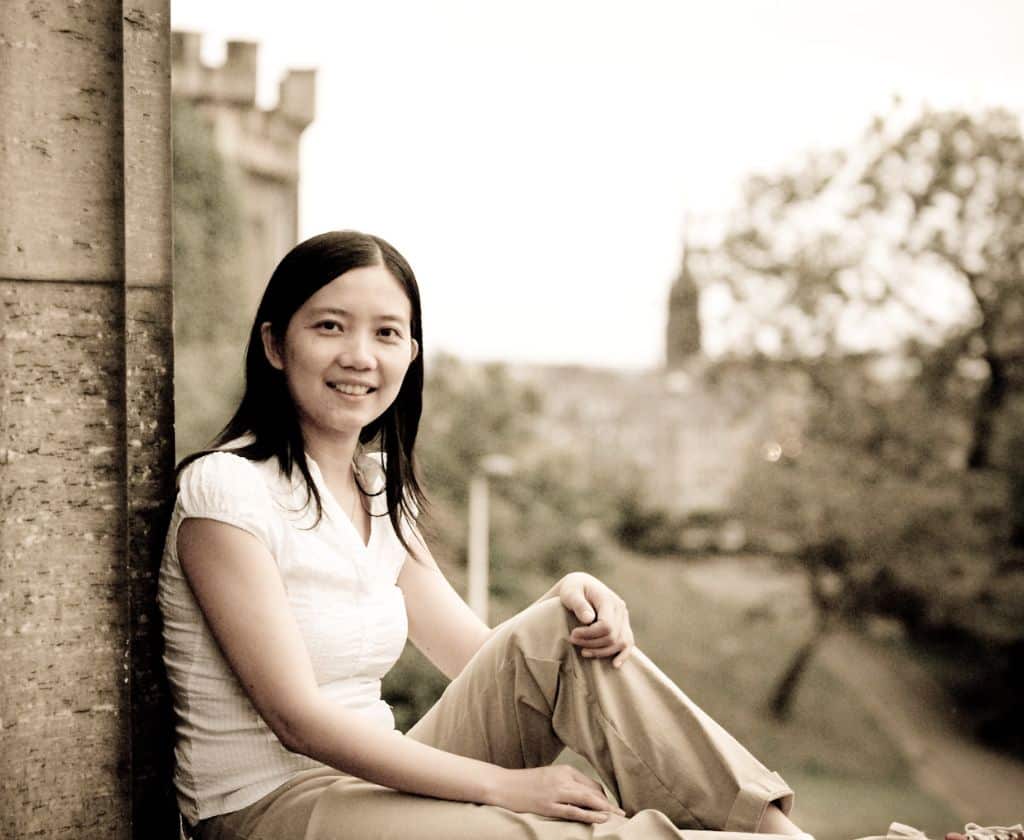
Jia Xu, a prominent figure in the field of artificial intelligence, is redefining what it means for AI to be both smart and efficient in practical applications. As a computer scientist and researcher, Xu has dedicated her career to exploring how AI can better serve real-world needs, with a focus on natural language processing, large language models, and enhancing AI efficiency. She stands out for her commitment to creating systems that extend beyond theoretical confines, demonstrating a profound impact on technology in everyday life.
Xu’s journey into the world of AI began at the age of nineteen when she moved to Germany to pursue a degree in computer science. She completed her bachelor’s and master’s degrees at TU Berlin in just 3.5 years, before earning her Ph.D. from RWTH Aachen University under the mentorship of renowned machine translation expert Professor Hermann Ney. This early transition shaped her approach to both research and life, instilling in her a sense of resilience as she navigated a new culture and language.
“When I first came to Germany, I faced a major challenge,” Xu recalls. “Learning the language, adapting to a new culture, and navigating school entirely in German taught me resilience.” Her doctoral research in machine translation laid a foundational understanding that would later inspire advancements in modern AI technology. Alongside her academic pursuits, Xu gained pivotal experience through research visits at Microsoft Research and IBM Watson, exposing her to industry-scale AI applications.
Following her Ph.D., Xu’s academic career flourished in Asia, where she served as an Assistant Professor and Ph.D. advisor at Tsinghua University, later becoming an Associate Professor at the Chinese Academy of Sciences. These positions placed her at the center of dynamic AI ecosystems, collaborating with students and researchers on a range of topics from dialogue systems to generalization in deep learning. Her teams have produced over fifty publications and received multiple accolades in major AI competitions.
“Long-term goals are usually decomposed into short-term goals,” she states, reflecting on her philosophy of research as a commitment rather than a series of short-lived victories.
A significant highlight of Xu’s career has been her participation in international AI competitions, where her teams achieved 18 top-ranking results in major natural language processing challenges. Notably, her team secured second place in the Amazon Alexa Prize Social Bot Challenge, a prestigious global competition focused on developing open-domain conversational systems capable of engaging users in natural dialogues over extended interactions.
“Competitions like these reward more than theory to me. They test whether systems can perform under real constraints,” Xu explains. Her emphasis on balance underscores her belief that harmony between personal and professional lives fosters fulfillment and happiness.
In recent years, Xu has shifted her focus toward enhancing the efficiency of large language models. She investigates model compression, generalization, and robustness to create smaller, more deployable AI systems. Her goal is to ensure that AI remains accessible and cost-effective, especially for organizations lacking vast infrastructure.
“In my area of research, continuous learning is part of the work itself,” she says. “Every success brings new challenges and questions.” Xu’s contributions to the field are evidenced by approximately fifty publications in esteemed venues such as ACL, EMNLP, NAACL, COLING, IJCAI, and ICML.
Across her various projects, Xu consistently emphasizes the idea that technology should fundamentally serve people. “I measure success using two standards: my own metric of growth and learning, and social feedback. If an idea helps make the world better, then it matters,” she asserts. This guiding principle informs her mentorship of young researchers, encouraging them to look beyond mere benchmarks and consider the long-term implications of their work.
Xu continues to research and teach while collaborating internationally, reflecting a blend of academic rigor and real-world engagement. She expresses gratitude for the support she has received throughout her career, stating, “I’m very lucky and thankful to have people who strongly support and believe in me, no matter the situation. So I’ve never doubted my path.”
From her early studies in Germany to leading AI teams on the global stage, Xu’s journey serves as a testament to the value of global experience in shaping effective technology. In an industry increasingly driven by speed and scale, her work emphasizes a crucial reminder: smart, purpose-built systems are the ones that endure.
See also AI-Generated Ads Boost Click-Through Rates by 19% While Labels Slash Performance by 31%
 Tel Aviv University and Google Israel Launch $1M AI Research Initiative Focused on Core Technologies
 Hiral Raval Advances Ethical AI with New Research on Scalable Data Infrastructure
 AI Pathology Models Show 29% Bias in Cancer Detection Across Demographics, Study Reveals