









































Just hours before Argentina’s legislative elections in October 2025, a manipulated video surfaced on social media, allegedly featuring former president Mauricio Macri endorsing an opposition alliance against President Javier Milei. Fact-checking organization Chequeado confirmed that the video was altered using artificial intelligence (AI), repurposing footage from Macri’s 2015 campaign. This incident was part of a larger trend, with the Argentine National Electoral Prosecutor’s Office receiving 31 complaints related to AI-altered content on election day, highlighting the growing concern of disinformation in Latin America.
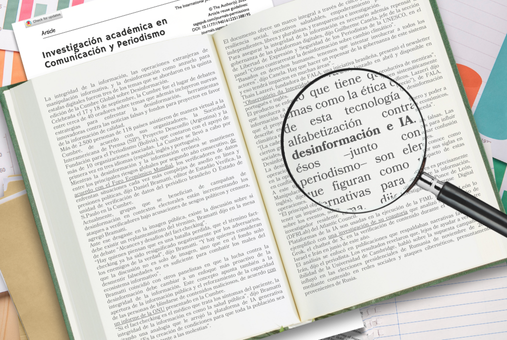
Despite the significant challenges posed by disinformation—impacting electoral processes, social conflicts, and personal finances—academic inquiry into the intersection of AI and disinformation in Latin America remains limited. A study titled “Global Mapping of Research on AI and Disinformation,” conducted by the Technical University of Loja (UTPL) in Ecuador, points to a notable scarcity of research focused on this critical issue, often isolating the region from broader global discussions.
The study, which synthesizes 347 academic articles from 2020 to 2025 indexed in Scopus, found that while global research in this area has surged, Latin America has not kept pace. The U.S. leads the field with 59 studies, followed by Spain with 52. In contrast, substantial contributions from Latin America have been notably concentrated in Brazil, Chile, and Mexico, while research from other countries like Colombia and Ecuador appears less collaborative and often isolated.
Claudia Rodríguez Hidalgo, a professor and researcher at UTPL, emphasized the urgency of academic engagement in addressing these issues. “Latin America is a region heavily affected by disinformation, especially due to its connection to political instability and social crises,” she remarked. She noted that while some studies focus on local experiences regarding the impact of disinformation on elections and social movements, there remains a lack of comparative research across different sociopolitical contexts—an area where research in other regions has thrived.
Rodríguez Hidalgo argues for the necessity of building collaborative networks among researchers and universities across Latin America. “Many Latin American articles primarily address experiences within their own countries, but we need to move beyond isolated efforts,” she stated, advocating for alliances with institutions in Spain and more established universities in North America and Europe. Such collaborations could leverage advanced scientific infrastructures and funding mechanisms that many Latin American institutions lack.
As reporters grapple with the complexities of AI-generated disinformation, Rodríguez Hidalgo stressed the role of academia in informing journalistic practices. She noted that while journalists are on the front lines of protecting the information ecosystem and democracy, their efforts are often inadequate against the rapid evolution of disinformation techniques. “Media and academia need to work much more closely together,” she said, urging for research findings to be more accessible to the public.
Despite increasing academic interest in AI and disinformation, gaps remain in understanding ethical implications and the importance of media literacy. Rodríguez Hidalgo pointed out that existing research tends to focus on how disinformation occurs rather than on its ethical ramifications or how to educate the public in combating it. “We are still focused on the phenomenon, and we haven’t quite managed to fully understand or describe it,” she said, highlighting the urgent need for ethical frameworks in using emerging technologies.
The findings of the study are set to be published in a forthcoming issue of Springer in early 2026, with an updated review of research from 2025 expected in the first half of that year. Preliminary data indicates a significant uptick in studies concerning AI and disinformation, potentially reflecting a growing awareness of the pressing challenges faced by media and society at large.
See also EchoLeak Exposes Microsoft 365 Copilot Vulnerability, Proving AI Needs New Security Models
 Thinking Machines Lab Launches Tinker, Secures $2B Funding at $12B Valuation
 AI Benchmarks Flawed: Study Reveals Variability in Performance Metrics and Testing Methods
 AI Memorization Crisis: Stanford Reveals Major Copyright Risks in OpenAI, Claude, and Others
 Researchers Develop Physics-Informed Deep Learning Model for Accurate Rainfall Forecasting