





















































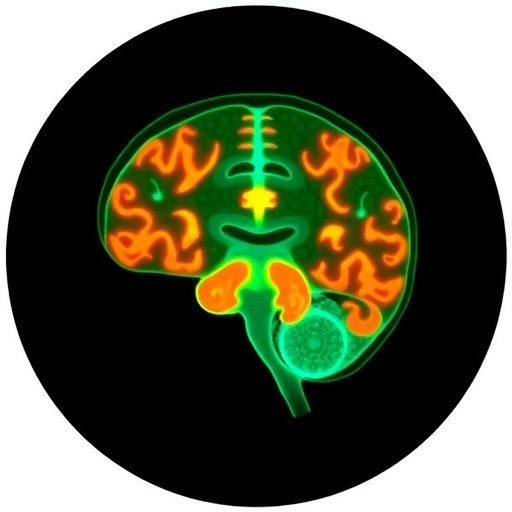
A collaborative study led by Jin et al. has made significant advances in the field of lumbar disc degeneration through the integration of machine learning and clinical-transcriptomic classifications. Published in *Military Medicine Research*, the research aims to revolutionize the diagnosis and treatment of this widespread condition, which affects millions of individuals by causing severe pain and limiting mobility. By employing advanced machine learning algorithms, the study enhances the understanding of the intricate relationship between clinical symptoms and genetic markers associated with the disease.
Lumbar disc degeneration has long been a challenge for healthcare professionals, primarily due to the reliance on traditional diagnostic methods that often involve subjective assessments. These assessments can lead to inconsistent interpretations and varied treatment outcomes. The innovative clinical-transcriptomic classification system proposed by Jin and his team aims to bridge this gap, providing healthcare providers with tools for more accurate and personalized interventions. By merging clinical data with transcriptomic information acquired through advanced sequencing technologies, the researchers endeavor to create a more nuanced understanding of the condition.
The research team analyzed extensive datasets of patient information using sophisticated machine learning techniques. By training algorithms to identify patterns and correlations within this data, the study presents a refined framework designed to classify distinct subtypes of lumbar disc degeneration. This approach promises a departure from a one-size-fits-all methodology, encouraging a more individualized treatment plan tailored to each patient’s unique clinical profile. Such stratification is crucial for ensuring that patients receive the most effective therapeutic interventions, which can significantly improve outcomes.
In addition to classification, the study highlights the importance of transcriptomic analysis in understanding the molecular pathways that contribute to disc degeneration. By investigating gene expression patterns in patient samples, researchers identified biomarkers that correlate with the severity and progression of the disease. This molecular insight lays the groundwork for targeted therapies aimed at mitigating the degenerative processes involved. The integration of machine learning not only enhances the interpretability of these biomarkers but also facilitates the translation of laboratory discoveries into practical clinical applications.
As the study outlines, the clinical workflow designed incorporates machine learning tools that utilize both clinical indicators and transcriptomic data. This model has substantial implications for healthcare systems, as it can lead to improved patient outcomes through more accurate diagnoses. Additionally, as diagnostic processes become streamlined, there is potential for reduced healthcare costs associated with misdiagnoses and ineffective treatments, which often burden medical systems.
The collaboration among multi-disciplinary teams of healthcare professionals and data scientists is essential for successfully implementing the findings of this research. By fostering partnerships across these areas, the study exemplifies how collective expertise can drive innovation within the medical field. The potential of machine learning to elucidate complex conditions like lumbar disc degeneration may set a precedent for similar advancements across other health sectors, promoting a data-driven approach to healthcare.
Looking ahead, the future applications of machine learning in medical research appear vast and promising. The methodologies established in this study could serve as blueprints for addressing other musculoskeletal disorders, positioning technology at the forefront of modern medicine. Both patients and healthcare providers can anticipate a more sophisticated understanding of health conditions and their corresponding management strategies.
This research not only emphasizes the importance of advanced technology in healthcare but also highlights the urgent need for a medically informed society to embrace these developments. A commitment to accelerating the integration of technology and healthcare could lead to improved health outcomes on a broader scale. While challenges remain, the dedication to enhancing patient care through innovative research efforts stands as both inspiring and essential.
The ongoing dialogue between researchers and clinicians is vital for addressing lumbar disc degeneration effectively. As emerging models like the one proposed by Jin et al. gain traction, the imperative to validate these findings through clinical trials and real-world applicability becomes increasingly important. Rigorous testing across diverse patient populations will be necessary to ensure that these findings translate effectively across various demographic groups.
In conclusion, the pioneering research by Jin and colleagues establishes a critical benchmark for the future of clinical diagnostics, particularly concerning musculoskeletal health. Through the innovative combination of clinical data and machine learning technology, the study challenges traditional paradigms and signals a new era in personalized medicine. As academia and healthcare systems begin to implement these findings, the ultimate objective remains clear: to alleviate suffering and enhance quality of life through advanced medical insights.
With this enhanced understanding, the path towards comprehensive care for lumbar disc degeneration continues to unfold. The convergence of machine learning, clinical expertise, and genetic insights promises to strengthen the efficacy of medical interventions, potentially transforming the treatment landscape for this common yet impactful ailment. As research progresses, stakeholders in the healthcare ecosystem must remain vigilant and responsive, ensuring that the needs and welfare of patients are prioritized.
The future holds vast opportunities grounded in the discoveries made by Jin et al. The fusion of clinical applications with robust technological advancements captures the essence of contemporary medicine, urging the medical community to leverage innovation in ways that foster healing, engagement, and above all, hope.
Subject of Research: Clinical-transcriptomic classification of lumbar disc degeneration enhanced by machine learning
Article Title: Clinical-transcriptomic classification of lumbar disc degeneration enhanced by machine learning
Article References: Jin, HJ., Lin, P., Ma, XY. et al. Clinical-transcriptomic classification of lumbar disc degeneration enhanced by machine learning. Military Med Res 12, 54 (2025). https://doi.org/10.1186/s40779-025-00637-9
Image Credits: AI Generated
DOI: https://doi.org/10.1186/s40779-025-00637-9
Keywords: lumbar disc degeneration, machine learning, clinical classification, transcriptomics, personalized medicine, healthcare technology.
 TCU Launches $10M AI² Initiative with Dell to Expand AI Research and Education
 University of Surrey Reveals AI Tool Predicting Osteoarthritis Progression in Knee X-Rays
 Deep Learning Transforms Kidney Transplant Success Rates by Enhancing Outcome Predictions
 CMU-Q Scholar Urges Arabic AI Research to Address Inclusion Gap for 400M Speakers






