









































Microsoft Research has made a significant breakthrough in long-term data storage, publishing findings in the journal Nature that could revolutionize how information is preserved for thousands of years. The research focuses on Project Silica, a pioneering effort to encode data within glass using femtosecond lasers. Unlike traditional storage media, which degrade over decades, this new approach aims to ensure data remains intact for up to 10,000 years.
The crux of the innovation lies in the ability to utilize ordinary borosilicate glass—commonly found in kitchen cookware—rather than the more expensive fused silica previously used. This advancement not only makes the technology more accessible and cost-effective but also addresses critical barriers to commercialization. The researchers have unlocked methods for faster parallel writing and developed a simplified reading mechanism that only requires a single camera, vastly reducing the complexity and size of the needed equipment.
Storing data in glass is part of a broader movement toward durable and immutable data storage solutions. The femtosecond laser technique allows data to be inscribed in glass with remarkable resistance to environmental factors such as heat, water, and dust. Prior to this research, the technique was limited to pure fused silica, which was not only difficult to manufacture but also available from limited sources.
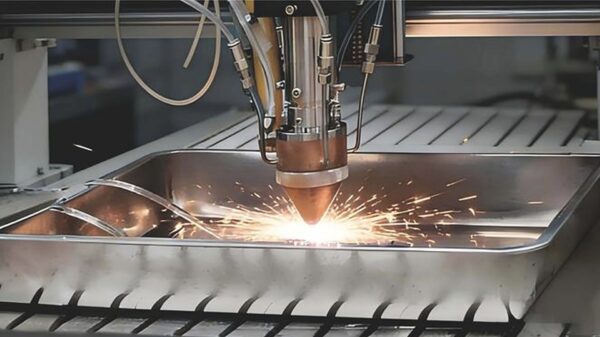
The technique involves writing hundreds of layers of data in glass just 2mm thick. The researchers have made significant improvements, including the introduction of a new phase voxel method that requires only a single laser pulse to create data storage voxels. This method simplifies the writing process and enables faster data encoding. Additionally, a multi-beam writing system allows multiple data voxels to be written simultaneously, dramatically increasing speed.
Among the key scientific discoveries detailed in the Nature paper are advancements in birefringent voxel writing and the novel concept of phase voxels. The researchers have shown that the polarization of the laser pulse can be optimized to improve efficiency and reduce the number of laser pulses needed for effective data storage. They further enhanced writing capabilities by employing machine learning models to predict and mitigate potential data read errors.
As part of its ongoing research initiative, Project Silica has already demonstrated its capabilities through a series of proofs of concept. Notably, the team successfully stored the Warner Bros. film “Superman” on quartz glass, collaborated with Global Music Vault to preserve music under ice for an anticipated 10,000 years, and engaged students in a project aimed at creating a digitally curated “Golden Record 2.0,” designed to represent and preserve the diversity of humanity across millennia.
Looking ahead, Microsoft Research plans to continue exploring the implications of this technology for sustainable data storage solutions. The research phase of Project Silica has concluded, but the findings are intended to serve as a foundation for future advancements in archival storage systems design, workload analysis, and machine learning methods for symbol decoding in storage systems.
This development not only marks a milestone for Microsoft in the realm of data storage but also holds potential implications for various industries reliant on long-term information preservation. As the need for durable storage solutions becomes increasingly pressing, the innovations stemming from Project Silica may pave the way for a new era in data management.
See also Riemannian Geometry Transforms Graph Learning Paradigm, Enhancing Neural Networks’ Performance
 Johann Vargas Calixto Develops $10 AI Solution to Improve Maternal-Fetal Health in Guatemala
 Digital Agriculture Study Reveals Uneven Sustainability Gains and Collaboration Gaps
 Google CEO Pichai Unveils $15B AI Hub in India, Promises Scientific Breakthroughs
 AIMET-NL Launches Workshop on Scientific Machine Learning & Uncertainty Quantification in 2026