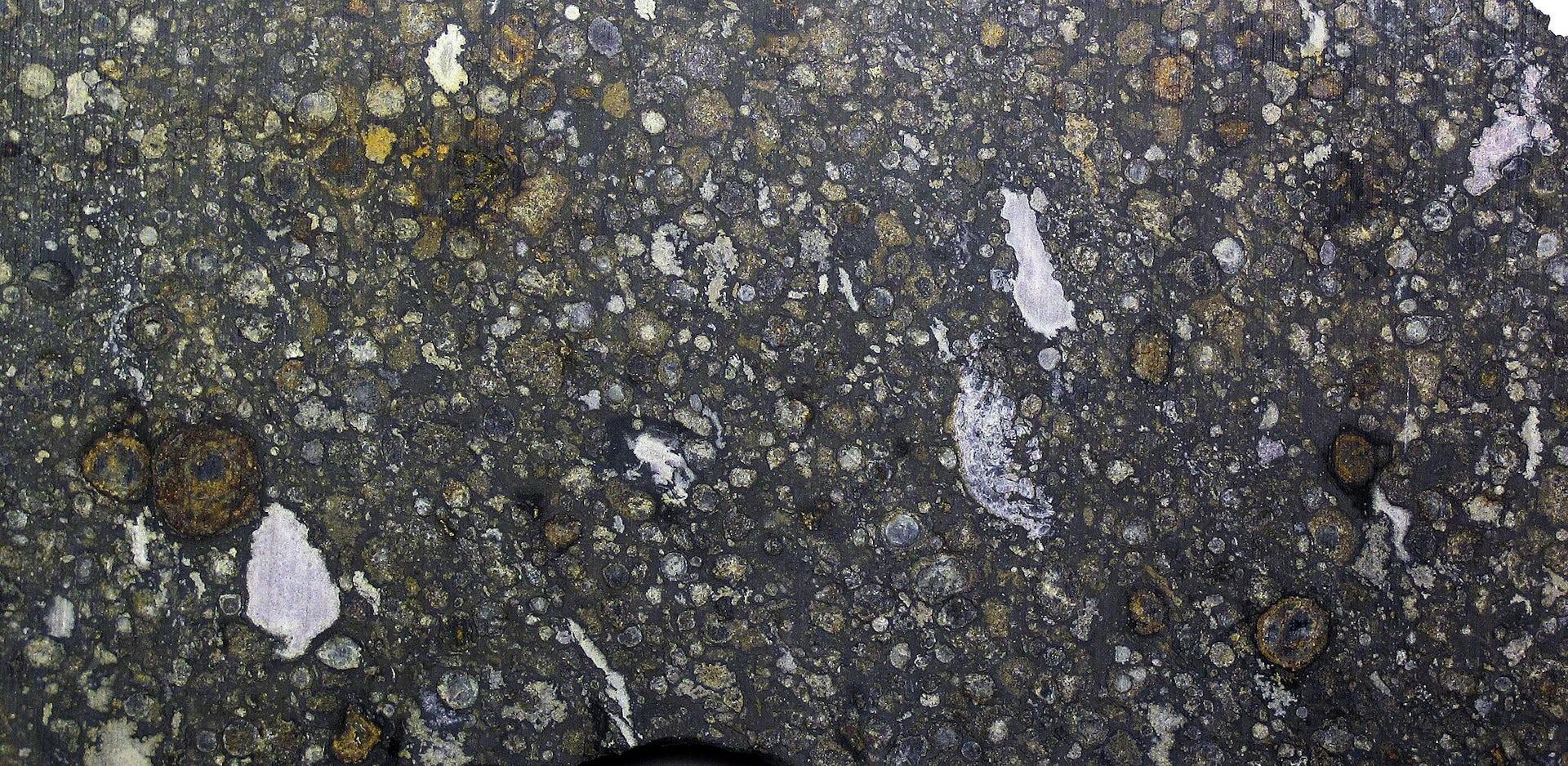
When NASA scientists opened the sample return canister from the OSIRIS-REx asteroid sample mission in late 2023, they discovered remarkable findings. Dust and rock collected from the asteroid Bennu contained vital components of life, including all five nucleobases used in DNA and RNA, 14 of the 20 amino acids found in proteins, and a diverse range of other organic molecules. These compounds, primarily composed of carbon and hydrogen, form the foundation of life’s chemistry.
For decades, scientists have theorized that early asteroids might have delivered life’s essential ingredients to Earth, and the findings from Bennu provide compelling evidence for this hypothesis. However, even more astonishing was the near-equal distribution of “left-handed” and “right-handed” amino acids in the sample. Amino acids exist in two mirror-image configurations, known as chiral forms, similar to human hands. On Earth, biological systems predominantly utilize left-handed versions. A strong left-handed excess in the Bennu sample could have suggested that life’s molecular asymmetry was inherited from space; however, the balanced mixture indicates that life’s left-handed preference likely developed later through terrestrial processes.
This discovery complicates the task of identifying the true signs of biology, as it suggests that space rocks can carry familiar building blocks but lack the specific chemical signatures indicative of life. As scientists prepare for new missions targeting Mars, its moons, and other ocean worlds in our solar system, the challenge of detecting life when its chemistry may resemble that of non-living materials becomes increasingly pertinent.
In response to this challenge, researchers are exploring innovative methodologies to differentiate between complex geochemistry and potential extraterrestrial biology. A recent study published in the journal PNAS Nexus introduced a new framework called LifeTracer, designed to assess whether mixtures of compounds preserved in rocks and meteorites contain traces of life. Rather than searching for a single definitive molecule, LifeTracer aims to classify the likelihood of a sample containing biological material by analyzing the overall chemical patterns within it.
The foundational principle of LifeTracer is that life produces molecules with specific purposes, whereas nonliving chemistry does not. Living cells must manage energy storage, construct membranes, and transmit information. In contrast, abiotic chemistry generated by nonliving processes follows distinct patterns because it is not influenced by metabolism or evolution. Traditional biosignature detection often focuses on identifying specific compounds or chiral biases, relying heavily on molecular patterns observed in Earth-based life. This approach risks overlooking alien life that may employ similar yet fundamentally different chemical mechanisms.
The Bennu findings underscore this issue, revealing organic molecules that are familiar to life, yet they do not indicate that these samples contained any living organisms. To better understand the nuances between life and non-life, the LifeTracer team compiled a unique dataset of organic materials straddling the boundary between the two. This dataset included samples from eight carbon-rich meteorites showcasing abiotic chemistry from the early solar system, alongside ten samples of terrestrial soils and sediments containing the remnants of biological molecules from past or present life.
At NASA’s Goddard Space Flight Center, researchers processed each sample by crushing it, adding a solvent, and applying heat to extract the organic materials. This extraction method resembles brewing tea. Following extraction, the organic mixture was subjected to two filtering columns to separate its complex components. The resulting fragments were then analyzed using mass spectrometry, a technique traditionally employed to reconstruct molecular structures. However, the sheer volume of compounds in each sample presented a considerable challenge.
LifeTracer deviates from conventional practices by focusing on identifying patterns in fragmented data rather than reconstructing individual structures. It analyzes the chemical fingerprints of each sample based on mass and two additional chemical properties, organizing them into a large matrix reflective of the molecular composition. The framework employs a machine learning model to effectively differentiate between abiotic meteorite samples and biotic terrestrial materials based on their chemical signatures.
Using a supervised learning approach, LifeTracer demonstrated high accuracy in distinguishing between the two origins, even with only a limited number of 18 samples for training. The framework highlighted that the overall distribution of chemical fingerprints, rather than the presence of specific molecules, was key to understanding the source of the samples. Meteorites typically exhibited a higher prevalence of volatile compounds, indicative of the cold space environment where they formed.
This innovative methodology suggests that the distinction between life and non-life is not confined to individual chemical markers but rather how an entire suite of organic molecules is organized. By concentrating on the patterns rather than preconceived notions about which molecules signify life, LifeTracer broadens the scope for interpreting samples returned from Mars, its moons Phobos and Deimos, as well as Jupiter’s moon Europa and Saturn’s moon Enceladus.
As future missions are expected to gather organic mixtures from various sources, the ability to assess whether a chemical landscape resembles biology or random geochemistry becomes essential. While LifeTracer is not a universal detector of life, it lays a crucial foundation for interpreting complex organic mixtures. The findings from Bennu serve as a poignant reminder that while life-friendly chemistry may be prevalent throughout the solar system, distinguishing it from biological activity requires a multifaceted approach, combining advanced spacecraft, instruments, and innovative analytical frameworks.
See also UCSD’s Hao AI Lab Acquires NVIDIA DGX B200, Boosts Low-Latency LLM Performance
 Google Research Advances AI to Amplify Human Ingenuity and Drive Real-World Impact
 New Protocol Reduces Communication Complexity in Distributed Estimation by 50%
 AI-Driven Research Boosts Productivity by 89% but Raises Concerns Over Quality, Study Finds
 Deep Learning Boosts Chiral Metasurfaces, Doubling Dichroism for Advanced Optical Devices