



































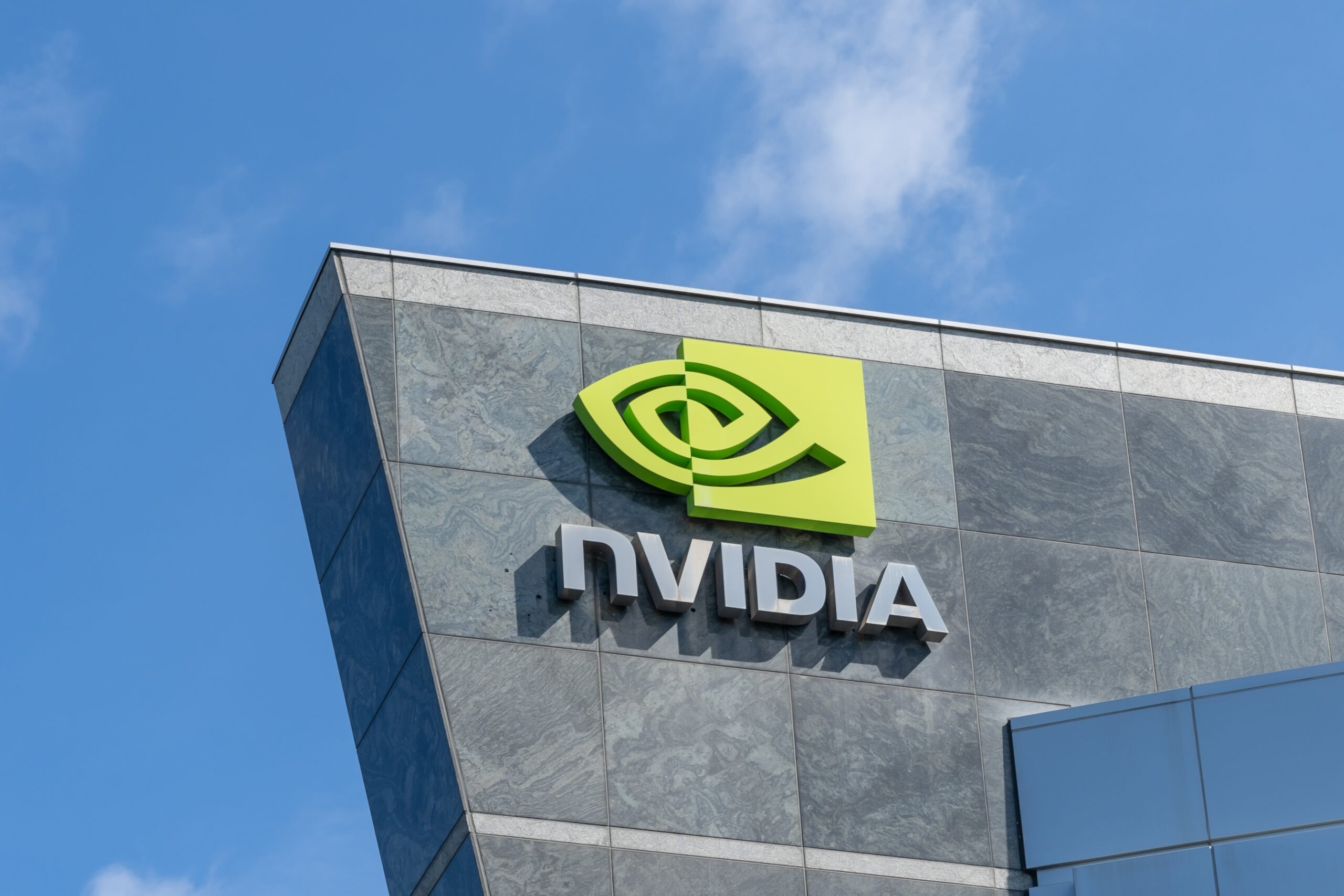
Nvidia showcased a significant advancement in open-source artificial intelligence at NeurIPS 2025, featuring new models aimed at enhancing speech technology, AI safety, and autonomous vehicle (AV) development. This unveiling represents one of Nvidia’s most extensive open-source initiatives to date, responding to the rising demand for transparent, research-ready AI systems. The annual NeurIPS conference, recognized as a premier event for machine learning research, provided an ideal platform for Nvidia’s announcement, which emphasizes the need for accessible and reproducible AI models.
Central to Nvidia’s release is a comprehensive suite of tools that spans critical areas such as speech recognition, AI safety evaluation, and self-driving systems. Among these tools are new multi-speaker speech models, an expansion of safety datasets, and specialized libraries that support reinforcement learning and synthetic data generation. The company reported that its Nemotron models and datasets received high scores from Artificial Analysis, a firm dedicated to ranking AI systems by their openness and transparency. This strong evaluation aligns with Nvidia’s strategy of making its models available for study, adaptation, and benchmarking within the research community.
The most notable announcement was the introduction of the Nvidia Drive Alpamayo-R1, a groundbreaking open reasoning vision-language-action model designed specifically for advanced AV research. The Alpamayo-R1 integrates spatial reasoning, environmental comprehension, and path-planning into a cohesive framework, marking a pivotal shift in autonomous driving research that goes beyond mere perception towards more complex decision-making capabilities. Although Nvidia has not disclosed specific details about the model’s parameter count or computational requirements—other models in the Cosmos family range from 4 to 14 billion parameters—its design reflects a commitment to pushing the boundaries of AV technology.
While the Alpamayo-R1 is released for non-commercial research purposes, uncertainties remain around its licensing and data provenance. Nvidia has shared a portion of its training data through the Physical AI Open Datasets, a controlled resource for robotics and autonomy research; however, the exact licensing terms and the comprehensive lineage of the dataset are not yet clear. Researchers will find the model, along with the necessary evaluation tools and datasets, accessible on GitHub and Hugging Face, setting the stage for experimentation in real-time reasoning and simulated driving scenarios.
Nvidia also expanded its Nemotron toolkit, which supports not only AV research but also advancements in speech and safety research as well as AI-driven content generation. The new multi-speaker speech models aim to enhance transcription accuracy, voice differentiation, and multilingual capabilities. Additionally, the toolkit now includes AI safety datasets that focus on hallucination analysis, output verification, and controlled reinforcement learning environments. With these developments, Nvidia introduced new libraries for reinforcement learning-based data generation, providing researchers greater control over training models to operate reliably in unpredictable scenarios.
Industry stakeholders have already begun to take notice of Nvidia’s announcements. Cloud GPU platforms and MLOps vendors are eyeing the potential for deploying inference-ready SKUs tailored for reasoning workloads like those introduced with Alpamayo-R1. Providers are expected to develop products optimized for the Cosmos family of models, which are well-suited for physics-aware video processing and simulation. MLOps platforms see an opportunity to offer deployment playbooks for the Alpamayo-R1, potentially bringing researchers closer to operational autonomy systems capable of Level 4 performance, which denotes high autonomy within geofenced parameters.
Nvidia’s latest open-source models represent a significant step forward in AI technology, particularly in the domains of speech recognition and autonomous driving. As the demand for more transparent and effective AI solutions continues to grow, these releases may pave the way for broader application and innovation in the industry, reinforcing Nvidia’s position as a leader in AI development.
See also BC Medical Advancement Foundation Launches AI Lab Using 500M Medical Records for Enhanced Diagnosis
 Researchers Evaluate Five DNA Language Models for Genomic Tasks, Revealing Key Insights
 Samsung Appoints 39-Year-Old Lee Kang-wook to Lead New AI Lab Amidst Global Competition
 UK Government Offers 1,000,000 GPU Hours for AI Research Proposals in Key Science Areas
 Workato Launches AI Lab in Singapore to Create 65 High-Value Jobs and Propel Innovation