















































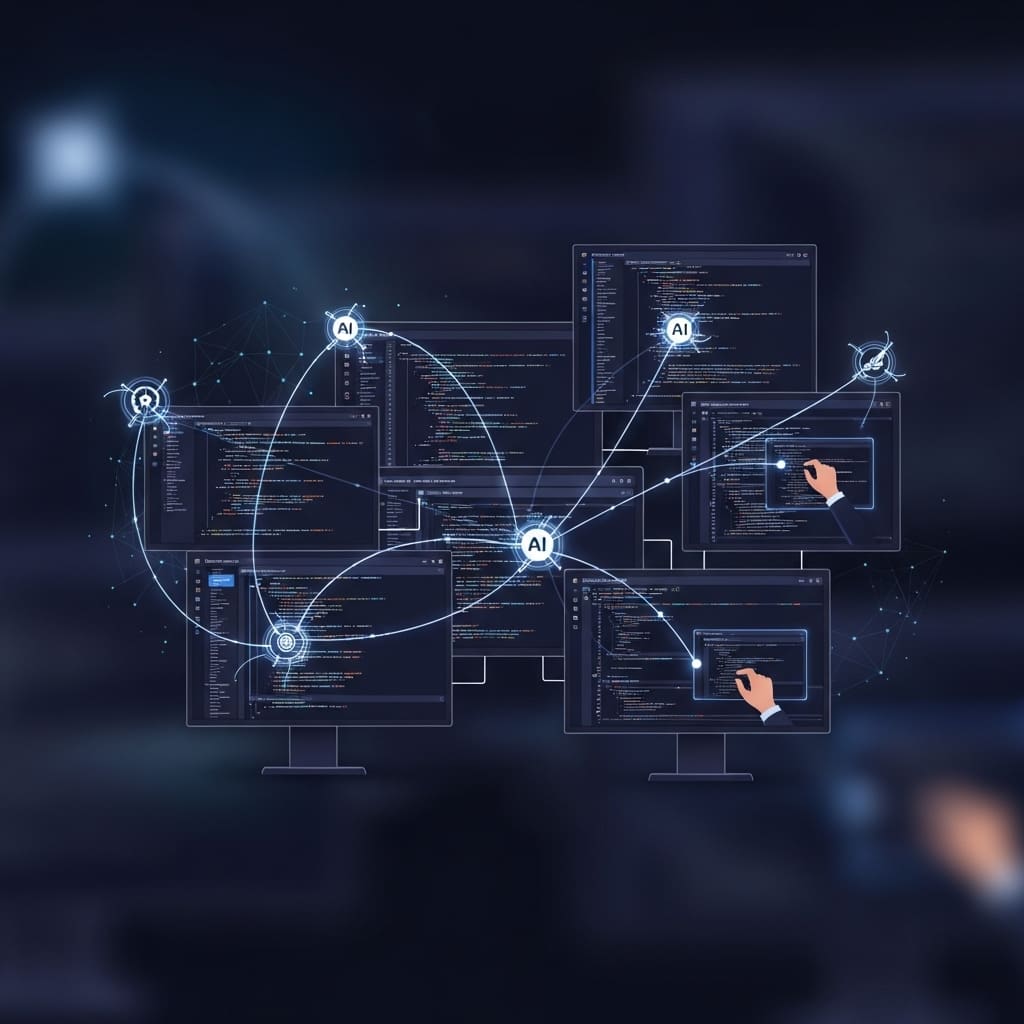
The integration of artificial intelligence into software development practices continues to present significant challenges, according to a recent study by researchers from JetBrains and Carnegie Mellon University. Conducted over five days, the field study involved 15 developers observing 229 AI interventions within a professional Integrated Development Environment (IDE). The research aimed to understand how developers respond to proactive assistance, a tool designed to enhance coding experiences by reducing cognitive load and increasing engagement.
Led by Nadine Kuo of JetBrains Amsterdam and supported by Agnia Sergeyuk from JetBrains Research Belgrade, Valerie Chen from Carnegie Mellon University, and Maliheh Izadi of Delft University of Technology, the study revealed that timely proactive suggestions made at natural workflow boundaries—such as after code commits—substantially improved developer receptivity. The findings underscore the potential for AI to facilitate smoother coding processes, striking a balance between automation and user agency.
The researchers developed a system called ProAIDE to deliver proactive code quality suggestions, moving beyond traditional reactive tools. Through a human-centered design process, the project transitioned from prototype to a functional feature within a widely used IDE. This iterative approach allowed for real-world evaluation across 12 programming languages, capturing telemetry logs from 5,732 interaction points to assess how developers responded to AI prompts.
Data collection focused on contrasting interventions at various workflow stages. Suggestions delivered during post-commit actions yielded a striking 52% engagement rate, while mid-task prompts, such as those following declined edits, saw a 62% dismissal rate. This disparity highlights the critical role that timing plays in the acceptance of AI-generated advice, suggesting that developers are more likely to engage with suggestions when they align with the natural flow of their work.
Moreover, the study revealed that well-timed proactive suggestions required significantly less cognitive effort. Developers averaged 45.4 seconds to process proactive prompts compared to 101.4 seconds for reactive ones, indicating an increase in cognitive efficiency when assistance is offered at appropriate moments. This not only streamlines workflows but also helps alleviate mental fatigue, a common concern in the high-pressure environment of software development.
The mixed-methods approach utilized in this research combined quantitative telemetry data with qualitative feedback from structured daily surveys and a comprehensive post-study questionnaire. This dual strategy provided a nuanced view of both developer interactions and their subjective experiences with the AI system. Developers rated ProAIDE with a score of 72.8 out of 100 on the System Usability Scale, reflecting a generally positive reception of its integration into their coding routines.
While the study established that contextual alignment enhances the utility of AI assistance, the researchers noted limitations regarding the understanding of lower-level contextual details within the source code. Suggestions that failed to account for technical design choices and domain-specific patterns were less effective, emphasizing the need for AI systems to evolve in their comprehension of complex coding environments.
The findings from this research contribute valuable insights for the future design of proactive coding assistants. By focusing on the timing of interventions, ensuring contextual relevance, and balancing AI functionality with user control, developers may benefit from more effective coding tools that genuinely enhance productivity. As the industry moves toward more adaptive AI systems, the potential for prolonged positive impacts on developer satisfaction and efficiency is significant.
This study serves as a foundational step in bridging the gap between theoretical AI applications and practical IDE integration. The researchers call for longer-term investigations to further explore the enduring effects of proactive assistance on software development productivity, potentially paving the way for more sophisticated and user-configurable AI support in the field.
See also Researchers Develop AI Model Mimicking Human Emotion Formation with 75% Accuracy
 Top 5 AI Research Labs to Watch in 2026: Innovations from Vector, Decart, and More
 OpenAI Announces Enhanced Privacy Practices for AI Queries and Data Retention
 Canada Faces Talent Exodus as $186M AI Research Funding at Risk Before 2026
 Deep Learning Model ELunarDTMNet Achieves 0.65m Accuracy in Lunar Topography Reconstruction