







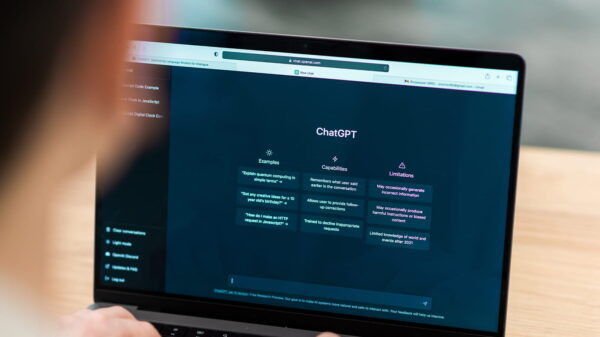






















Professors in Indonesia, Malaysia, and the Philippines are urging for clear guidelines on the use of artificial intelligence (AI) tools in higher education, as the rapid adoption of platforms like ChatGPT has outpaced existing institutional policies aimed at protecting academic integrity. A study published in The Palawan Scientist by Western Philippines University revealed that educators are increasingly concerned about students relying on AI-generated content for academic tasks, including writing and research.
The research, which involved interviews with 22 professors, 11 from the Philippines, underscores a growing unease among educators regarding the impact of AI on student originality and comprehension. With universities in Palawan enhancing digital access and technology use in classrooms, the study calls for policies that reflect local educational realities.
Professors noted that a common issue is students submitting AI-generated outputs without proper verification. “Students cut and paste assignment questions into ChatGPT, and I noticed their information is inaccurate,” said a Malaysian professor with three decades of teaching experience. This practice raises alarms about students’ critical thinking skills and originality.
“High dependency on this tool blocks their creative thinking and prevents them from producing their own analyses,” cautioned an Indonesian educator. These sentiments resonate with ongoing discussions in Philippine higher education about maintaining academic integrity amidst easy access to digital information.
Despite the concerns, none of the professors suggested outright bans on AI tools like ChatGPT. Instead, they acknowledged its potential benefits when used responsibly. “For students and teachers, AI is there to make our lives more convenient,” said a graduate school dean in the Philippines, advocating for responsible use alongside thorough verification of AI-generated outputs.
Others emphasized that ChatGPT could aid students in refining their writing and organizing ideas. However, they insisted that strong guidance from educators is essential to mitigate potential misuse. “Banning ChatGPT will not stop students from using it. What we can do is teach them to use it responsibly, and integrate it into the learning process,” stated a professor based in Palawan.
The challenges extend to the tools used for detecting AI-generated submissions. Some professors reported unreliable results from AI detectors, which could lead to unfair penalties for students. “There are cases where some colleagues ran a paper through an AI detector, and it flagged the entire document. The student received a failing grade,” remarked a Palawan-based professor.
Recent studies confirm these concerns, with findings indicating that many detection tools lack accuracy. A 2023 study published in the International Journal for Educational Integrity found that available detection tools frequently misclassified human-written content as AI-generated and vice versa. Another study highlighted that simple edits could significantly decrease detection accuracy, raising the risk of unjust penalties for students.
The consequences of these inaccuracies can be severe, with some students facing failing grades solely based on flawed AI detector results. “Detectors should never replace teacher judgment. They are helpful as a reference, but students should not be penalized solely because a machine flags the content as AI-generated,” cautioned the Palawan professor, emphasizing the need for a balanced approach to AI use in academic settings.
The need for clear guidelines on ethical AI usage was a prominent recommendation among the educators interviewed. “Institutions should establish guidelines explaining when and how students may use ChatGPT, including transparency requirements in research writing,” one professor suggested. Another stressed that defined limits are crucial when assessing the extent of AI assistance in student work.
Many universities in the Philippines have already developed their own AI policies. The University of the Philippines has outlined principles for responsible AI use, emphasizing human oversight. At the UP Open University, both educators and students must declare any use of AI tools. Similarly, Far Eastern University has updated its academic integrity rules to include generative AI, stressing that it should not replace student learning.
Professors from Palawan highlighted the risks posed by AI-generated content, particularly in fields vital to the region’s development, such as environmental governance and community-based research, where accuracy is paramount. They stressed that institutions like Western Philippines University and Palawan State University should lead in establishing policies that promote responsible AI use while safeguarding research integrity.
The researchers concluded that the integration of ChatGPT into academic life is “inevitable,” and the focus should now be on ensuring its responsible use. Recommendations include capacity-building programs for faculty and orientation sessions for students to help both understand the ethical boundaries of AI in research and academic writing. Future studies should also explore the experiences of students, particularly in regions like Palawan, where the digital landscape is rapidly evolving.
See also AI Agents Use GPT-5 and Claude to Simulate $4.6M in DeFi Exploits, Warns Anthropic Study
 Nvidia Launches Open-Source AI Models for Speech and Self-Driving Systems at NeurIPS 2025
 BC Medical Advancement Foundation Launches AI Lab Using 500M Medical Records for Enhanced Diagnosis
 Researchers Evaluate Five DNA Language Models for Genomic Tasks, Revealing Key Insights
 Samsung Appoints 39-Year-Old Lee Kang-wook to Lead New AI Lab Amidst Global Competition