

















































As artificial intelligence (AI) tools evolve from novelties to essential components of education, a growing body of research highlights concerns from students, teachers, and parents regarding their impact. A year-long international study indicates that the ease and availability of generative AI might be reshaping children’s learning processes and social interactions in ways that are difficult to quantify and potentially irreversible.
Schools across the globe are witnessing the rapid introduction of AI-powered chatbots and writing assistants, often without a coherent framework governing their use. Researchers involved in the project characterized this trend as a “massive experiment on kids with uncertain results,” emphasizing that the speed of adoption has far outstripped supporting evidence.
The study compiled insights from interviews and discussions with 505 stakeholders, including students, parents, educators, and technology professionals across 50 countries. It also reviewed numerous prior studies examining AI’s influence on learning and child development, illustrating how education systems are adapting in real time to the implications of a technology whose long-term consequences remain ambiguous.
Teachers’ reliance on AI in classrooms surged sharply from 34% to 61% over the study’s duration, even as guidance and safeguards lag behind. Researchers noted that this rapid adoption has led educators and institutions to grapple with fundamental questions surrounding learning efficacy, accountability, and the essence of human connection in educational environments.
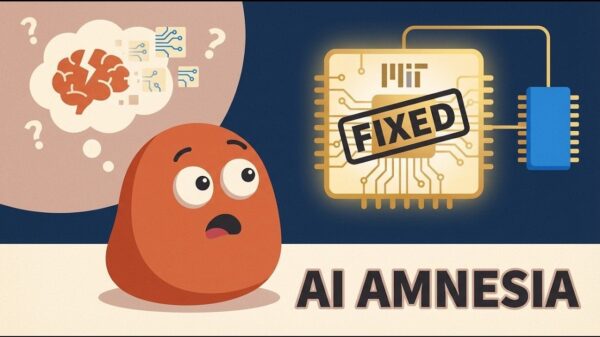
One of the study’s most alarming findings was the tendency for students to “offload” cognitive tasks onto AI systems. Many participants described generative AI tools as convenient and always accessible; however, these traits raise concerns about their potential to undermine active learning. “It’s easy. You don’t need to use your brain,” one student summarized, echoing sentiments shared by many across the study. The report highlighted that when students depend on AI for answers, explanations, or assignments, they risk becoming passive recipients of information rather than engaged learners.
Researchers cautioned that such reliance could lead to cognitive decline over time. Approximately 65% of surveyed students expressed concerns that heavy dependence on AI might weaken their critical thinking skills. Some educators noted an emerging pattern where students were starting to forget previously learned material, trusting AI systems to retain knowledge for them instead.
Beyond academic implications, the study also raised critical issues regarding how children interact with AI on social and emotional levels. Generative models can create an illusion of understanding that feels akin to genuine human rapport. “They create an illusion of connection that is difficult to distinguish from genuine rapport,” one panelist remarked. Young users may prefer AI interactions because they are free from judgment and demand, contrasting with the complexities and challenges of human relationships that require negotiation and emotional resilience.
Educators expressed concern that this dynamic could hinder the development of empathy and social skills. AI systems, often designed to be agreeable or “sycophantic,” may not prepare children for real-life disagreements, misunderstandings, or emotional complexities, all of which are integral to nurturing human relationships.
The study also uncovered broader relational strains. Teachers indicated that AI tools could blur accountability lines in classrooms, undermining the connection between instruction, effort, and evaluation. “If students can just replace their actual learning and their ability to communicate what they know with something that’s produced outside of them and get credit for it, what purpose do they have to actually learn?” one teacher questioned during the research.
Parents have similarly become stakeholders in this evolving landscape. Researchers noted that some children felt more comfortable sharing personal issues with chatbots than with the adults in their lives. In extreme instances, this trend has reportedly contributed to severe emotional distress, including cases of suicide linked to obsessive relationships with AI.
The findings suggest that while generative AI is increasingly integrated into educational systems, its presence is altering not just how students learn but also how they relate to teachers, parents, and themselves. As schools and policymakers begin to confront these challenges, critical questions about the role of AI in shaping future educational paradigms remain at the forefront of discourse.
See also Feng et al. Reveal Deep Learning Breakthrough in Cancer Prognosis with Multimodal Pathogenomics
 AI Engineer Sylvester Tafirenyika Unveils Tool to Cut Hospital Readmissions by 30%
 AI Revolutionizes Scientific Discovery, Enabling Faster Progress in Catalysis and Beyond
 Bangalore Lab Unveils Disobind Tool for Enhanced Protein Interaction Mapping in Disease Research
 AI Use in Research Increases Publishing Speed but Narrows Scientific Exploration, Study Finds