






















































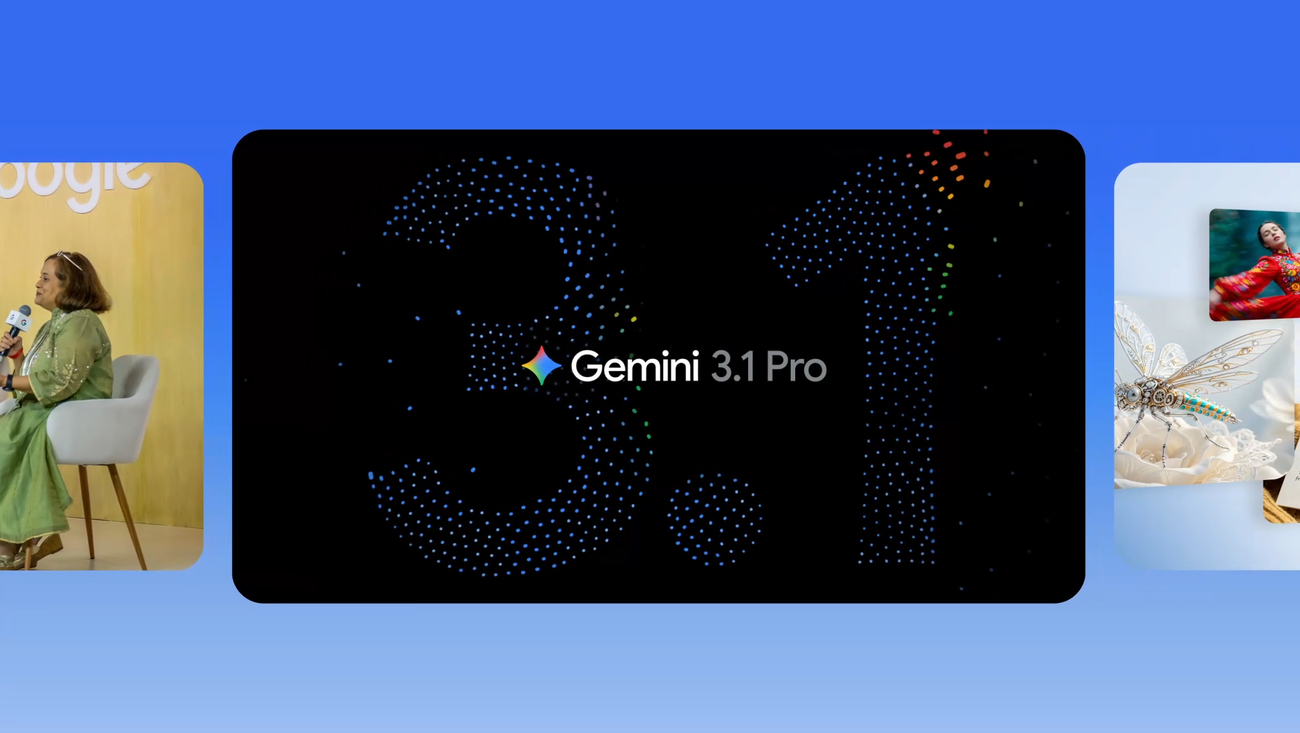
Google has announced the release of Gemini 3.1 Pro, a significant upgrade aimed at aiding users in tackling complex tasks more effectively. Launched as part of a broader strategy to enhance AI capabilities, Gemini 3.1 Pro boasts more than double the reasoning performance of its predecessor, 3 Pro. The model is designed for users seeking in-depth analysis, whether that involves providing clear visual explanations, synthesizing disparate data sets, or integrating creative elements into projects. This new version is being made available across various platforms for developers, enterprises, and consumers.
In conjunction with this release, Google also unveiled a major upgrade to Gemini 3 Deep Think. Developed through collaborations with leading scientists and researchers, the revised version is attuned to the distinct challenges posed by scientific and engineering problems. Unlike traditional models that may falter in the face of messy data, the new Deep Think aims to transcend abstract theory by delivering practical solutions for technical challenges. Access to the updated Deep Think will be provided within the Gemini app exclusively for Google AI Ultra subscribers, while researchers and engineers are encouraged to express interest in early access through the Gemini API.
The announcements come at a pivotal time in the AI landscape, as organizations grapple with the complexities of digital transformation. Kent Walker, Google’s President of Global Affairs, addressed these challenges during the 62nd Munich Security Conference, where he emphasized the necessity of a collaborative approach to security in the era of AI. Walker pointed out that the evolution of threats necessitates new strategies, calling for partnerships that prioritize resilience without compromising data control. This perspective aligns with current trends in the technology sector, where companies are increasingly recognizing the importance of security and compliance in their AI initiatives.
Walker’s insights reflect a growing understanding within the industry that traditional methods of addressing security risks may no longer suffice. As AI technologies evolve, so too do the potential threats, making it imperative for organizations to adopt more dynamic and integrated security frameworks. Google’s commitment to enhancing AI capabilities through products like Gemini 3.1 Pro and Deep Think underscores the company’s recognition of these shifting dynamics and its intent to remain at the forefront of AI-driven innovation.
The implications of these developments extend beyond immediate technical enhancements. As the demand for AI solutions in complex problem-solving grows, Google’s Gemini offerings could play a crucial role in shaping how businesses and researchers approach intricate tasks. With features designed for deeper analysis and practical application, Gemini 3.1 Pro and Deep Think could redefine standards in the AI landscape, highlighting the importance of adaptability in strategies aimed at leveraging technology for real-world solutions.
Looking ahead, the industry can expect continued advancements in AI as companies like Google work to refine their offerings. The evolution of models like Gemini 3.1 Pro and Deep Think signals a trend toward more sophisticated AI capabilities, which could lead to transformative changes across various sectors. By focusing on collaborative security and practical applications, Google is positioning itself as a leader in not only AI technology but also in the broader dialogue about digital resilience in a rapidly changing world.
See also Ateneo’s ALIVE Lab Partners with Industry to Enhance Machine Learning in Healthcare and Transportation
 Wilson Sonsini Unveils AI Adoption Strategy Aiming for Transformative Legal Tools by 2026
 March 2026 Patch Tuesday: Google Fixes High-Risk Gemini AI Vulnerability; Microsoft Enhances Copilot Security
 Pegasystems Launches Vibe Coding in Pega Blueprint to Enhance AI Workflow Design
 Diligent AI Secures €2.1 Million to Enhance KYC and AML Automation with New AI Agents














