












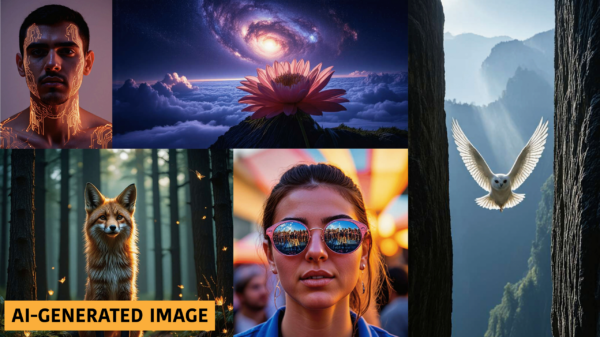


































Artificial intelligence platforms are perpetuating narrow western body ideals in their imagery of male and female bodies, according to a recent study from the University of Toronto. Published in the journal Psychology of Popular Media, the research analyzed the outputs of three leading AI platforms—Midjourney, DALL-E, and Stable Diffusion—in response to prompts requesting images of athletes and other bodies.
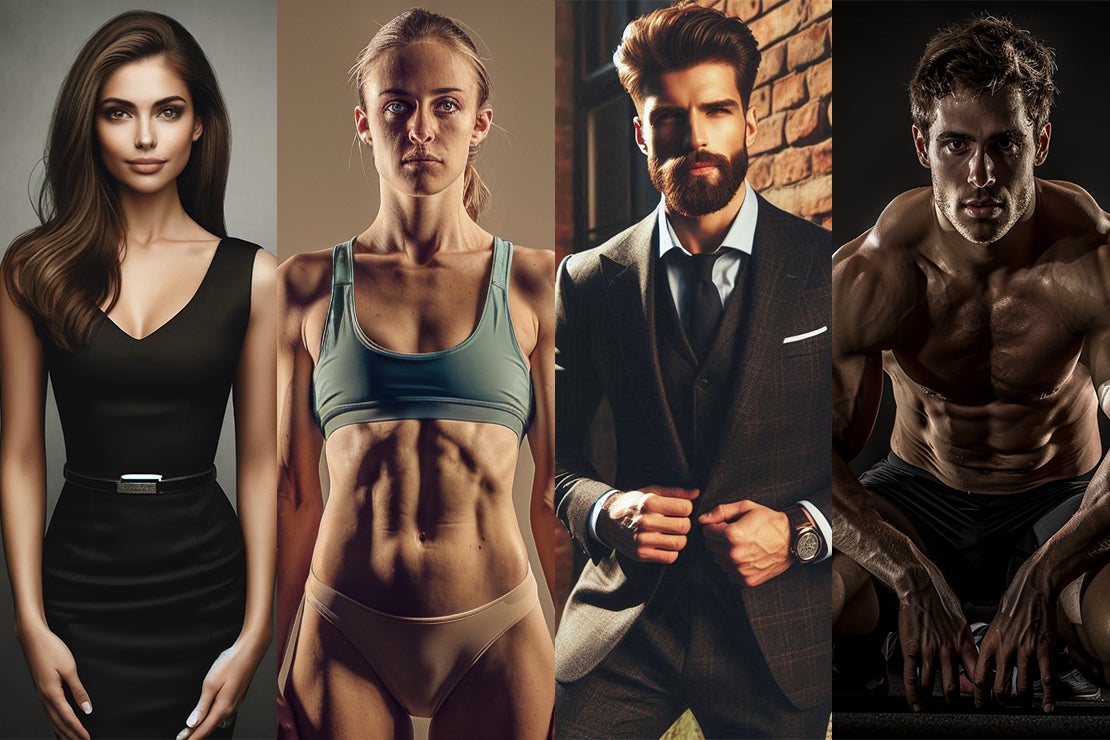
The findings revealed a significant bias towards the “fit ideal,” with images of athletes predominantly showcasing very low body fat and highly defined muscularity, compared to non-athlete images. “In a systematic coding of 300 AI-generated images, we found that AI reinforces the fit ideal,” said lead author Delaney Thibodeau, a postdoctoral researcher at the Faculty of Kinesiology & Physical Education (KPE).
Co-authors included research associate Sasha Gollish, recent master’s graduate Edina Bijvoet, KPE Professor Catherine Sabiston, and graduate student Jessica E. Boyes from Northumbria University in the U.K. Their research highlighted a troubling persistence of gendered sexualization, as female images tended to be younger, facially attractive, and depicted in revealing clothing, while male images were often portrayed as shirtless, hairier, and hyper-muscular.
The study also identified prevalent objectification in the generated images, where clothing fit and exposure patterns emphasized appearance over functionality, aligning with negative trends seen in social media. The researchers noted a striking lack of diversity in the imagery, with most representations being young and white, and no images depicting visible disabilities. “Racial and age diversity were minimal,” Thibodeau stated, emphasizing that AI defaults to male athletes when no specific gender is mentioned. “When prompted simply for an athlete (no sex specified), 90 percent of images depicted a male body,” she added, underscoring an embedded bias towards male representation.
Sabiston, who is a Canada Research Chair in physical activity and psychosocial well-being and director of the Mental Health and Physical Activity Research Centre (MPARC) at KPE, remarked on the broader implications of the findings. “Overall, our findings underscore the need to investigate how emerging technologies replicate and amplify existing body ideals and exclusionary norms,” she said. A call for a human-centered approach in AI design was emphasized, advocating for considerations of gender, race, disability, and age to mitigate the perpetuation of harmful and inflexible imagery regarding what athletes should look like.
The role of users in shaping the output of AI-generated images was also highlighted, with Sabiston encouraging individuals to carefully craft their prompts and consider the public presentation of the generated images. Viewers, she noted, should remain critical of the biases and stereotypes that may be depicted, cautioning against interpreting these images as authentic representations.
While the study calls for further research into the psychosocial effects of AI-generated imagery on self-esteem, motivation, and body image, the researchers remain hopeful. They believe that greater acceptance of body and weight diversity may arise as diverse and inclusive images gain more visibility and are shared globally. This research was funded by the Canada Research Chair program, marking a significant step in understanding the impact of technology on societal norms surrounding body image.
See also Yushau Shuaib Reveals 75% AI Adoption in Nigeria’s Crisis Communication at CCC Symposium
 CxOs Project IT Budget Increases, Focus on AI with 52% Aiming for Strategic Differentiation
 Generative AI Agents Automate Key Cash Management Tasks, Boosting Liquidity Efficiency
 Machine Learning Reveals Phase Transition in Zinc Oxide Nanoparticles During Growth
 AI Research Shifts Focus from Scaling to Human-Like Learning for Improved Generalization