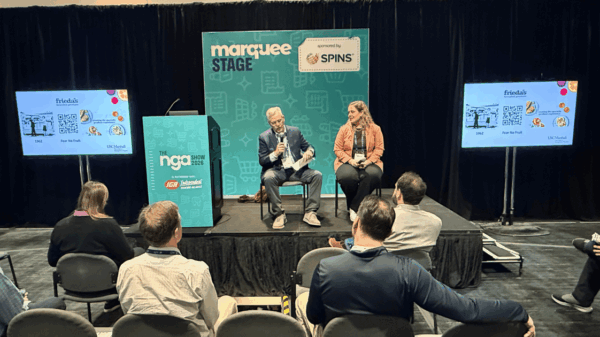







































The week of January 5-10, 2026, marked a significant transition in the advertising landscape as platforms began deploying agentic AI systems for autonomous campaign execution. This evolution coincided with CES in Las Vegas, where discussions on programmatic advertising intensified. The IAB Tech Lab’s comprehensive agentic roadmap seeks to address fragmentation within the ecosystem, aiming to unify competing protocols before they splinter the industry.
On January 6, Yahoo DSP announced the integration of agentic AI into its demand-side platform, allowing artificial intelligence agents to monitor campaigns continuously, diagnose performance issues, and autonomously execute corrective actions. Adam Roodman, general manager at Yahoo DSP, emphasized that this capability represents a fundamental transformation of workflow rather than mere optimization. Advertisers retain authority over campaign modifications, with AI offering recommendations but requiring human oversight for final decisions.
This architectural approach contrasts sharply with fully autonomous systems, emphasizing accountability in managing high-stakes campaigns. Advertisers, particularly those handling million-dollar budgets, require mechanisms to ensure that automated systems align with strategic objectives and respond appropriately to market conditions.
Simultaneously, the IAB Tech Lab unveiled a roadmap that extends established industry standards like OpenRTB, AdCOM, and VAST, introducing new execution protocols designed for agentic functionality. CEO Anthony Katsur stated that substantial investments would focus on AI development, positioning the IAB as a coordinator rather than a competitor in the agentic landscape. However, widespread adoption hinges on participation from major platforms managing the bulk of programmatic advertising budgets.
Live event streaming presents unique challenges for advertisement delivery, prompting IAB Tech Lab to develop new signaling protocols and guidance to navigate the complexities of real-time optimization. The organization has scheduled a public webinar on January 28, 2026, titled “Reviewing the Agentic AI Standards Roadmap,” to provide a technical overview of these developments. Starting February 12, monthly Agentic AI Boot Camps will be launched at the IAB Ad Lab.
Analysis from Ari Paparo, CEO of Marketecture Media, suggests that autonomous AI systems could potentially displace the traditional roles of demand-side platforms, prompting existential questions for their business models. In line with this shift, AdExchanger announced the launch of Programmatic AI, a new industry event set for May 18-20, 2026, which will explore how intelligence and automation are reshaping media planning and buying.
On the measurement front, Comscore’s January 6 release of program-level measurement capabilities, powered by Amazon Bedrock AI, aims to resolve historical fragmentation in audience intelligence across platforms. This enhancement provides unified reach data tracking individual shows across both streaming and linear television, facilitating smarter advertising strategies. Comscore’s Chief Commercial Officer, Steve Bagdasarian, noted that the expansion unlocks better planning and greater confidence in a converged advertising landscape.
Spotter’s January 6 partnership with Comscore further illustrates the industry’s push for standardized measurement in creator-led content. By utilizing Comscore’s Cross-Platform Content Measurement and other products, Spotter seeks to offer television-caliber metrics for YouTube creators, reflecting a significant shift in how creator content is perceived within the broader media ecosystem.
As agency consolidations continue, Omnicom unveiled the next generation of Omni on January 8, integrating the Acxiom Real ID identity solution acquired from Interpublic Group. This upgrade, fueled by industry consolidation, aims to streamline operations and offer unified digital marketing solutions while addressing the challenges of integrating diverse technologies and cultures.
Amidst these transitions, Google’s announcement of updates to its Pharmaceutical product policies for Authorized Buyers marks another notable shift. As of January 2026, the updated frameworks will allow certain promotions of prescription drugs without requiring Google certification, reflecting an evolving approach to regulatory compliance in the advertising space.
Looking ahead, the advertising and technology landscapes are positioned for pivotal changes as the rise of AI-driven solutions reshapes traditional business models. The dynamics of programmatic advertising, coupled with the need for transparency and accountability, will continue to drive innovation and competition across the industry.
See also Alibaba Stock Rises 4.8% Following China’s Approval of Nvidia H200 AI Chips
 ON Semiconductor Drives EV Revolution with Advanced SiC Tech and Image Sensors
 AI Risks Surge Without GDPR Compliance, Warns Data Protection Expert Muhammad Gjokaj
 Cadence Design Systems Powers AI Hardware Boom with Advanced EDA Tools for 3nm Designs
 AI Dominates CES 2026 as Tech Giants Invest $500B Amid Bubble Concerns