






















































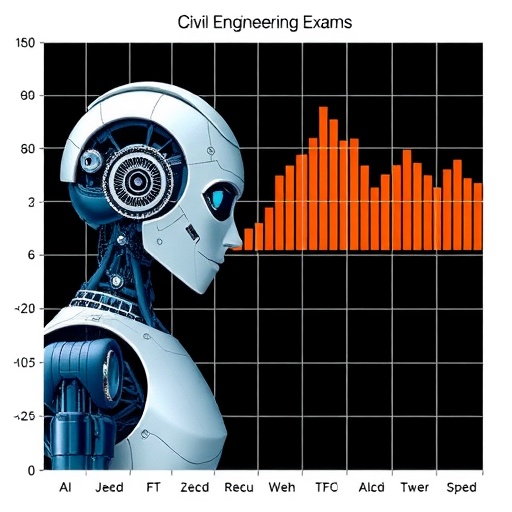
Artificial intelligence is making significant strides in educational contexts, particularly through the use of AI chatbots. A recent study by Oblitas, Adeeb, and Cruz-Noguez investigated the performance of these chatbots on fundamental civil engineering exam questions, offering important insights into their capabilities and limitations. Conducted with the aim of understanding how AI can enhance educational support in engineering disciplines, the findings may influence how educators integrate technology into civil engineering curricula.
The researchers established a set of criteria to evaluate the chatbots, selecting a diverse array of problems that reflect core civil engineering principles and theories. The chosen questions were strategically designed to challenge the chatbots’ understanding, ensuring that only the most competent models would provide accurate responses. This rigorous approach enhances the reliability of the study’s results.
In the initial phase of the research, the AI chatbots were trained using data from previous civil engineering exams and relevant textbooks. This training aimed to improve the chatbots’ ability to comprehend and respond to engineering-related inquiries. Utilizing state-of-the-art natural language processing algorithms, the researchers enabled the chatbots to effectively interpret complex engineering terminology, laying the groundwork for the performance evaluations that followed.
During the performance tests, the results showcased considerable variability among different AI models. While some chatbots excelled in demonstrating a solid grasp of fundamental engineering concepts, others faltered with basic questions. This discrepancy underscores the importance of selecting appropriate AI tools for educational purposes, suggesting that understanding these differences can significantly influence educators’ integration strategies.
One noteworthy aspect of this study was the chatbots’ ability to articulate their reasoning for specific answers. Unlike traditional assessment methods, where students often provide answers without justification, AI chatbots can explain their thought processes. This feature fosters deeper learning, as students gain insights into the underlying mechanics of engineering principles. The potential for chatbots to serve as educational tools that not only answer questions but also provide comprehensive explanations marks a significant shift in engineering education.
The research also emphasizes the role of AI chatbots in creating personalized learning experiences. Recognizing that students possess varied levels of understanding and learning paces, the study indicates that AI chatbots can tailor educational content to meet individual needs, offering customized explanations and feedback. This adaptability represents a marked improvement over traditional, one-size-fits-all teaching methods.
However, the researchers also identified notable limitations within current AI chatbot technology. Despite their impressive capabilities, these models occasionally produce inaccuracies in mathematical calculations or misinterpret complex engineering queries. Such errors highlight the necessity for ongoing improvements in AI models and serve as a reminder that technology should enhance, rather than replace, traditional educational practices. The authors urge educators to remain mindful of these limitations, advocating for the use of AI chatbots as supplemental tools rather than primary sources of information.
The implications of this research extend beyond civil engineering, prompting a broader discourse on the future of AI in education. If chatbots can effectively aid students in grasping complex subjects, similar applications could be explored across various disciplines, including mechanical engineering, architecture, and even social sciences. As AI technology continues to evolve, its potential to reshape educational methodologies is becoming increasingly evident.
Moreover, the study raises important ethical considerations regarding the reliance on AI technology in education. Issues surrounding data privacy, the reliability of information, and the role of human instructors must be addressed as AI tools become more prevalent in learning environments. The researchers advocate for a balanced approach that merges the advantages of AI with human expertise, ensuring a holistic and enriching educational experience.
In conclusion, the research conducted by Oblitas, Adeeb, and Cruz-Noguez sheds light on the performance of AI chatbots in civil engineering examinations. The findings underscore the transformative potential of AI in education while also calling attention to its limitations and ethical implications. As educators seek innovative ways to enhance learning experiences, AI technology holds promise in bridging knowledge gaps and personalizing education, thereby shaping the future of engineering education and beyond.
As advancements in artificial intelligence continue, discussions about its impact on education are likely to intensify. This study provides a foundation for understanding how AI can support learning in specialized fields while encouraging dialogue about best practices for the integration of emerging technologies in educational settings.
See also Nvidia Reveals GPS Technology to Track AI Chip Locations, Enhancing Export Compliance
 Vietnam Passes Landmark AI Law, Establishes National AI Development Fund and Supercomputing Center
 AI Toy Market Surges to $3.49 Billion as Companies Innovate Emotional Companion Products
 Asia’s Secret Seven Firms Drive $1 Trillion AI Infrastructure Boom Ahead of U.S. Tech Giants
 NVIDIA Denies DeepSeek’s Use of Banned Blackwell GPUs Amid US-China AI Tensions