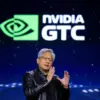
NVIDIA has swiftly addressed allegations regarding the alleged use of banned Blackwell GPUs by the Chinese AI firm DeepSeek. Rumors have emerged suggesting that DeepSeek managed to acquire these advanced chips despite a stringent U.S. export ban aimed at curtailing China’s AI capabilities. With rising tensions between the U.S. and China concerning AI advancements, NVIDIA’s denial appears aimed at reassuring investors, particularly following a 3.26% drop in its stock price on December 15, which has had ripple effects on global markets, notably in Hong Kong.
Recent reports indicated that DeepSeek, a burgeoning Chinese startup, had obtained Blackwell GPUs, crucial components in AI technologies. Such allegations raised significant concerns, prompting NVIDIA to refute the claims, asserting its full compliance with U.S. export regulations regarding China. The goal of the export ban is to slow down China’s progress in AI, a focal point of U.S. national security apprehensions regarding technological and economic implications.
This incident highlights the ongoing challenges surrounding the monitoring of high-tech exports. As AI stands at the forefront of economic power, NVIDIA’s denial is critical in maintaining trust in its operations and adherence to regulations. The broader context surrounding U.S.-China relations has fueled scrutiny of companies involved in advanced technologies, placing major corporations like NVIDIA under enhanced observation.
Following the allegations, NVIDIA’s stock (NVDA) experienced a decline of over 3% on December 15, closing at $175.02. This market reaction underscores the sensitivity of investors to geopolitical tensions, indicating that ongoing U.S.-China tech disputes profoundly impact financial landscapes. Despite recent volatility, NVIDIA’s earnings remain robust, with an earnings per share (EPS) of 4.03 and a forward price-to-earnings (P/E) ratio indicating growth potential. Analyst ratings continue to support a ‘Buy’ stance on the stock, reflecting confidence in NVIDIA’s long-term prospects.
The U.S. government has been rigorously enforcing sanctions on AI-related exports to China, citing national security concerns. This regulatory environment has resulted in increased scrutiny for companies like NVIDIA, whose cutting-edge semiconductors are vital for AI innovation. The ramifications of these tensions may lead to a significant tech decoupling, which could disrupt global supply chains and hinder access to advanced technologies for Chinese AI firms. NVIDIA’s prompt denial of the allegations serves to mitigate fears but also highlights the intricate geopolitical complexities that are reshaping the technology sector.
The implications of U.S.-China AI tensions extend beyond immediate market reactions. They symbolize a strategic struggle for technological dominance, where companies like NVIDIA find themselves navigating risks associated with international business while simultaneously driving innovation and strategic positioning in global markets. As geopolitical dynamics evolve, NVIDIA must ensure its operations align with regulatory frameworks to sustain investor confidence and market trust.
NVIDIA’s rapid denial regarding DeepSeek’s supposed use of banned Blackwell GPUs sheds light on the complex interplay between technological leadership and global geopolitics. This episode illustrates the underlying conflict over AI supremacy between the U.S. and China, an ongoing battle that influences market sentiment and investor behavior worldwide. While NVIDIA’s strong fundamentals and strategic outlook favor its resilience, the persistent tensions surrounding tech exports may present new challenges. Investors are advised to monitor regulatory developments closely as they strategize their positions in a market increasingly shaped by geopolitical factors. Amid these shifting global dynamics, NVIDIA remains a critical player, presenting both risks and opportunities for stakeholders.
Why did NVIDIA deny the use of Blackwell GPUs by DeepSeek? NVIDIA denied these claims to reaffirm its compliance with U.S. export regulations to China. The accusation, if true, would have significant geopolitical and market implications, which NVIDIA sought to address to maintain investor trust.
How did the market react to NVIDIA’s denial? NVIDIA’s stock fell by 3.26% following the allegations, highlighting investor sensitivity to geopolitical tensions and regulatory scrutiny affecting tech companies and global markets.
What are the broader implications of U.S.-China AI tensions? These tensions reflect a strategic struggle over technological dominance. For companies like NVIDIA, they pose risks to international business but also drive innovation and strategic positioning in global markets.
See also Nvidia’s H200 Boosts China’s AI Cloud Services Despite Huawei’s 12,800 TPP Chip
 AI-Powered Networks Revolutionize Telecom Strategies at Dubai Leaders’ Summit
 LinkedIn India Enhances Hiring Process with AI-Powered Features and Tools
 Google’s AI Recipe Summaries Threaten Livelihoods of Food Bloggers, Sparking Industry Fears
 Ciena’s 160% Surge: Is AI Infrastructure Growth Already Priced In?