

















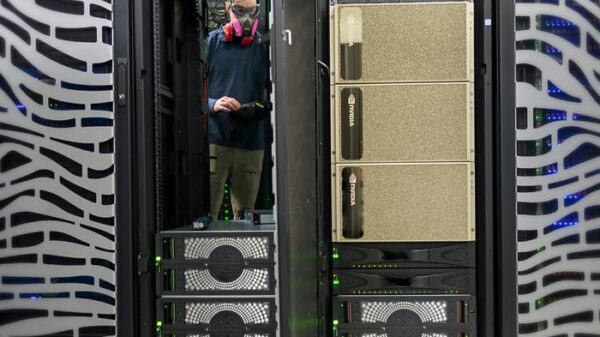



































NVIDIA Corporation and Micron Technology are facing significant challenges in the high-bandwidth memory (HBM) market, as shortages are driving prices to unprecedented levels. This surge in demand for HBM RAM, a critical component for advanced artificial intelligence (AI) applications and high-performance computing, comes at a time when the technology sector is increasingly reliant on powerful processing capabilities.
The escalating prices of HBM RAM have been attributed to the rapid growth of AI technologies that require substantial memory bandwidth. Major players in the AI landscape, including NVIDIA, which is known for its graphics processing units (GPUs), are competing to secure enough memory resources to meet the needs of their latest products. The situation has been exacerbated by supply chain disruptions and production limitations faced by manufacturers such as Micron and Samsung Electronics.
Recent reports indicate that prices for HBM RAM have surged, with some estimates suggesting an increase of nearly 40% over the past year. This rise poses a considerable hurdle for companies developing AI and machine learning solutions, as higher memory costs could lead to increased expenses for end products. The ramifications of this trend may extend beyond immediate financial implications, potentially slowing the pace of innovation in AI technology if companies are unable to manage these costs effectively.
In response to the growing demand and supply constraints, both NVIDIA and Micron have ramped up their production efforts. Micron is reportedly investing heavily in expanding its manufacturing capabilities to produce more HBM RAM, while NVIDIA continues to innovate its GPU lineup to leverage the existing memory technologies. Analysts suggest that these moves are essential for these companies to remain competitive in an increasingly crowded marketplace, where technological advancements are critical to capturing market share.
Furthermore, the strategic importance of HBM RAM is underscored by its role in delivering the performance required for cutting-edge applications, from autonomous vehicles to advanced data centers. The memory type is favored for its ability to handle large volumes of data at high speeds, a requirement for many AI-driven processes. As demand surges, the competition for securing HBM RAM has intensified among technology firms, raising concerns about potential market monopolization.
As the landscape continues to evolve, the industry is under pressure to adapt to changing dynamics. Recent commentary from tech analysts indicates that while the current shortage presents challenges, it may also catalyze innovation in alternative memory technologies or non-HBM solutions. Companies may seek to diversify their supply chains or invest in research and development to create more cost-effective memory options.
Looking ahead, the memory shortage could shape the future of AI technology significantly. As firms navigate these hurdles, the pressure on them to innovate and develop efficient solutions will only increase. The trajectory of HBM RAM pricing and availability will likely play a crucial role in determining which firms emerge as leaders in the fast-evolving AI and technology sectors.
See also Zepo Intelligence Secures $15M to Combat AI-Driven Social Engineering Attacks
 AI Revolutionizes Marketing: Rubeena Singh Highlights 2026 Trends in Discovery and Personalization
 Acer Launches Swift AI Copilot+ PCs with Intel Core Ultra Processors and Enhanced Productivity Features
 Lancium Secures $600M Financing to Launch 1.2 GW Clean Campus for AI Infrastructure
 GitHub Copilot Enhances AI Development with Custom Instructions and Context Engineering