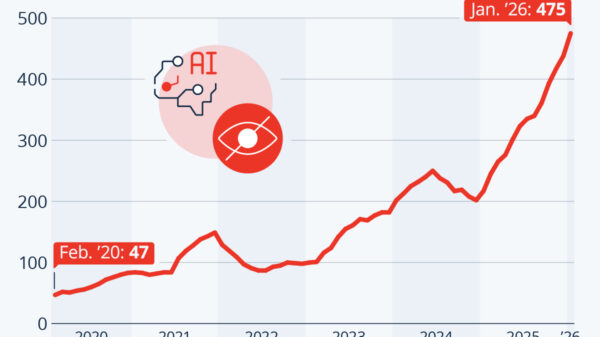
Economists are highlighting the potential of artificial intelligence (AI) to enhance productivity in industrialized nations, suggesting that this could offer governments more flexibility to address mounting public finance challenges. While AI is unlikely to fully resolve financial pressures, its capacity to drive economic growth may help make government debt more sustainable in the long run.
The urgency of this conversation is underscored by rising national debt levels, largely driven by an aging population and increasing spending on defense and climate change initiatives. Analysts from the Organization for Economic Cooperation and Development (OECD) and various financial institutions are optimistic that improvements in labor productivity attributable to AI could significantly reduce these debt burdens over time.
However, the demographic landscape poses a substantial obstacle to fiscal health. Analysts warn that although AI may provide a temporary buffer against fiscal stress, the underlying issues associated with an aging population will demand robust fiscal policies. While AI-driven economic growth might alleviate some pressure on public finances, it requires careful management to ensure that benefits are maximized.
As governments grapple with these challenges, the integration of AI technologies into various sectors could lead to transformative changes in productivity levels. For instance, industries such as manufacturing, healthcare, and logistics are already witnessing the potential benefits of AI, which can streamline operations and reduce costs. The ripple effects of these advancements may facilitate higher tax revenues without imposing additional burdens on the workforce.
Despite the promise that AI holds for economic revitalization, experts caution against complacency. The issues stemming from demographic changes—such as labor shortages and pension liabilities—will not simply vanish with technological innovation. Policymakers will need to implement a balanced approach that combines AI-enhanced productivity with strategic fiscal measures to address these long-term structural challenges.
The convergence of AI technology with economic policy offers a glimpse into a future where productivity gains could play a pivotal role in mitigating national debts. By adopting proactive strategies and investing in workforce training for the AI era, countries can position themselves to harness the full potential of this transformative technology. As the global economy continues to evolve, the interplay between AI advancements and fiscal strategy will be critical in shaping sustainable economic growth.
In conclusion, while AI presents opportunities for enhancing productivity and easing some financial strains, it cannot substitute for comprehensive fiscal reforms required to tackle the root causes of public debt. The successful integration of AI into the economy, paired with thoughtful policy initiatives, may ultimately be the key to navigating the complex financial landscape of the future.
See also Google and OpenAI Employees Demand Pentagon Red Lines on Surveillance and Weapons
 DeepSeek Reveals Multimodal LLM V4 Developed with Huawei and Cambricon Chips
 Peter Thiel Exits Apple, Microsoft Stocks Despite Wall Street’s 49% and 11% Upside
 St. Bonaventure University Announces Campus-Wide Access to ChatGPT Edu for Students and Faculty
 Unlock Income Potential: 8 Proven Ways to Monetize Midjourney AI Art Services