



































Decentralized Autonomous Organizations (DAOs) are grappling with governance complexities as they scale, raising critical questions about decision-making efficacy within the crypto ecosystem. Initially designed to eliminate centralized control and promote transparent, community-driven governance, DAOs now face challenges of fragmentation and complexity as their size and responsibilities increase. Enter the Model Context Protocol (MCP), introduced by Anthropic—an innovative framework aimed at improving decision-support systems within DAOs by enhancing contextual understanding and collective intelligence.
DAOs began with basic voting mechanisms, primarily managing straightforward decisions such as parameter updates and small treasury allocations. However, as the landscape evolves, many DAOs now oversee large multi-chain treasuries, intricate protocol upgrades, contributor compensation frameworks, environmental partnerships, and long-term strategic planning. This heightened complexity has placed an increased cognitive burden on participants, necessitating a deep understanding of technical language, financial data, and historical governance context spread across various platforms. The pressing challenge, therefore, lies in the lack of context in governance.
DAO decision-support systems comprise various software tools and procedures designed to assist members in making informed governance decisions. These systems typically include governance forums, proposal summaries, voting mechanisms, and analytics tools. While they improve accessibility, they often present information in isolation, lacking a holistic view of past decisions and their implications. Consequently, governance decisions can appear reactive rather than informed, further complicating the decision-making landscape for DAO participants.
Context is crucial for effective governance. The impact of any proposal hinges on past governance outcomes, the health of the treasury, market conditions, and alignment with the DAO’s mission. Participants are often left to rely on superficial summaries or prevailing social sentiments, leading to voter apathy. MCP-enhanced decision-support systems aim to mitigate this issue by delivering relevant background information at the critical moment of decision-making, thus simplifying complex governance narratives.
MCP’s Role in Enhancing DAO Governance
The Model Context Protocol can significantly improve DAO decision-support systems across several dimensions. First, traditional proposal summaries tend to be static and limited. By integrating MCP with AI-driven analysis tools, these systems can provide adaptive explanations that contextualize proposals within broader governance narratives, allowing voters to better understand their implications. This approach fosters a more informed voting environment.
Second, DAOs frequently face knowledge drain as contributors cycle in and out. MCP addresses this by preserving institutional memory, referencing historical governance data, identifying recurring decision patterns, and highlighting lessons from past successes and failures. Such continuity reduces the likelihood of repeating past mistakes.
Moreover, MCP can alleviate the burden on delegates who often experience proposal overload. By prioritizing proposals based on relevance and summarizing their technical and financial implications, MCP tools can enhance transparency and accountability in the voting process, ultimately boosting confidence in governance models.
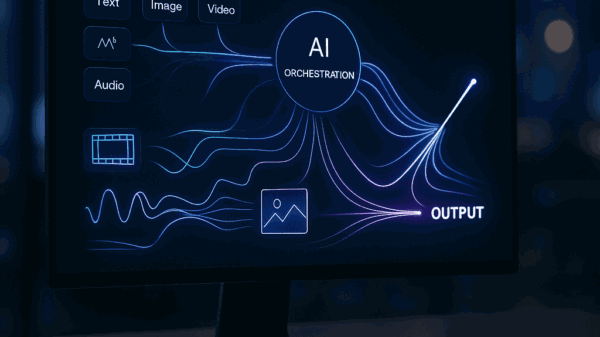
Additionally, MCP enables the integration of on-chain and off-chain data, pulling information from blockchains, forums, and messaging platforms. This consolidation allows for a more accurate and consistent decision-making process by incorporating key data points such as treasury balances and governance metadata, which are vital for informed decision-making.
As DAOs operate as experiments in collective intelligence, the shared context facilitated by MCP is essential for effective group decision-making. By reducing information asymmetry, translating governance knowledge into accessible language, and fostering discussions rooted in historical data, MCP enhances the quality of governance discussions, leading to more rational decisions.
Governance risk, particularly among treasury-focused DAOs, has gained prominence in recent discussions. MCP-powered decision support systems can strengthen governance risk analysis by proactively identifying vulnerabilities within governance frameworks, allowing DAOs to address high-risk areas before they escalate.
The potential benefits of implementing MCP in DAO governance are manifold, including improved proposal comprehension, stronger transparency, reduced voter fatigue, better alignment with long-term strategies, and enhanced scalability. However, challenges remain, such as the risk of over-reliance on AI-generated insights, potential bias from incomplete data, and the technical complexity that may hinder smaller DAOs. Governance disputes over context control also pose a significant concern.
Balancing these factors is crucial for the responsible adoption of MCP. As DAOs navigate the complexities of governance, the integration of innovative tools like the Model Context Protocol may pave the way for more effective and sustainable decision-making, thereby shaping the future of decentralized governance in the crypto landscape.
See also Tech Giants Launch Space Data Centers to Meet AI’s Growing Energy Demands
 AMD Stock Rises 6.2% Following Positive Analyst Ratings and AI Spending Boost
 BIOSTAR Launches EdgeComp MU-N150 and MS-NANO for Scalable AI and IoT Solutions
 AMD Stock Soars 8.5% to $265 as Server CPU Demand Fuels Earnings Optimism Amid AI Concerns
 UC Riverside Reveals Test-Time Matching Method Boosting AI Reasoning by 89.4%